You're in the parking lot at dawn, wetsuit half on, board across the tailgate. You go to drop your fins in and the grub screw won't budge. The key's at home in a drawer, the wave's pumping, and you're stuck because of a piece of metal that costs less than your post-surf coffee.
That's the dirty secret of fin screws. They're the cheapest part of your setup and the one most likely to end your session before it starts. Nobody talks about them until they fail. So let's talk about them.
What Actually Holds Your Fins In
Three systems dominate, and each one bolts your fins to the board differently.
Original FCS (the dual-tab system) uses two grub screws per fin. They thread into the plugs and clamp down on the fin's tabs. The screws are 10-24 thread, stainless steel, about 5/16" long, and they take a 3/32" hex key (roughly 3mm). Two screws per fin, three fins on a thruster, that's six tiny screws standing between you and a session.
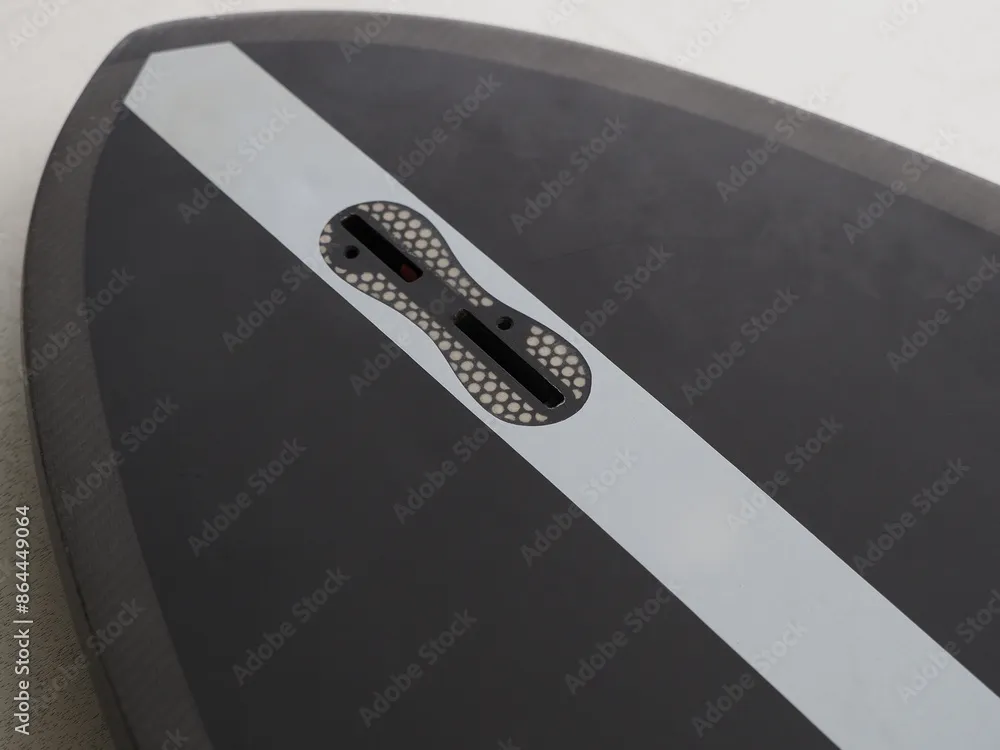
Futures went simpler. One grub screw at the front of the box. The fin slides in from the back, seats against the box, and a single screw locks the front tab. Less hardware, fewer things to lose, and the connection feels stiff and direct because there's no second screw introducing wiggle.
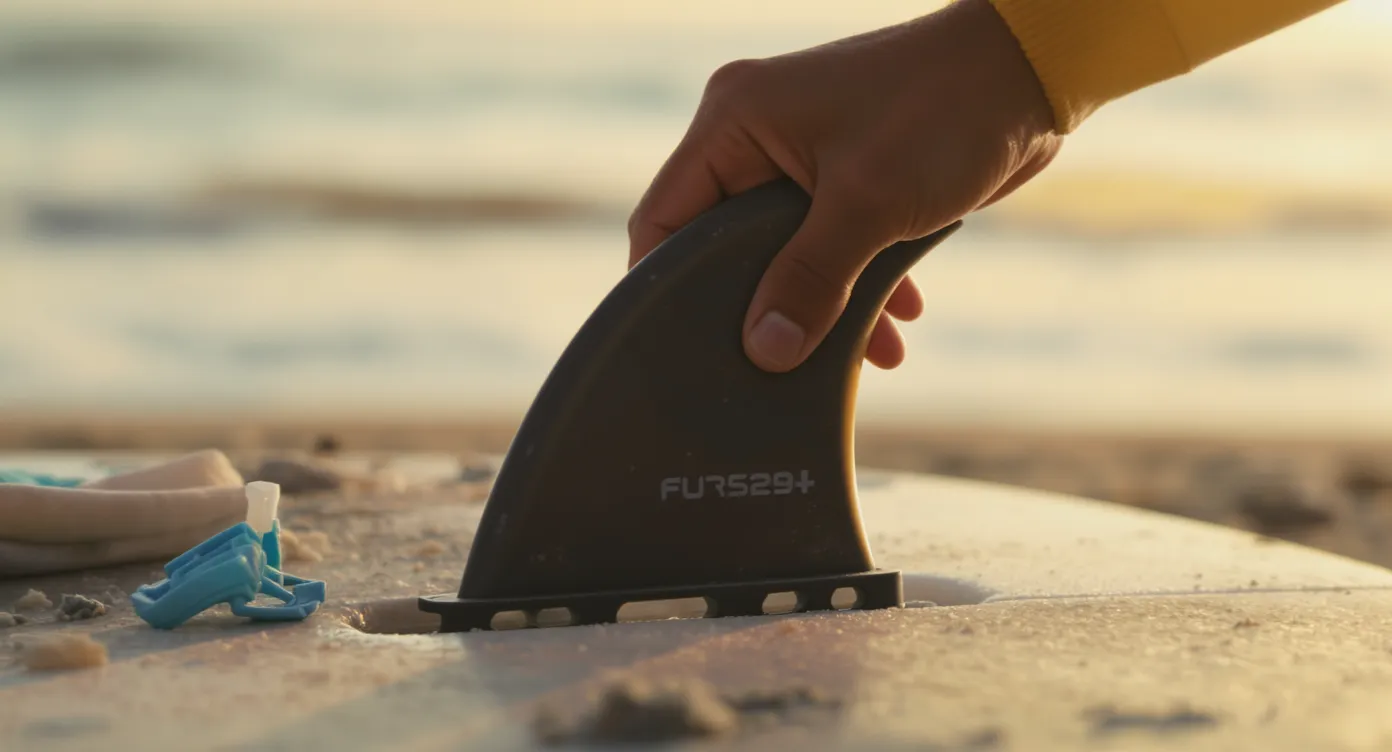
FCS II threw the screws out entirely: you press the fin in and it clicks. No key, no tools, swap your whole setup in the time it takes to read this sentence. There's a quiet snap when it seats, and once you've heard it you trust it. The catch is that FCS II fins also ship with a screw option for the front tab, and plenty of surfers use it on bigger boards or heavy waves because a keyless box can develop a little play over a season.
The Fin Key Nobody Can Find
The FCS and Futures key is the same idea: a stubby L-shaped or T-shaped hex driver, usually 3/32". Most keys on the market fit both brands, which is why a single $3 key from True Ames or Santa Barbara Surfing covers your whole quiver.
Here's the thing about fin keys. You will lose them, everyone does. They live in board bags, glove boxes, the bottom of beach bags, and the lost-and-found bin of every surf shop on the coast. Buy a five-pack and stash one in every bag you own.
The math is brutal. A $3 key versus a blown dawn patrol at Trestles because you couldn't tighten a screw.
How to Install Fins Without Wrecking the Hardware
Most stripped screws are self-inflicted. People crank them like they're torquing lug nuts. You don't need that.
Back the screws out first so they're not poking into the plug slot. Line the tabs up, drop the fin straight down until it seats flush against the board. Then turn the key until you feel the screw bite the tab. Snug, not gorilla-tight.
Overtightening does two ugly things. It chews the soft brass of the grub screw so the key can't grip it later, and it can crack the fin tab or split the plug. A fin held by a properly snugged screw won't move. You're clamping a tab, not hanging a shelf.
When the Screw Fights Back
Salt is the enemy. Stainless steel still corrodes, and a screw left wet for months will seize in the plug or strip the second you torque it. The head rounds out, the key spins free, and now you've got a fin you can't remove and a screw you can't turn.
A few field fixes that actually work:
- Rinse first. Salt crystals lock things up. Soak the box in fresh water and let it sit before you touch the screw.
- Rubber band trick. Lay a thin rubber band over the stripped screw head, press the key through it, and turn. The rubber fills the gap and grabs.
- Super glue on the key. One drop on the key tip, seat it in the screw, wait thirty seconds, then turn. You'll sacrifice the key and screw, but you'll free the fin.
- Screw extractor. For a truly rounded screw, a cheap extractor bit bites into the head and backs it out. It's the bomb-proof option.
If the screw snaps off inside the plug, that's a different beast, and it lives closer to a repair job. We covered the full removal playbook in our guide on getting stuck fins out without breaking your board.
Prevention Costs Almost Nothing
Rinse your fin boxes with fresh water after salty sessions, same as you'd rinse a wetsuit. Once a season, back the screws all the way out, wipe the threads, and a tiny dab of surf wax or marine anti-seize on the threads keeps salt from welding them shut.
Carry spares. A little zip bag with six grub screws and two keys weighs nothing and turns a session-ending failure into a thirty-second fix in the lot. Captain Fin, FCS, Futures, and a dozen no-name brands all sell screw-and-key kits for pocket change. There's no excuse to get caught out.
The hardware also has to match your box. If you're not sure whether you're running original FCS, FCS II, or Futures, our breakdown of the different fin box systems sorts it out fast.
Key Takeaways
- Original FCS uses two grub screws per fin and a 3/32" hex key. Futures uses one screw per fin. FCS II clicks in with no tools, though most fins still include a front screw.
- One $3 fin key fits both FCS and Futures. Buy a five-pack and stash one in every bag, because you will lose them.
- Snug your screws, don't crank them. Overtightening strips the brass and cracks tabs faster than anything the ocean does.
- Salt seizes screws. Rinse boxes with fresh water, and a dab of wax or anti-seize on the threads once a season prevents the dreaded stripped head.
- For a stripped screw in the field, the rubber band trick or a drop of super glue on the key will usually get it out.
Hardware keeps your fins in the board. Picking the right fins is the part that decides how the board actually surfs, and that's a harder question than which screw to buy. If you're staring at a wall of templates wondering which set matches your board and your waves, tell our recommender what you ride and let it narrow the field for you.
Helpful Resources
Ready to Find Your Perfect Fins?
Use our expert fin recommender tool to get personalized suggestions based on your needs.
Try Fin Recommender