It's July. You're paddling out into waist-high mush at Scripps, riding the same board with the same medium thrusters you had mounted last February when Blacks was pumping overhead. You're pumping down the line, the board feels sluggish, and you're blaming the waves.
It's not the waves. It's your fins.
Most surfers own one set of fins and ride them year-round like it's a personality trait. But waves in August don't behave anything like waves in January. The energy, the speed, the power behind the water changes completely. Your fins should change too.
Why One Fin Setup Can't Do Everything
Think about it like tires. You wouldn't run snow tires in Phoenix during July. Fins work the same way. Different wave conditions put different demands on your equipment, and a single setup is always a compromise.
Summer waves on most coastlines are smaller, weaker, and slower. They don't push your board. You have to generate your own speed, and every bit of drag works against you.
Winter waves bring power, speed, and steeper faces. Now you need control, hold, and the confidence that your fins won't release when you set a rail on a solid bottom turn.
Running the same fins in both conditions means you're always leaving performance on the table. Either you're too stiff and draggy in summer, or you're too loose and sketchy in winter. Neither is fun.
Your Summer Fin Setup: Speed From Nothing
Summer surfing in most regions means small, gutless waves with zero push. Your fins need to get out of the way and let the board run.
Go Smaller
Drop one fin size from your normal setup. If you ride Mediums in winter, go Small-Mediums for summer. Less surface area means less drag, and in weak waves, drag is the enemy.
You'll feel the difference on your first wave. The board just goes. That pump-pump-pump that used to get you three feet down the line suddenly covers half the section.
Choose Flexible Fins
Stiffer fins need powerful waves to load up and spring back. In two-foot mush, stiff fins feel dead. Like surfing with kitchen knives strapped to your board. Flex patterns with softer tips let you generate speed through turns even when the wave isn't giving you anything.
Flex matters more than most surfers realize, and summer is where it shows up most dramatically.
Consider Quads
If your board has five-fin boxes, summer is quad season. No center fin means no drag brake. You'll carry speed through flat spots that would stall a thruster.
Kelly Slater has talked about running quads in small south swells at Trestles for exactly this reason. The reduced drag is borderline unfair when waves lack power.
Check out our fin setups breakdown if you're curious about making the switch.
Your Winter Fin Setup: Hold When It Counts
Winter swells bring size, power, and consequences. Your fins need to grip, drive, and not slide out when you're setting a rail on a wave that could send you over the falls.
Go Stiffer
Powerful waves load stiff fins properly. That carbon or fiberglass layup that felt dead in summer? In overhead surf, it comes alive.
You set a bottom turn on a head-high right and the fin grabs the face like it's been waiting all year for this moment. The board drives through the turn with this quiet, locked-in authority that flexible fins can't match when the wave has real push behind it.
Size Up If You Need To
If you're surfing waves with serious power, your normal size or even one size up gives you more hold. Bigger fins have more surface area to grip the wave face during critical turns. The extra drag that killed your speed in summer becomes stability when a six-foot set is unloading on the inside bar.
Stick With Thrusters
Winter power waves are thruster territory. That center fin gives you a pivot point for vertical, top-to-bottom surfing. When waves have enough push to drive the board naturally, you don't need the speed advantage of quads. You need the control advantage of three fins working together.
The sizing guide breaks down exactly how weight and wave size factor into your choice.
The Two-Set Seasonal Quiver
You don't need ten sets of fins. You need two.
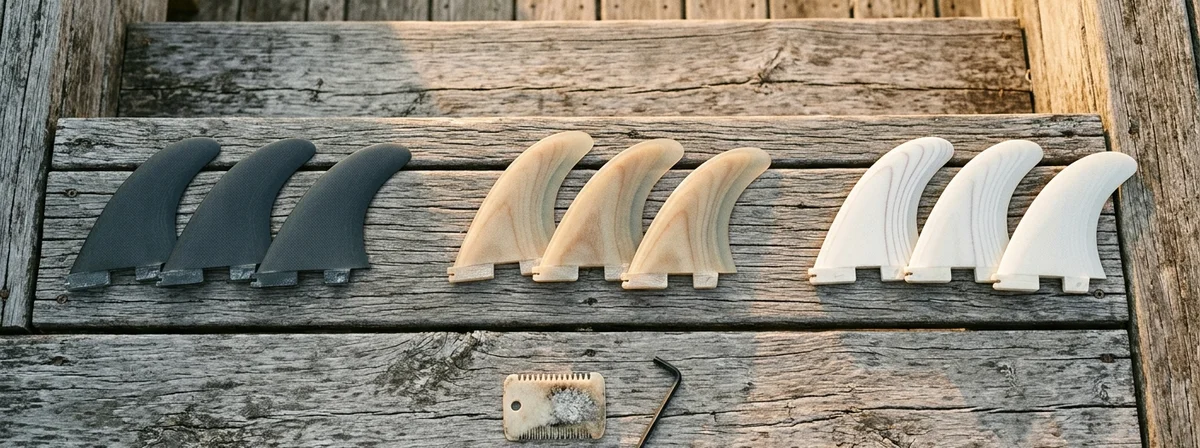
Set 1 (Summer): Small-Medium flex fins or a quad set. Something that generates speed in weak waves and stays loose. FCS II Performer in a smaller size or Futures F4 with a softer flex pattern both work well here. Budget around $40-70.
Set 2 (Winter): Medium or Medium-Large stiff fins in a thruster config. Something with drive, hold, and backbone. FCS II Reactor, Futures AM2, or anything with a stiffer carbon layup. Budget around $50-90.
Total investment: about $100-160 for a setup that covers the entire year. That's less than a wetsuit and it'll make a bigger difference in how your board feels session to session.
What About the In-Between?
Shoulder seasons exist. Fall gets weird. Spring can swing from two feet to eight feet in a single week.
For those transitional periods, pick whichever set matches the dominant conditions. Trending toward summer slop? Run the flexy set.
First real winter swell hits? Swap to the stiff set.
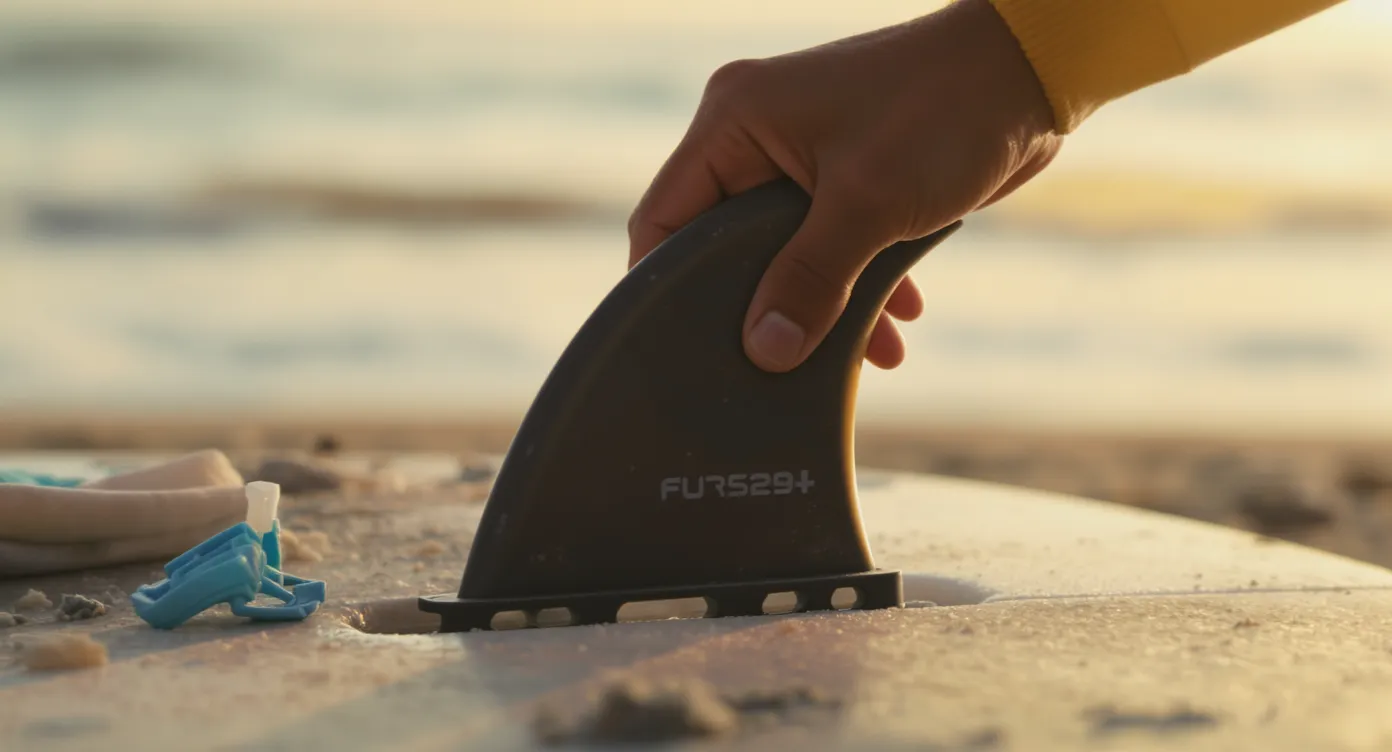
Don't overthink it. The swap takes 30 seconds with FCS II or Futures. You can literally do it in the parking lot.
The Mistake Most Surfers Make
Here's the thing. Most surfers buy fins once, mount them, and never think about it again. They'll obsess over board dimensions, wetsuit thickness, wax brands.
But fins? Set it and forget it.
That's backwards. Fins are the easiest, cheapest performance variable you can change. No shaping, no custom order, no six-week wait. Just pop them out, pop new ones in, and your board feels like a different machine.
Dane Reynolds has talked about swapping fins constantly, sometimes between sessions on the same day. The pros treat fins as a tuning tool, not a permanent fixture. You should too.
How Your Local Break Factors In
Seasonal fin swaps work differently depending on where you surf. Beach break surfers deal with more variation in wave quality, so the summer-to-winter contrast hits harder. Point break surfers might have more consistent wave shape but still see dramatic power changes between seasons.
Reef surfers in spots like Uluwatu or Pipeline face the biggest consequences. Winter power at a shallow reef demands every ounce of hold your fins can provide. Running your summer slop setup at a heavy reef break isn't just slow. It's sketchy.
Know your break. Know your season. Match your fins to both.
Key Takeaways
- Summer waves need smaller, more flexible fins that generate speed in weak surf
- Winter waves need stiffer, standard-size fins that provide hold and drive in powerful conditions
- A two-set fin quiver covering both seasons costs $100-160 and is the cheapest performance upgrade you can make
- Quad setups shine in summer's small waves; thrusters own winter's power surf
- Swapping fins takes 30 seconds and changes how your board feels more than any other quick adjustment
If you're not sure which specific fins match your board, weight, and local conditions for each season, plug your details into the recommender and let it sort through the options. Beats staring at a wall of fins at the surf shop.
Helpful Resources
Ready to Find Your Perfect Fins?
Use our expert fin recommender tool to get personalized suggestions based on your needs.
Try Fin Recommender