You paddle out at dawn, the lineup is empty, and you drop into your first wave of the day. Halfway through your bottom turn, you hear it. A high, thin whistle screaming out from somewhere under your board. You straighten out, kick out, and sit there wondering if your $90 fins just turned into a kettle.
You're not crazy. Whistling fins are real. And they're telling you something specific.
What's actually happening when fins whistle
Whistling isn't the fin being haunted. It's water flowing across a damaged or imperfect trailing edge and shedding vortices at a frequency your ear can hear. Same physics that makes a flute work. You've turned your fin into a tiny, badly-tuned wind instrument.
Most fins ship with a sharp, clean trailing edge. That edge is doing real work, releasing water cleanly off the back of the foil so the fin doesn't drag. When that edge gets nicked, chipped, or rolled over, the airflow (water flow, technically) starts oscillating instead of releasing smoothly. The oscillation is the whistle.
The pitch tells you something. Higher pitches usually mean a smaller damaged fin or a tinier chip. Lower hum-style noise often comes from a bigger fin or a longer stretch of damage.
Sometimes it's all three fins. Sometimes it's just one.
The thing that probably caused it
Reef. Rocks. Another surfer's rail at Lower Trestles when you didn't see them coming. Or the bottom of your truck bed when you tossed the board in without a fin sock.
You don't need a violent collision either. A few sandy paddle-outs over reef can micro-chip a trailing edge enough to start a whistle. Carbon fins are more prone to this than fiberglass because the carbon weave can fray on impact instead of just chipping cleanly.
Soft-top fins almost never whistle. The rubber edges absorb the energy that would otherwise turn into sound. If you're riding a foamie and hearing a whistle, check your leash, your zipper, anything else first. It's not the fins.
How to figure out which fin is the problem
This is the annoying part. You can't really hear which fin is whistling while you're surfing because the sound comes from under the water and bounces around. You'll know there's a whistle. You won't always know which fin owns it.
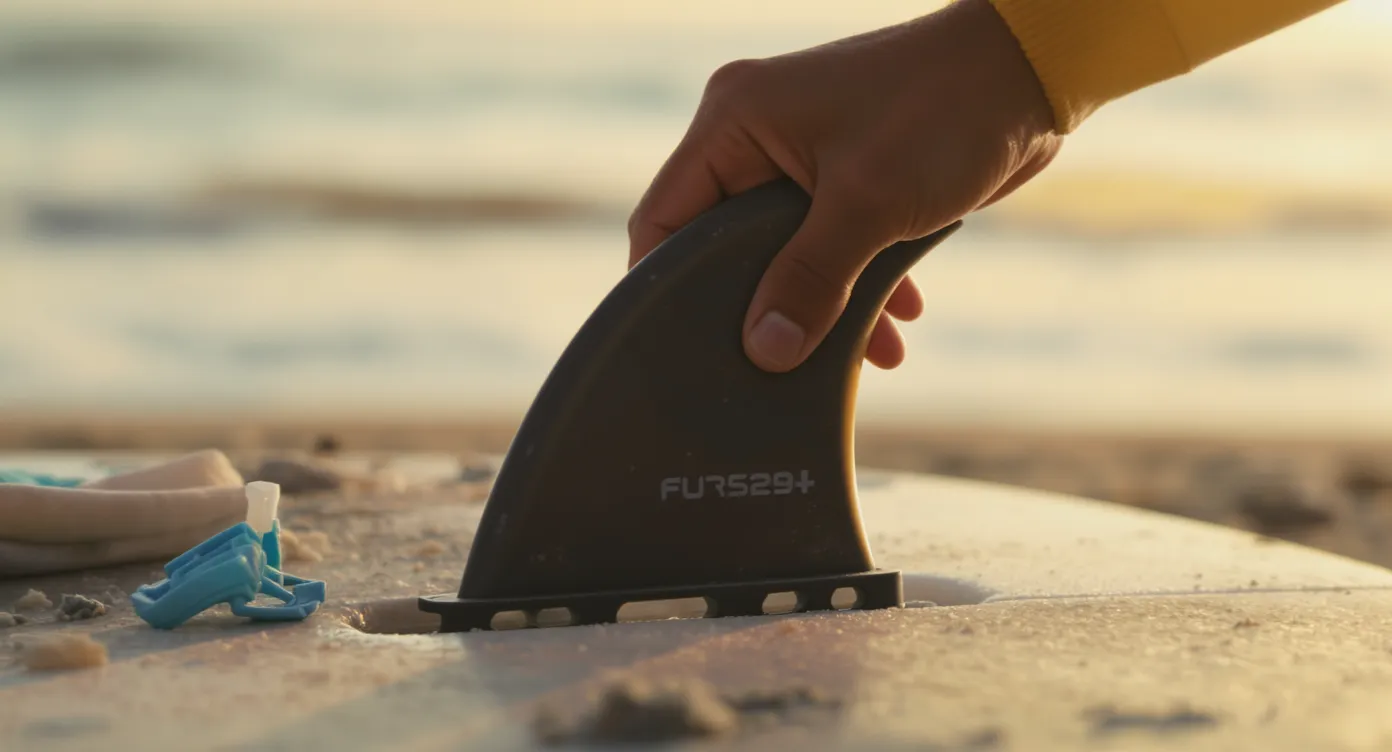
Easiest method: pull each fin out one at a time and inspect the trailing edge under good light. Run your fingernail down it. If you feel a catch, snag, or any roughness, that's almost certainly your culprit. A clean trailing edge feels like a knife edge that's been polished, smooth and consistent from base to tip.
Look for:
- Visible chips along the back edge, especially near the tip where damage clusters
- A trailing edge that looks frayed or fuzzy on carbon fins
- Rolled or rounded sections where the edge should be sharp
- Hairline cracks running into the fin body from the trailing edge inward
If two fins look chewed up, fix both. The whistle might be coming from either one, and you've got nothing to lose by smoothing them both out.
The actual fix takes about ten minutes
Get 400-grit sandpaper. That's the tool. You don't need fancy fin repair kits or epoxy or anything from a $200 surf maintenance set.
The goal is to restore the sharp trailing edge without rounding it off. People mess this up by sanding the edge into a soft curve, which kills the foil and makes the fin slow. You're not blunting the edge. You're cleaning it.
Lay the sandpaper flat on a table. Run the trailing edge across it at the same angle the foil already has, with light pressure. Five or six passes per side, and stop the second the damage is gone.
The edge should feel sharp again, like the rest of the fin. More sanding past that point just removes good material you can't get back.
If you've got a really gnarly chip that goes deep into the fin, sand it out, then check whether the fin still has its original outline. A trailing edge that's now noticeably shorter than the others in the set will affect how the board turns. At that point you're choosing between a slightly off-balance set or a new fin.
When sanding won't save it
Some fins are cooked. Hairline cracks running from the trailing edge into the body of the fin are a structural problem, not a sound problem. Those fins will eventually snap, usually mid-turn on the wave you cared most about that month.
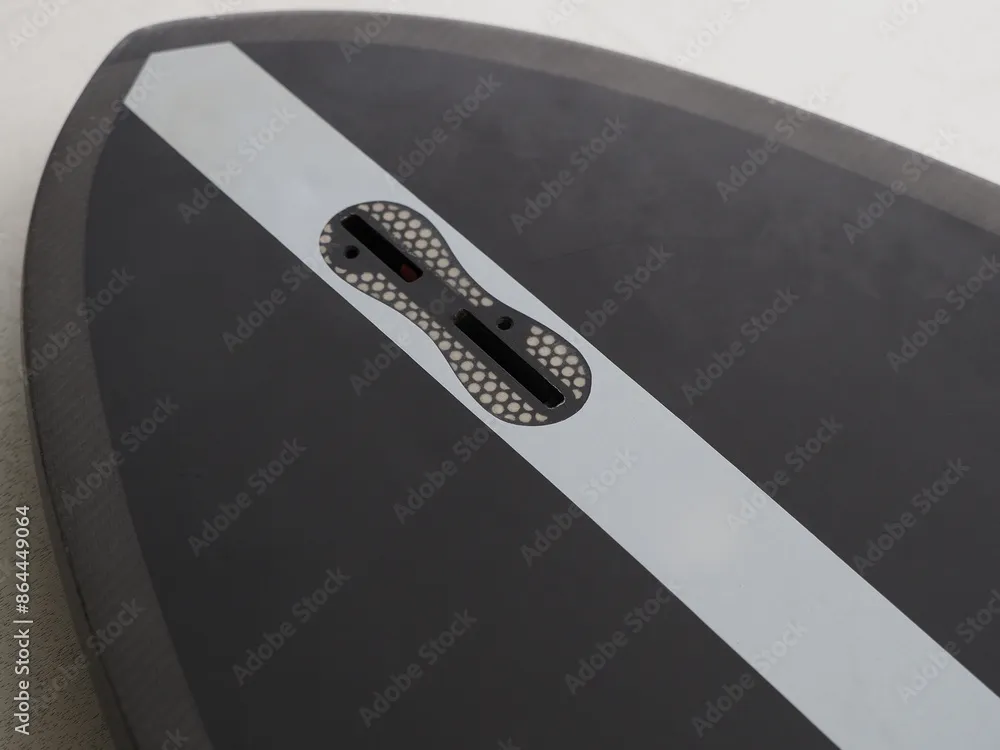
Same goes for tab damage at the base. If the fin is loose in the box and the tab edges are chewed, the fin is going to chatter at minimum and probably eject at some point. You can hear chatter as a different kind of noise, more of a buzz or rattle than a whistle. The fundamentals of how fin construction works explain why both of these are non-negotiable replacements.
Carbon fins with frayed weave at the trailing edge can sometimes be saved with a careful sand and a tiny dab of epoxy resin to seal the fibers. Honestly, by the time it's that bad, most surfers just buy new fins. The labor isn't worth the saved $80.
The session difference after a proper fix
You'll feel it immediately. The board hums quieter. Your bottom turns drive smoother because the water is releasing off that trailing edge clean instead of fighting itself. There's a specific sensation, like the board settled into the water properly for the first time in weeks.
You don't realize how much that micro-drag from a chipped edge was costing you until it's gone. The whistle was the obvious symptom. The real cost was the half-second of slow speed coming out of every turn that you'd been blaming on yourself.
Pros obsess over fin surface condition for a reason. You don't need to be that paranoid about it. But ten minutes with sandpaper between you and a quieter, faster board is the easiest performance gain you'll ever get.
Key Takeaways
- Whistling fins are caused by damage to the trailing edge that creates oscillating water flow, not a defect in the fin itself.
- Diagnose by running your fingernail down each trailing edge in good light, looking for catches, chips, or rolled sections.
- Fix with 400-grit sandpaper. Five or six light passes per side at the existing foil angle. Do not round the edge into a curve.
- Replace any fin with hairline cracks running into the body or chewed tab edges at the base. Those fail eventually.
- Soft-top fins essentially never whistle. If your foamie is making weird noises, look anywhere but the fins.
If your whistling fins are this trashed, it might be time for a fresh set anyway. Tell our recommender what you ride and where, and it'll point you at fins that match the board you're actually surfing instead of guessing through forum threads at 11 PM.
Helpful Resources
Ready to Find Your Perfect Fins?
Use our expert fin recommender tool to get personalized suggestions based on your needs.
Try Fin Recommender