You're standing in a surf shop, staring at a wall of fins. The ones you want cost $150. The ones you can afford look like they came out of a cereal box. You grab the cheap ones, paddle out, and spend the next two hours wondering why your board feels like it's dragging an anchor through wet cement.
Been there. Multiple times.
Here's the thing: the best budget surfboard fins have gotten genuinely good in the last few years. The gap between a $40 set and a $140 set isn't what it used to be. Factory technology trickled down, competition pushed quality up, and brands like Ho Stevie, Captain Fin, and even the big two (FCS and Futures) started offering real performance at entry-level prices.
But some cheap fins still absolutely suck. The trick is knowing which ones don't.
Why Cheap Fins Used to Be Terrible
Old-school budget fins had one material: injection-molded plastic. Thick, flexy, dead. They'd bend like wet cardboard on a bottom turn and had all the responsiveness of a park bench.
You could literally grab the tip and bend it to the base. That's not flex. That's structural failure.
Modern budget fins use fiberglass-reinforced polymers (FRP), honeycomb cores, and resin composites that mimic premium construction at a fraction of the cost. The manufacturing improvements are real.
Some of these fins come out of the same factories in Asia that produce fins for the big brands. Same molds. Different logo.
That said, material still matters. A $35 nylon fin won't match a $130 carbon composite. But it doesn't need to.
For 90% of recreational surfers in everyday conditions, the difference between "good enough" and "premium" shows up in maybe one turn per session. Maybe.
The Budget Fins Actually Worth Buying
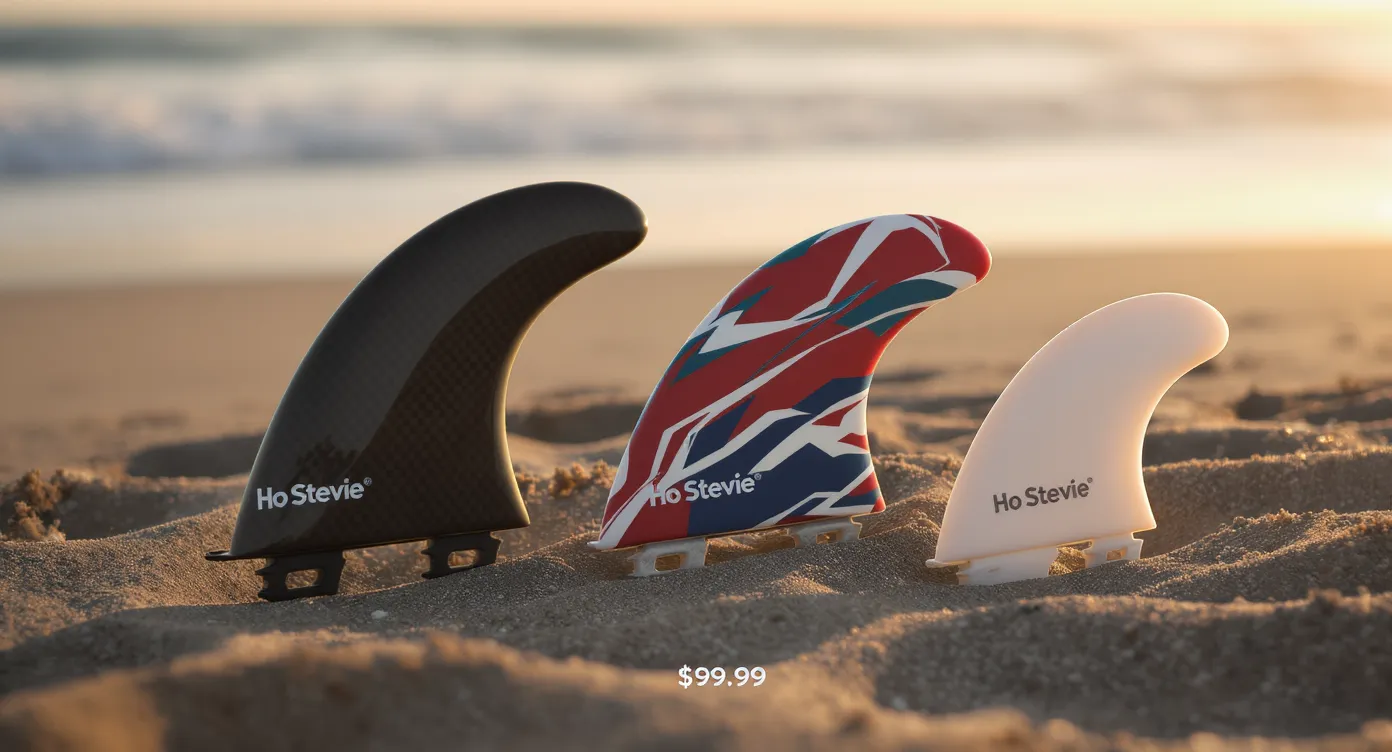
Ho Stevie Fiberglass Honeycomb Thrusters (~$50-65)
These are the fins that made surfers question why they were spending $140 on name-brand sets. Honeycomb core, fiberglass construction, available in both FCS and Futures compatible bases. They're light, they're responsive, and they hold through turns better than any fin in this price range has a right to.
I rode a set through an entire SoCal winter. Head-high Trestles, mushy Scripps, punchy Blacks on a south swell. They held. Not premium-fin held, but genuinely confident held.
You set your rail on a steep face and the fins grip without that sketchy wobble you get from pure nylon. There's a smoothness to the drive that feels like the board wants to go, not like you're fighting it.
The flex pattern runs slightly softer than an FCS Performer or Futures F6, which actually helps in smaller waves. More forgiveness on late turns, easier to generate speed when there's no push.
In overhead-plus surf, you'll start wishing for stiffer construction. But for your average session? These are the best value in surfing right now.
We did a full Ho Stevie review if you want the deep breakdown.
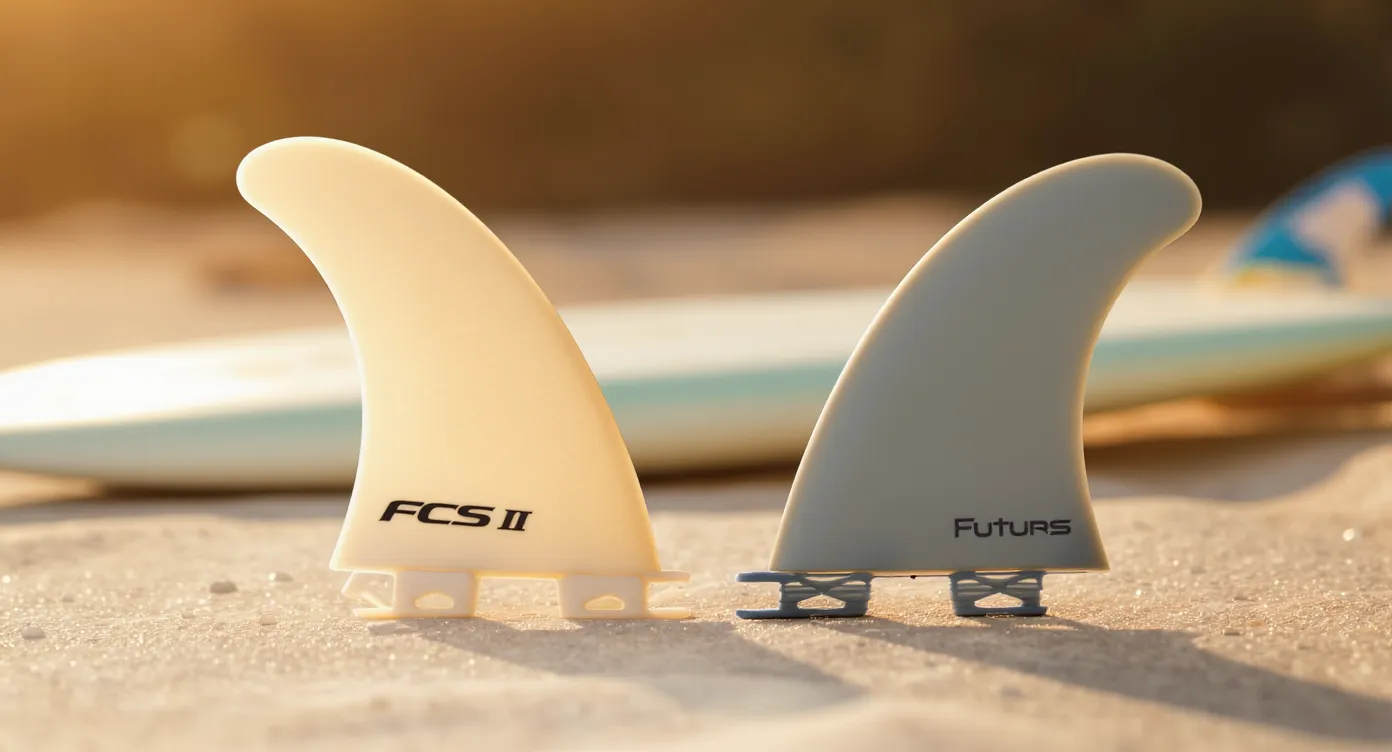
FCS II Performer Neo Glass Eco (~$70-80)
This is where FCS meets the budget market, and they did it right. The Performer template is their most versatile outline, basically the all-rounder that works in everything from knee-high mush to solid overhead.
The Neo Glass Eco construction uses 50% recycled glass and bio-resin. It's not marketing fluff. The material genuinely performs.
Neo Glass sits in a sweet spot between nylon and fiberglass. Stiffer than plastic, more forgiving than full composite. For intermediate surfers still figuring out their preferences, this is honestly the smartest first fin purchase.
The Performer template doesn't excel at any one thing, but it doesn't suck at anything either. It's the Honda Civic of fins. Boring praise, but it's accurate.
The click-in FCS II system means no fin key, no screws, no fumbling in the parking lot. Pop them in, go surf. That convenience alone is worth something when you're running late for dawn patrol.
Futures Thermotech Performance (~$45-55)
Futures' entry-level line gets overlooked because it says "Thermotech" and people assume that means plastic garbage. It's not. Thermotech is a fiberglass-infused composite that's legitimately stiffer and more responsive than basic nylon. The Performance template runs a balanced outline with moderate rake, similar to their mid-range offerings.
Where these shine is durability. You can beat the hell out of Thermotech fins, bounce them off rocks, drag them through sand, and they just keep going. The flex pattern is predictable and consistent. There's no dead spot or weird hinge point halfway up the fin.
The ride won't blow your mind. You won't feel that crisp snap-back you get from honeycomb or carbon. But the board goes where you point it, turns respond when you push, and the fins don't fold over in a solid bottom turn. For a properly sized set under $55, that's a win.
Captain Fin CF Series (~$55-75)
Captain Fin doesn't get enough credit. They've been making solid mid-range fins for years while FCS and Futures dominate the conversation. The CF series thrusters use a fiberglass layup that punches well above its price point. Clean flex patterns, good drive, and templates designed by actual surfers (including some pro models in this range).
The Tyler Warren twin + trailer set at $72 is a sleeper pick. Warren's templates have this buttery, flowing feel through turns that expensive twins struggle to match.
You drop into a waist-high wall, lean into a long bottom turn, and the fins carry you through with this effortless glide. Like the board decided to surf itself for a second. It's the kind of feeling that makes you wonder what you've been overpaying for.
Captain Fin makes both FCS and Futures compatible versions, so you're not locked into one system. Their quality control is consistent. No horror stories about fins snapping or tabs breaking off.
DORSAL Fiberglass Thrusters (~$25-35)
The absolute bottom of the "still functional" barrel. DORSAL fins are the Amazon special. Fiberglass reinforced, basic templates, available for both box systems.
Are they good? No. Are they fine? Honestly, yes.
If you need a backup set for travel, a spare for your beater board, or you're a beginner who's still figuring out which way is forward on a surfboard, DORSAL does the job. They flex more than you'd want in anything powerful. The foil is thicker than premium fins. The finish isn't pretty.
But for thirty bucks, you get fins that won't snap, fit the boxes properly, and let you surf. When you're on a Bali trip and your good fins are at the bottom of Padang Padang, DORSAL is the emergency kit that actually works.
What You're Actually Giving Up
Let's be honest about what budget fins can't do.
Construction precision. Premium fins have tighter tolerances, more consistent flex patterns, and better foil shapes. You can feel this as cleaner response through turns. Budget fins are "good enough" but they're not laser-dialed.
Advanced materials. Carbon fiber, PC Carbon, NetPlus recycled materials, and aerospace-grade composites aren't available under $80. These materials offer specific flex-to-stiffness ratios that budget construction can't replicate. If you're an advanced surfer who can feel the difference between a 4.35" and 4.39" base, budget fins will frustrate you.
Weight. Cheaper materials are heavier. Heavier fins mean slower response times.
The difference is measured in grams, but accumulated over a session, it shows up as slightly more effort to change direction. If you're surfing two hours of pumping overhead waves, you'll feel it in your legs.
For intermediate surfers in everyday waves? These tradeoffs are basically invisible. Save the $80 difference and put it toward a better understanding of fin design so you know what to upgrade to when you're ready.
The "When to Actually Spend More" Test
Not everyone should buy budget fins. Here's a quick gut check.
Stick with budget if: you surf less than three times a week, you're still working on basic turns, your home break is mostly small and forgiving, or you're building a quiver on a budget and need multiple fin configurations without going broke.
Upgrade to premium if: you surf four-plus times a week, you're consistently doing top-to-bottom turns and airs, your local waves are powerful and demanding, or you've ridden budget fins long enough to know exactly what you want more of (speed, hold, release).
The surfers who benefit most from premium fins are the ones who've already maxed out what budget fins can give them. If you're still learning to pump down the line, a $150 set of Futures Blackstix won't teach you faster. Your $50 Ho Stevies will do that just fine.
Key Takeaways
- Budget fins in 2026 are legitimately good thanks to fiberglass-reinforced construction and trickle-down factory tech. The "cheap fins are trash" era is over.
- Ho Stevie Honeycomb thrusters ($50-65) offer the best overall value, with performance that embarrasses fins twice the price in everyday conditions.
- FCS II Performer Neo Glass Eco ($70-80) is the smartest first fin purchase for intermediate surfers who want one reliable set.
- Save premium fin money for when you can actually feel the difference. For most surfers, that point comes later than the marketing suggests.
- Always match your fin size to your weight before stressing about construction or brand. A properly sized budget fin outperforms a wrong-sized premium fin every time.
Still not sure which budget set fits your board and your waves? Run your details through the recommender. It'll match you to the right template and size in about 60 seconds, no sponsored opinions involved.
Helpful Resources
Ready to Find Your Perfect Fins?
Use our expert fin recommender tool to get personalized suggestions based on your needs.
Try Fin Recommender