You're scrolling Craigslist on a Tuesday night. Some guy in Encinitas is dumping a full thruster set of FCS II Performers for forty bucks. Same set retails for one fifty. Photo's blurry. Description says "barely used." You stare at the screen and try to figure out if you're about to score or about to inherit someone else's broken garbage.
Used fins are one of the last bargains left in surfing. A good pair holds resale value like a Honda. A trashed pair gets dumped on Craigslist with the word "barely" doing fifty pounds of lifting.
The trick is knowing which is which before you hand over cash. Buying used fins can save you 50 to 70 percent off retail if you know what to look for. It can also leave you with a set that fails the first time you set a hard rail.
Why Used Fins Are Actually Worth Considering
Fin templates don't change that fast. The FCS II Performer that came out in 2018 is structurally the same as the one selling today. A 2020 Futures Vector hasn't been made obsolete by some new model. Fins age slower than boards, slower than wetsuits, slower than basically anything else in your quiver.
The other thing: most surfers buy fins, ride them three sessions, decide they prefer their old set, and stick the new pair in a closet. Six months later they're posting them online with the original packaging still there. That set is functionally new.
Real talk: the used fin market is full of impulse buys someone regretted. You're the cleanup crew. Bring cash.
The Five Things That Actually Matter
Forget cosmetics. Sun fade, scuffed leading edges, scratched logos, none of that affects how a fin rides. Here's what does.
1. Hairline Cracks at the Base
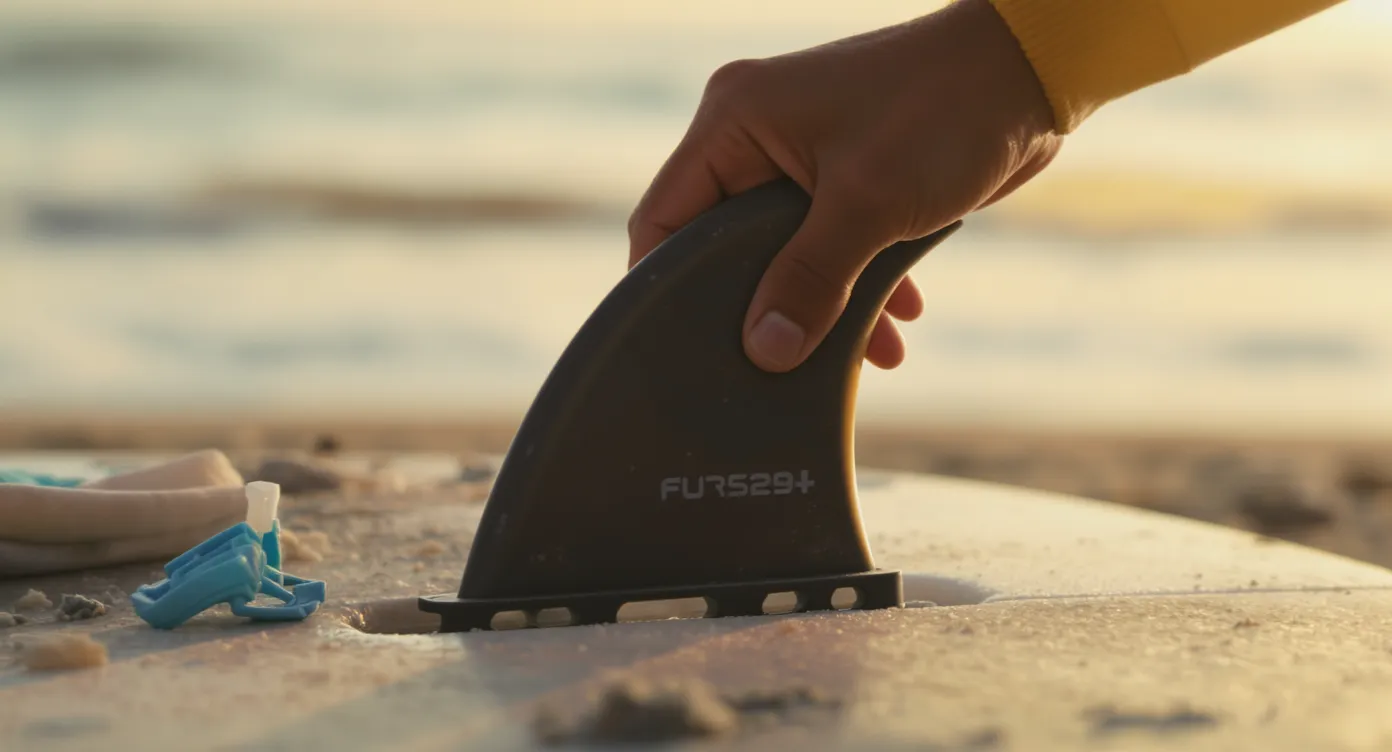
Pick the fin up. Hold it against a window or a flashlight. Look at the base where the tab meets the foil, especially the front edge. If you see a faint crack running parallel to the base, walk away. That fin is going to snap mid-bottom-turn and you'll find out at the worst possible moment.
Hairlines happen when someone hits a rock, a reef, or another board hard. The fin survives the impact but the resin around the tab has fractured. It rides fine for ten more sessions, then explodes on the eleventh. Not worth the gamble.
2. Oxidation on the Tabs
FCS II and Futures fins have metal pins or plates at the base. If those are corroded, pitted, or covered in white salt crust, the fin probably lived in a wet board bag for months. The corrosion itself isn't a dealbreaker. The signal it sends about how the fins were stored is.
Anyone leaving fins in a wet bag for half a year was not babying the rest of their gear. Inspect harder.
3. Box Wear and Wallowed Tabs
Look at the tabs themselves. Are they sharp-edged and snug, or are the corners rounded off? Tabs that have been jammed into ten different boards by someone who can't be bothered to align them properly will be visibly worn. A worn tab in a slightly worn box equals fin chatter, weird vibration, and that high-pitched whistle nobody wants on a clean point break.
4. Delamination on the Foil
Run your fingernail across the foil from base to tip. You're feeling for soft spots, bubbles, or zones where the surface gives slightly under pressure. Carbon fiber and fiberglass fins can delaminate after years in the sun, especially if they were stored in a hot car. A delaminated fin flexes wrong and feels mushy in the water.
Most delamination is invisible. The fingernail test catches it.
5. The Right Number of Fins
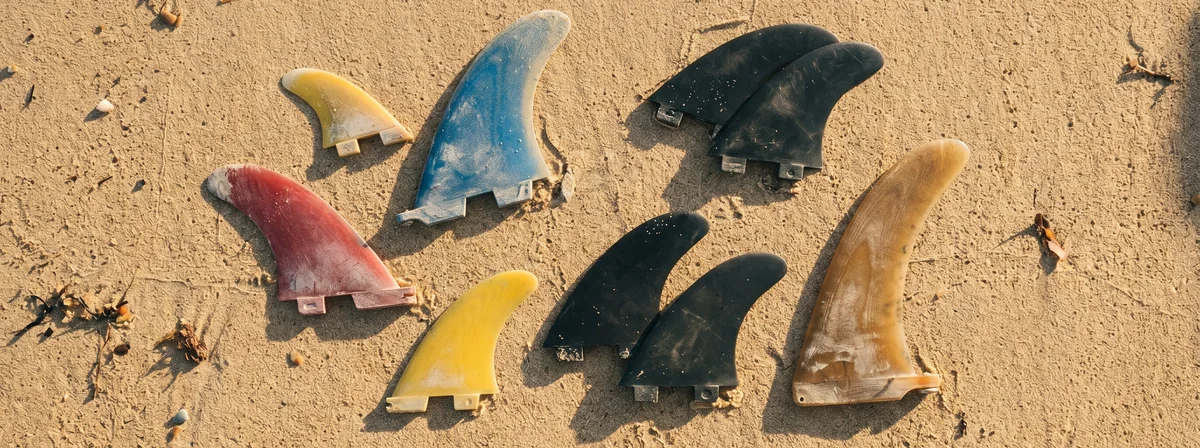
Sounds dumb, but check. People sell "thruster sets" that are actually two side fins and a center fin from a different template. People sell "quad sets" with three fins because one got lost. People sell "twin sets" that are mismatched sizes from different brands. Count the fins. Verify they match. If the listing says "set of three," ask for a photo of all three side by side before you drive across town.
Where to Actually Shop
Not all used fin marketplaces are created equal. Here's the hierarchy from best to sketchiest.
Local Surf Shop Trade-In Bins
The best option, full stop. Real shops vet their used inventory. They reject obviously broken fins, they know the templates, and they'll let you handle the goods. Expect to pay 50 to 60 percent of retail. Worth every penny because the shop is putting their reputation behind the sale.
Bird's, Hansen's, Rockin' Fig, any decent shop in San Diego or the OC. Walk in. Ask. The trade-in section is usually a small basket near the wax.
Swap Meets and Surf Flea Markets
The Pacific Coast Highway swap meets, the spring surf swaps that pop up in coastal towns, garage sales by retiring surfers. These are gold mines if you're patient. Prices range from "free with a board" to "what is this guy thinking." You're inspecting in person, which means you can run the five tests above before any money changes hands.
Bring a small flashlight. Bring cash in small bills. Don't bring your significant other unless they're also a surfer, because a flea market hunt for fins looks deeply unhinged from the outside.
Craigslist and Facebook Marketplace
Decent if you're local and can meet up to inspect. Sketchy if you're shipping or paying without seeing the fins. Always meet in person. Always inspect. Never wire money to someone for fins you've only seen in photos.
Craigslist has more old surfers offloading quivers. Facebook Marketplace skews younger and tends to have more "barely used, just need cash" listings, which is code for "I bought these last month and don't like them."
eBay
Last resort. The good listings get sniped. The bad listings have terrible photos and vague descriptions. Shipping eats into the savings. Returns are a fight. If you're going to use eBay, look for sellers with 100 plus feedback who specialize in surf gear, not random one-off listings.
Surfboard Forums and Subreddits
r/surfing has a weekly trade thread. Swaylocks has a buy-sell-trade subforum. These communities self-police pretty hard, so scams are rare, but inventory turns over slowly. Set up a saved search and check weekly.
What Things Should Cost
Quick benchmarks for what counts as a real deal versus someone testing the market with hopeful pricing.
Plastic fins (Performance Core, Tri-Quad sets): $20 to $40 used. New retail is $50 to $80, so anything over $45 is a stretch.
Fiberglass fins (FCS II Performer Glass Flex, Futures Vector): $40 to $70 used. New retail runs $90 to $130. Used pricing tracks roughly half of retail.
Carbon and high-end composites (FCS II Carver PC Carbon, Futures Pyzel Carbon): $60 to $110 used. New retail is $150 to $200. The premium materials hold value better, so deals here are smaller in percentage terms but bigger in absolute dollars.
Pro-model and limited drops (signature Mick Fanning, Slater, Toledo sets): wildly variable. Some sell at retail or above to collectors. Some sell for cheap because the buyer realized they don't surf like Filipe Toledo. Know what you're paying for.
The Boxes Question
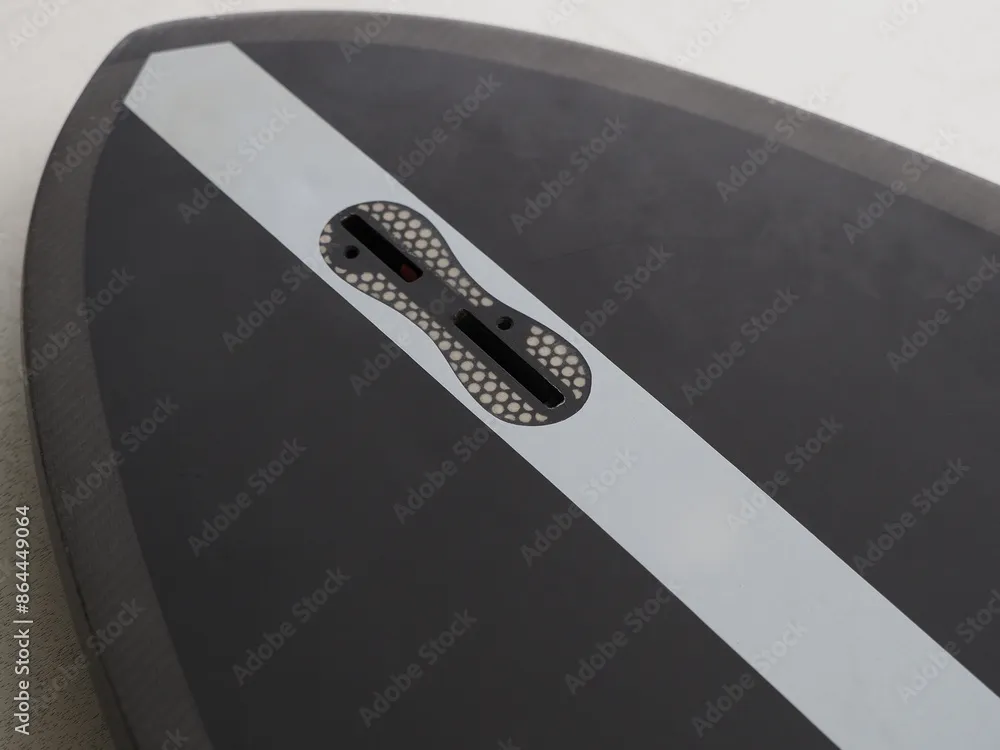
Here's a thing nobody mentions enough: used fins from a friend who rides Futures aren't going to fit your FCS II board. The systems are not compatible. Check the box before you buy. If you're ready to commit to one or the other, we wrote a full breakdown of switching between FCS and Futures that covers the conversion options.
If the seller can't tell you which system the fins fit, that's a yellow flag. They probably don't know what they have, which means they probably can't answer questions about how the fins were stored or used either.
One More Thing About Old Fins
Fins from the early 2000s and earlier ride differently than modern templates. Not worse necessarily, just different. Older glass-on era fins, vintage Fins Unlimited stuff, the original FCS plug fins, these can be incredible scores for collectors and longboarders. They can also feel completely alien if you've only ridden modern templates.
If you're buying anything older than about 2010, do some research on the template before you commit. Some old fins are gold. Some are gold for a museum, not for a Saturday session at your home break.
Key Takeaways
- Used fins are one of the best deals in surfing because templates barely change and most sellers are dumping impulse buys.
- Cosmetics don't matter. Hairline cracks at the base, tab oxidation, box wear, and foil delamination do.
- Local surf shop trade-in bins are the safest source. Swap meets are the most fun. Craigslist is fine if you inspect in person.
- Expect to pay roughly half of new retail for fiberglass and carbon sets. Anything closer to full retail isn't a deal.
- Always confirm the box system (FCS, FCS II, Futures) matches your boards before you hand over cash.
Once you've sorted out which used set fits your boards and conditions, the harder question is whether the template even matches your surfing. That's where having a clear picture of what you actually need helps. Tell our fin recommender what you ride and where, and it'll narrow the options before you hit the swap meet.
Helpful Resources
Ready to Find Your Perfect Fins?
Use our expert fin recommender tool to get personalized suggestions based on your needs.
Try Fin Recommender