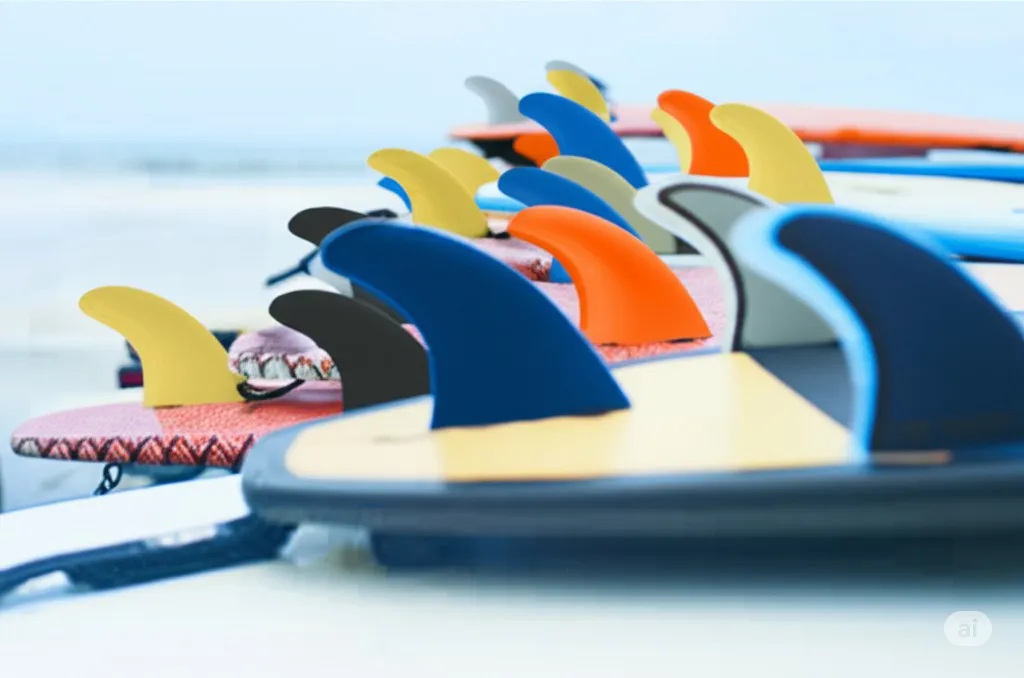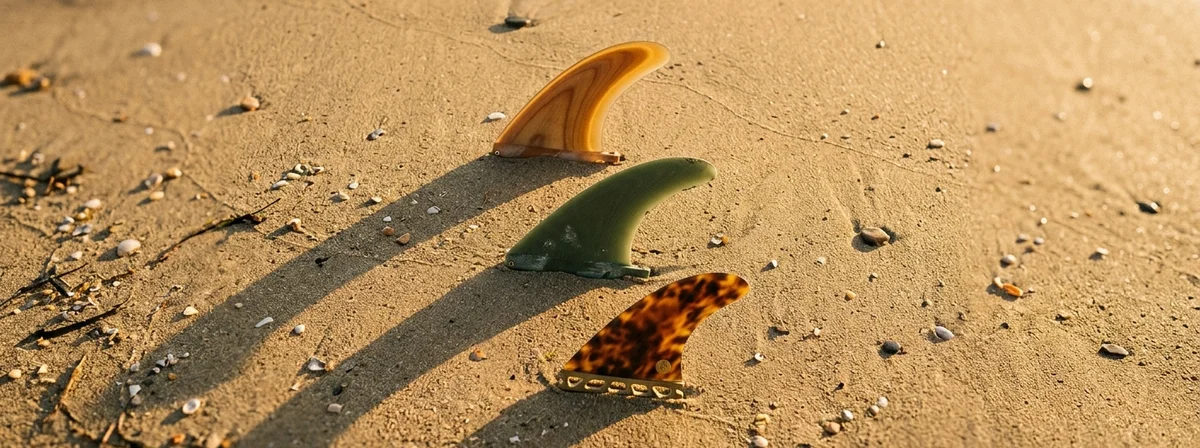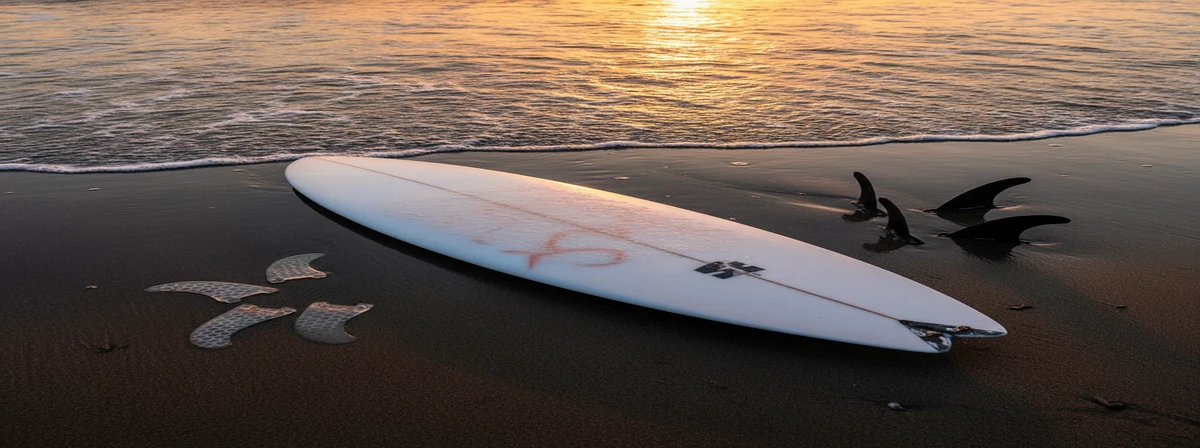
Kelly Slater is on the Gold Coast with six unmarked boards from six of the best shapers alive. He doesn't know who made what. But he does know this: every board has five-fin boxes. And he's going to ride each one as a quad AND a thruster to see how the fins change the ride.
That's the setup for Stab in the Dark X. And it might be the most useful fin experiment ever filmed.
Why SITD X Is a Fin Nerd's Dream
Stab in the Dark is surfing's blind taste test. Top shapers build boards for a mystery surfer, strip all branding, and let the shapes speak for themselves. SITD X was the 10th edition, starring the GOAT himself. Six shapers: past winners Jon Pyzel, Darren Handley (DHD), Britt Merrick (Channel Islands), Matt Biolos (...Lost), Marcio Zouvi (Sharp Eye), plus Dan Mann as a wildcard that Slater insisted on including.
But here's what made this season different. Every board had to be set up so Kelly could ride it as a quad or a thruster. Same board, different fin configurations, different waves across the Gold Coast. 174 waves. 14.5 hours in the water. Ten different breaks.
Kelly didn't just test shapes. He tested how each shape responded to different fin setups in different conditions. Some boards came alive as quads. Others felt better as thrusters. A few worked both ways. That's real data about how fins transform a board's character, straight from the most experienced surfer on the planet.
The Dan Mann Controversy
Dan Mann won. Kelly crowned his own shaper, the guy behind Firewire/Slater Designs, as the best of the six. Stab's headline: "The Most Controversial Stab in the Dark Ever."
The criticism is obvious. Mann has spent years building boards for Slater. He knows Kelly's stance width, his rocker preferences, how much tail he likes. The other shapers were guessing from a height and weight spec. Mann was working from a decade of intimate knowledge.
Britt Merrick made it personal. He went public about Slater leaving Channel Islands for Firewire years ago, saying their relationship dropped to "1% of what it used to be." Kelly said he'd called Al Merrick before the move, and Al told him: "Do what's best for you."
The drama is real. But the fin insights are more useful.
What Kelly's Switching Tells Us About Quad vs Thruster
When the same surfer rides the same board in both configurations across different conditions, you get a clean comparison. That's exactly what SITD X delivered. And the differences aren't subtle.
A board set up as a thruster has a pivot point. That center fin acts like an anchor. You set your rail on a bottom turn and the board rotates around it, tight and controlled. You throw spray off the lip because the tail stays locked. In steep, powerful waves, a thruster lets you surf in the pocket with precision.
Switch that same board to a quad and everything changes. The center fin drag disappears. You drop in and the board accelerates, no pumping needed. Sections that would stall a thruster become speed sections. The board flows down the line like it's been freed from something. On a mushy Gold Coast morning, that speed advantage is the difference between making sections and bogging.
But quads trade control for speed. When Kelly went vertical off the lip on a quad setup, the tail wanted to slide instead of snap. There's no center fin to pivot around. That loose, drifty feeling is a feature in small surf and a liability in punchy waves. Watching him switch back and forth on the same board made this tradeoff crystal clear.
Same Board, Two Different Animals
This is the part that matters for the rest of us. Each shaper designed one board. But Kelly effectively got to ride twelve, because a board in thruster mode and the same board in quad mode are not the same surfboard.
A shape built with drive and low rocker, the kind of board Dan Mann is known for, might feel alive and fast as a quad but stiff as a thruster. A more traditional high-performance shape designed for the pocket might shine with three fins but feel disconnected as a quad. The fin configuration doesn't just tweak the ride. It defines it.
If you've got a board with five-fin boxes and you've only ever run it as a thruster, you're riding half a board. Slater proved that across 174 waves on national television. The man didn't test shapes. He tested systems.
When to Go Quad vs Thruster
You don't need a Gold Coast film crew to figure this out. The pattern Kelly's switching revealed is one any surfer can apply.
Go Quad
- Small, gutless waves (1-3 ft). No center fin means no drag. You generate speed where a thruster bogs. It's like someone turned off the parking brake.
- Fast barrels. Down-the-line tubes need momentum, not pivots. Two fins on the wave face beats one.
- Fish and hybrid shapes. Wide tails and swallow tails pair naturally with four fins. The extra fin area keeps the tail in check.
Go Thruster
- Powerful surf with push (4 ft+). The center fin is your pivot point for tight, vertical turns.
- Pocket surfing. Steep sections and critical lips need that center fin anchor. Without it, you're fighting the board.
- Competition. Judges reward vertical surfing. Thrusters let you go vertical. Simple math.
Not sure what your local breaks call for? The FinFinder recommender matches your setup to your conditions in about a minute.
The Bigger Point
Mann won SITD X because he knows Slater better than any other shaper. But the real takeaway isn't about who won. It's that Kelly treated every board as two boards by switching fin setups. He read the conditions and matched the configuration to the wave. Small and mushy? Quads. Punchy and hollow? Thrusters.
Most of us ride the same three fins every session regardless of conditions. Slater's approach in SITD X is a reminder that the fins under your board are the single biggest performance variable you can change without buying new equipment. Five-fin boxes exist for a reason. Use them.
Key Takeaways
- Every board in SITD X was set up for both quad and thruster, and Kelly switched between them across different conditions
- The same board rides like two completely different surfboards depending on fin configuration
- Quads shine in small, gutless waves and fast barrels where speed matters most
- Thrusters win in powerful, steep surf where vertical turns and pocket control are critical
- If your board has five-fin boxes and you only run thrusters, you're leaving half the performance on the beach
Helpful Resources
Ready to Find Your Perfect Fins?
Use our expert fin recommender tool to get personalized suggestions based on your needs.
Try Fin Recommender