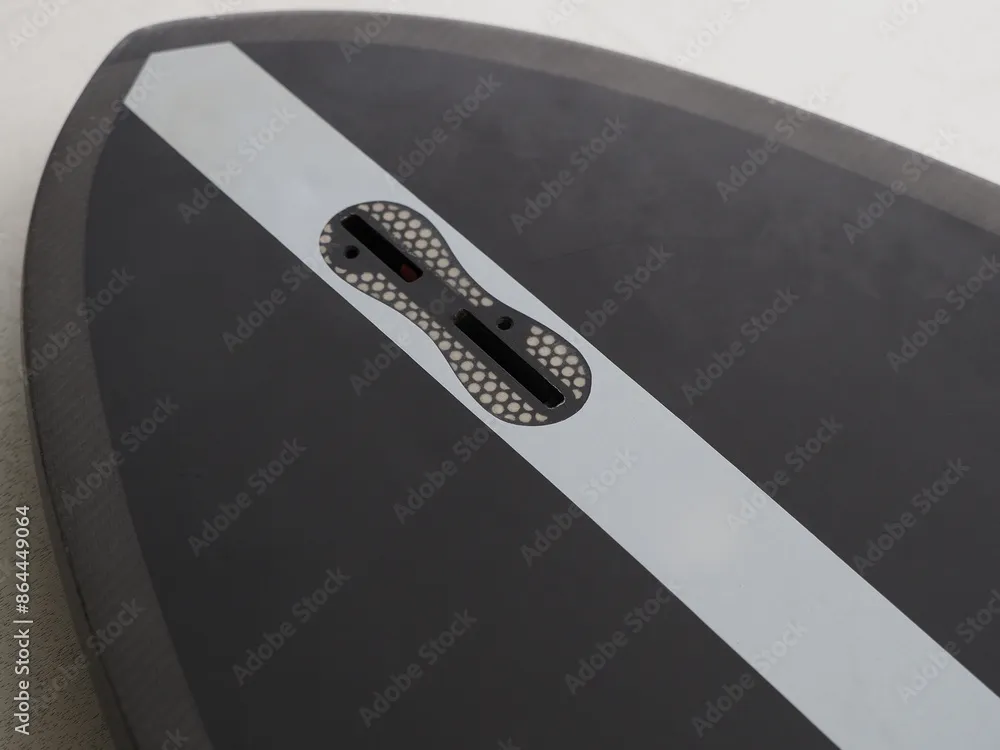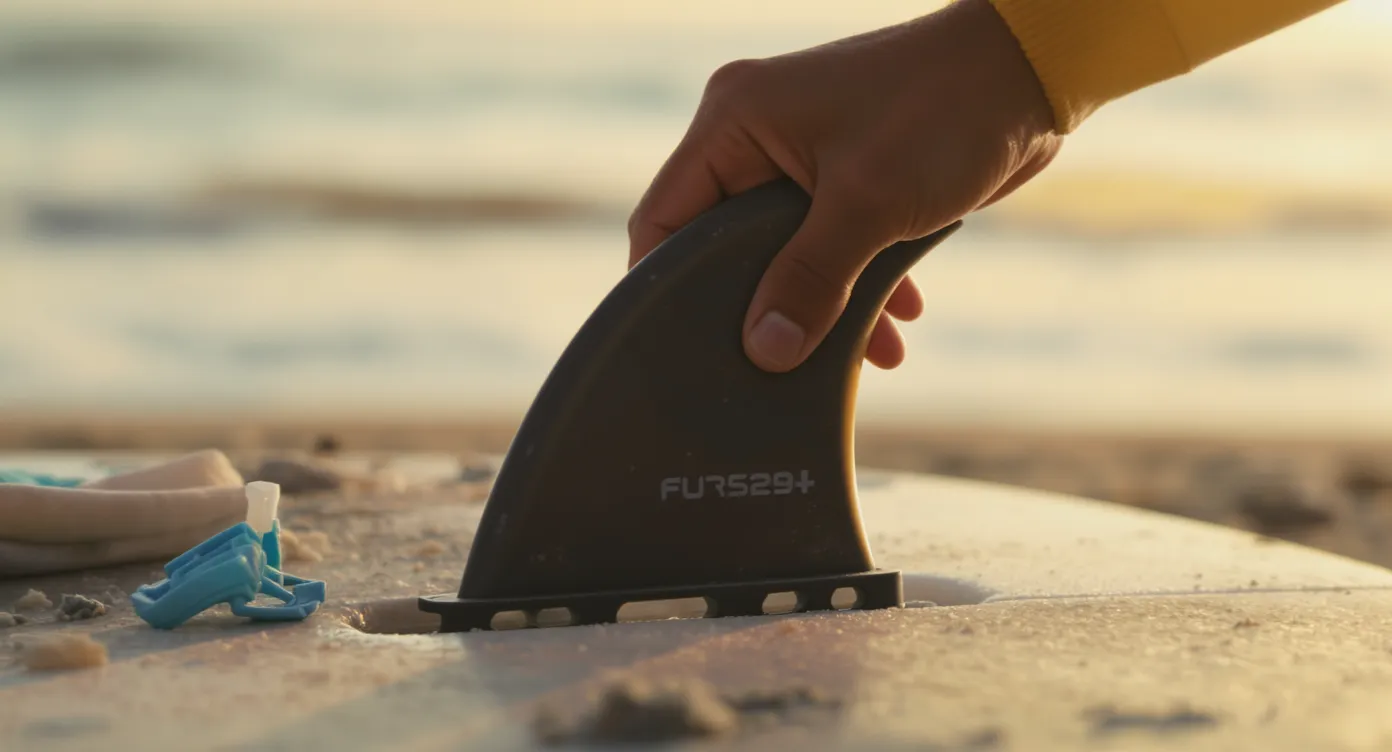
You're mid-bottom turn at a chunky south swell, the rail's buried, and you feel it. That low hum right under your front foot. Sometimes it's a ghost. Sometimes it rattles your teeth.
It's called fin chatter. Most surfers spend years not knowing what causes it or whether it's a problem worth solving.
Where That Hum Comes From
Short version: your fins are vibrating in the water. That vibration travels up the fin plug and into the board, turning your deck into a tiny speaker.
Longer version: when water flows past a fin at speed, it doesn't move in a smooth line. It separates, swirls, reattaches, and occasionally cavitates. That turbulence pushes the fin around at a frequency your body picks up. Stiff fins hum less. Flexy tips in fast water hum more.
It's physics, not a defect. Fine trailing edge plus load plus speed equals chatter. Every time.
The Three Kinds of Hum
Not all chatter is the same. You'll run into three patterns.
1. The healthy hum
Quiet, steady, shows up during hard bottom turns or when you're trimming at speed. This is your fins telling you they're loaded. Surf equivalent of tire noise on a good road. Nothing to fix.
2. The rattle
Higher pitched, sharper, kicks in suddenly. Usually a loose fin screw. Check your hardware before you check your soul.
3. The ghost hum
That intermittent drone you can't trace. Sometimes it's a hairline crack in a fiberglass fin. Sometimes it's saltwater trapped in the box. Sometimes the fin tab isn't sitting flat against the base. Pull the fin and inspect.
Why Flexy Fins Chatter More
Carbon tips feel sharp and responsive, but they also chatter more at speed than stiffer fiberglass. When a fin flexes under load, the tip deflects, loses contact with clean water for a microsecond, snaps back, and starts a micro-oscillation. Think of a flag in wind. Same idea, way smaller scale.
This is why Futures offers multiple flex cores in the Alpha line. Softer cores feel alive but buzz more. Stiffer Techflex cores stay quieter but feel glued to the board.
If you've ever swapped from glass to carbon mid-session and thought, "wait, why is my board humming now?", that's the reason.
How It Feels Through Your Feet
Good chatter feels like confidence. You drop in at Lowers on a head-high runner, set the rail deep, and a low-frequency hum comes up through the deck pad. Your front foot picks it up before your ears do. The fins are doing work without screaming about it.
Bad chatter feels like a warning. You're dropping in fast and suddenly the board shakes. Not rolls. Shakes. Like the tail just caught an electric sander for a quarter second. That's the sign something's wrong. Loose hardware, a cracked fin, or a fin installed crooked.
The difference isn't subtle once you know what to listen for.
When to Worry and When to Shrug
Most chatter is noise, not news. Surfers on Pipeline quads hear it. Kelly Slater's boards hum on occasion. The vibration itself doesn't damage the board or the fin.
Worry when:
- The sound is new and sharp
- It happens on straight-line sections, not just turns
- You feel it through your back foot even at low speed
- There's a click inside the box when you press the fin sideways on the sand
Pull the fin. Check the screw torque. Inspect the tab for stress cracks. Leave it in a dry spot overnight if water's trapped inside the plug. Ninety percent of problematic chatter fixes itself with a screwdriver and thirty seconds of attention.
The Cavitation Question
Cavitation is a separate animal. It's when water pressure around the fin drops low enough for vapor bubbles to form, then collapse. You hear about it on jet ski impellers and ship propellers. On a surfboard? Possible but rare.
True cavitation needs very high water velocity across a specific part of the foil. Tow surfers see it at Jaws or Nazare. Your home break at knee-to-waist high? Almost never happens. What you're feeling is flex-induced vibration, not vapor collapse.
Want to nerd out on why fin shape matters? Our breakdown of fin foil cross-sections walks through the geometry that controls all of this.
Diagnosing Chatter in Thirty Seconds
Pull the board out of the car. Don't even wax it yet. Grab the fin by the tip and wiggle side to side. Firm, not aggressive.
If you feel any lateral play at the base, your screw needs a quarter turn. If the fin flexes smoothly but the tab stays rock solid against the box, you're good. If you hear a tiny click coming from inside the plug, something's broken in the box and you need to get it to a repair guy before your next paddle out.
Next, flip the board and look at the box itself. Hairline cracks around the base are more common than surfers think, especially on boards that have taken a reef hit. A cracked box lets the fin shift a fraction of a millimeter under load. That micro-movement is where sharp chatter comes from.
One more check: run your thumb along the trailing edge of the fin. It should be sharp but not nicked. Dings on the trailing edge create turbulence in exactly the wrong place and can turn a healthy hum into a buzz. A quick pass with fine sandpaper usually fixes it. Our guide on fin maintenance has the full checklist if you want to get obsessive about it.
The Setup Effect
Thrusters chatter differently than quads. The center fin sits in disrupted water coming off the board's rail and the two side fins. That turbulence creates a different vibration signature, often sharper and slightly higher in pitch.
Quads skip the center fin entirely. The two back fins run in cleaner water and usually hum at a lower, steadier frequency. Twins are the quietest of the bunch. Most twin templates are stiffer glass with higher aspect ratios and they're doing less work than a small trailer fin spinning around in turbulent wake.
If you're curious how setup choice changes everything from chatter to drive, the fin setups guide covers the real differences without the marketing spin.
Ride a Firewire Dominator in a 2+1 with a longer center fin and a pair of side bites, and you'll often hear a dual-frequency hum. The center fin runs at one tone and the sides buzz at another. Surfers who switch back to a single fin setup on the same board frequently notice the noise simplify down to one clean note. Same board, same wave. Different vibration story.
Key Takeaways
- Most fin chatter is normal. A low, steady hum under load means your fins are loaded and working.
- Sharp, sudden, or unpredictable chatter usually means loose hardware or a cracked fin. Pull and inspect.
- Flexy carbon tips chatter more than stiff fiberglass. That's flex doing its job, not a defect.
- Quads and twins tend to run quieter than thrusters because the back fins sit in cleaner water.
- True cavitation on a surfboard fin is rare. Almost all chatter is flex-induced vibration.
Tune into the hum next session. It's not a bug in your setup. It's feedback from a system that's working. And if you're trying to pair the right fins to your board and your wave without guessing, the FinFinder recommender will do the math in about a minute.
Helpful Resources
Ready to Find Your Perfect Fins?
Use our expert fin recommender tool to get personalized suggestions based on your needs.
Try Fin Recommender