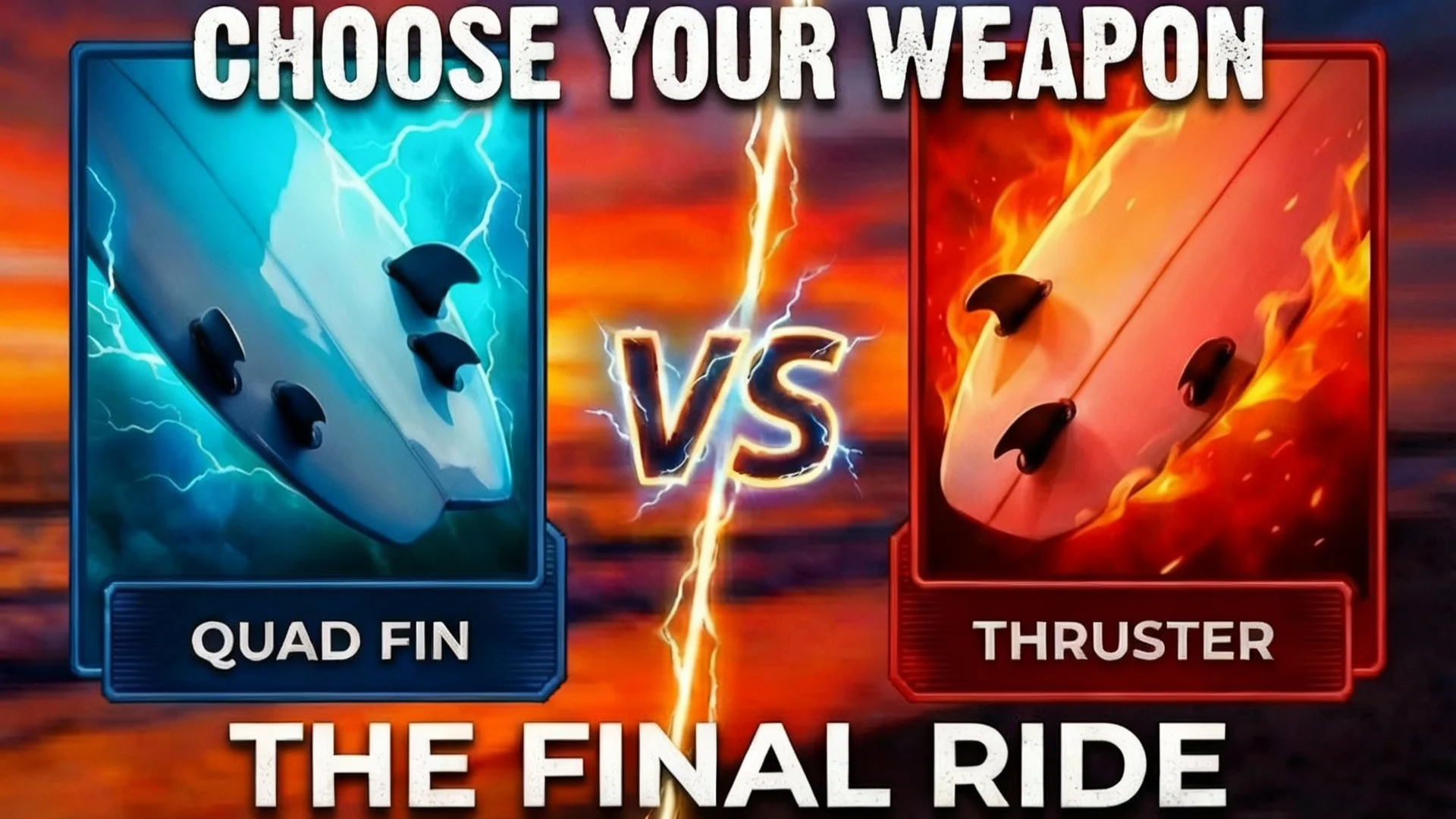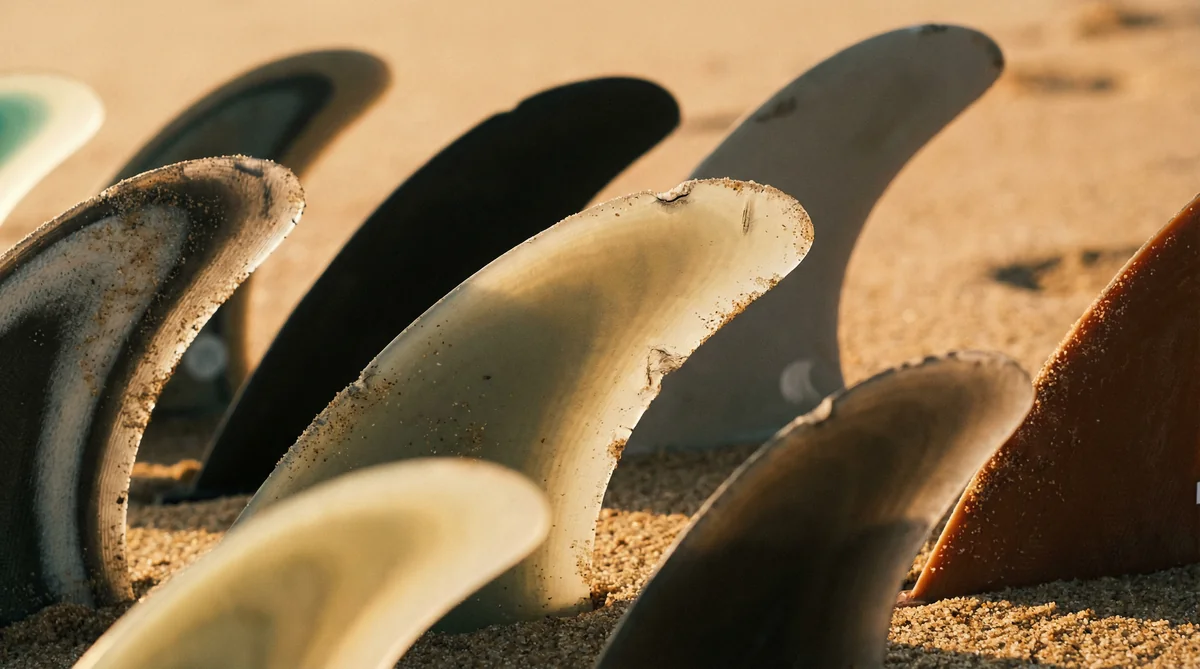
You're standing in the surf shop, two fin sets in your hands. Same size. Same rake. Same material.
The only difference on the spec sheet is "inside foil" versus "flat foil."
One costs $20 more. You grab the cheaper ones and walk out. Bad move.
That fin foil shape, the cross-sectional profile from leading edge to trailing edge, is doing more work than you think. It's the reason one set of fins feels fast and alive in mushy surf while another set with identical measurements feels dead. And almost nobody talks about it.
What Fin Foil Actually Is
Grab one of your fins and look at it from the tip, straight down the leading edge. See how one side curves out more than the other? That's the foil.
It works exactly like an airplane wing. Water hits the leading edge, splits around both sides, and the shape of those two surfaces determines how much lift, drag, and turbulence the fin creates.
Every other fin spec, rake, cant, toe-in, base length, those control where your fin pushes the water. Foil controls how efficiently it pushes. It's the difference between a fin that generates speed for free and one that makes you work for every inch of momentum.
The Four Foil Types (And What Each One Does to Your Surfing)
Flat Foil: The Reliable All-Rounder
One side flat, one side convex. This is what you'll find on most side fins in thruster and quad sets from FCS and Futures. The flat inside face gives you a predictable blend of drive, pivot, and hold.
It's the Toyota Tacoma of foil shapes. Does everything well, nothing spectacularly.
You set your rail on a bottom turn and the fin responds exactly how you'd expect. No surprises, no weird lift, no sudden release. The board tracks where you point it with a steady, confident grip that doesn't fight you through transitions.
Best for: everyday surfing, all-around performance, surfers who want consistency across conditions.
Inside Foil (Concave): The Speed Machine
Convex outside, concave inside. This is where things get interesting. That concave scoops water along the inside face, creating a low-pressure zone that generates lift.
Same principle as the bottom concaves on your surfboard. More speed with less effort, especially in weak waves.
You drop into a waist-high mushburger and instead of pumping three times just to make the section, the board glides. There's this effortless forward momentum that feels like someone turned off the friction. It's borderline cheating in small surf.
The tradeoff: inside foils generate more drag at high speeds. In overhead, punchy waves where you're already carrying plenty of momentum, that extra lift becomes extra resistance. The fin wants to keep accelerating when you need it to hold and bite.
Best for: small to medium waves, surfers who prioritize speed generation, fish and groveler setups.
50/50 (Symmetrical) Foil: The Center Fin Standard
Both sides convex, perfectly mirrored. You'll find this on virtually every center fin in a thruster set. Makes sense when you think about it. Your center fin needs to work identically whether you're turning frontside or backside, so it can't favor one direction.
The symmetrical shape creates equal water flow on both sides, which translates to stability and neutral handling. It's the anchor of your thruster setup. Not flashy, but take it away and everything falls apart.
Best for: center fins in thruster setups, single fins, any fin position that needs directional neutrality.
80/20 Foil: The Hybrid Nobody Talks About
More curve on the outside, slight curve on the inside. Think of it as a flat foil that went to grad school. You get smoother rail-to-rail transitions than a flat foil because the slight inside curve reduces the abrupt pressure change when you switch edges. Water flows across the transition instead of slamming into a flat wall.
The 80/20 shows up most often on rear fins in quad sets, where you want that blend of center-fin stability and side-fin responsiveness. It's also becoming popular on twin fin keels where shapers want a more refined feel than traditional flat-foiled keels provide.
Best for: quad rear fins, refined twin setups, surfers chasing smooth transitions without sacrificing drive.
Why Foil Matters More Than You Think
Here's the thing most fin guides skip. You can obsess over rake and cant angles all day, but those specs assume the water is flowing efficiently over the fin in the first place. Foil is what determines that efficiency.
A poorly matched foil with perfect rake is like putting racing tires on a car with bad aerodynamics. You've optimized the wrong variable.
Rob Machado's signature keel fins use an inside foil for a reason. He wanted that effortless glide in everyday California surf, not maximum hold in 8-foot Sunset. The foil choice came before the template, before the rake, before anything else. That's how important it is to the overall feel.
Matching Foil to Your Setup
Thrusters
Side fins: flat foil (standard) or inside foil (if you want more speed in weaker waves). Center fin: always 50/50. Don't get creative with your center fin foil unless you're shaping custom glass-ons and know exactly what you're doing.
Quads
Front fins: flat or inside foil, same logic as thruster sides. Rear fins: 80/20 works beautifully here. The slightly curved inside face smooths out the transition between your front and rear fins, reducing that "disconnected" feel some quad riders complain about.
Twins
Traditional keels run flat foil for that classic, drivey twin feel. Modern performance twins increasingly use inside foil for added speed. If your twin fish feels sluggish in anything under chest-high, swapping to inside-foiled fins might fix it without changing anything else about your fin setup.
Single Fins
50/50 foil, period. A single fin needs to work equally in both directions. Some longboard center fins use a slightly asymmetric foil for noseriding (more lift = more trim stability), but for 99% of single fin riders, symmetrical is the move.
The Conditions Factor
Foil choice isn't just about your board. It's about where you surf.
If your home break is a punchy beach break that delivers overhead peaks regularly, flat foil gives you the control and hold you need when things get critical. The predictability matters when the wave is throwing you into the flats.
If you're surfing Southern California summer slop more often than not, inside foil fins will squeeze speed out of waves that have no business being surfable. That extra lift turns a three-pump closeout into an actual ride. Sessions at San Onofre or Tourmaline go from frustrating to genuinely fun.
Traveling to Indo for hollow reef passes? Go flat. You'll have more speed than you know what to do with from the wave itself. What you need is bite and control, and flat foil delivers that without the extra lift fighting you in the barrel.
Key Takeaways
- Fin foil is the cross-sectional shape from leading to trailing edge, and it controls how efficiently water flows over your fin
- Flat foil is the all-rounder: predictable drive, hold, and pivot across conditions
- Inside (concave) foil generates lift and speed in weak waves but adds drag in powerful surf
- 50/50 symmetrical foil belongs on center fins and single fins where directional neutrality matters
- 80/20 foil smooths rail-to-rail transitions, ideal for quad rears and refined twin setups
- Match your foil to your typical conditions first, then fine-tune rake, cant, and size around it
If you're trying to figure out which foil type pairs best with your board and your local break, run your setup through the recommender. It factors in the stuff most surfers forget to consider.
Helpful Resources
Ready to Find Your Perfect Fins?
Use our expert fin recommender tool to get personalized suggestions based on your needs.
Try Fin Recommender