You've been riding a thruster for years. Everyone does. It's the default, the safe choice, the setup that came with your board. But then you're out in those mushy 2-footers, pumping like crazy, watching your buddy glide past you on a quad like they've got a motor strapped to their tail.
What gives?
The thruster versus quad debate isn't about which is "better." It's about understanding when each setup actually works and when you're just handicapping yourself. Let's cut through the noise and talk about what really happens when you swap that center fin for a fourth side bite.
The Real Difference: It's Physics, Not Hype
Here's what actually changes when you go from three fins to four.
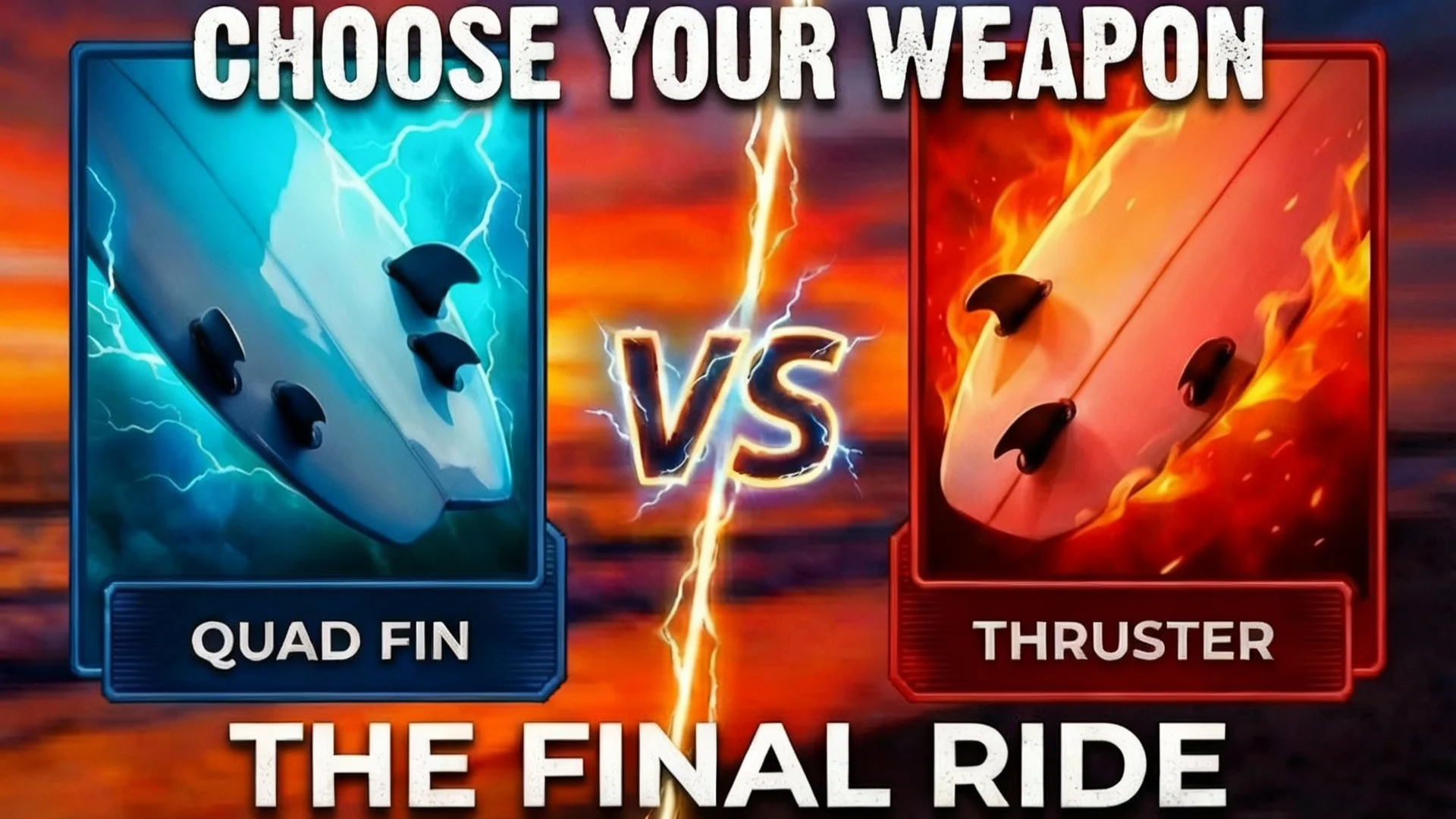
Thruster setup: Two side fins plus a center fin. That center fin acts like a pivot point, giving you tight, vertical turns and stability when you're carving hard. But it also creates drag. Every time you're going straight down the line, that center fin is basically a brake.
Quad setup: Four fins, no center. Two larger front fins, two smaller rear fins. Without that center fin drag, you get immediate speed gains and a looser, skatier feel. When you're on rail, two fins are engaged instead of one, giving you serious hold in critical sections.
The difference isn't subtle. Quads generate 15-20% more down-the-line speed in small to medium waves compared to thrusters. That's not marketing talk, that's measurable.
When Quads Actually Destroy Thrusters
Small, Mushy Waves (1-3ft)
This is where quads shine and thrusters struggle. When the waves have zero push, that center fin is killing your momentum. Quads let you generate speed from nothing, carrying velocity through flat sections that would stall a thruster.
If you're surfing Southern California summer slop or East Coast wind swell, a quad setup will transform your session. You'll actually be able to do maneuvers instead of just trying to stay ahead of the whitewater.
Fast, Down-the-Line Barrels
Hollow, racing waves are quad territory. The reduced drag means you can hold a high line without pumping, and when you're deep in the tube, having two fins locked into the face (instead of one center fin) gives you more stability and control.
This is why you see guys riding quads at spots like Desert Point or Skeleton Bay, long, fast barrels where maintaining speed is everything.
Drawn-Out Carves and Speed Runs
Quads excel at long, flowing turns. If your style is more about big, sweeping arcs and generating speed through carves rather than snappy, vertical hacks, quads will feel way more natural.
When Thrusters Still Win
Let's be real: thrusters dominate competitive surfing for a reason.
Powerful, Vertical Waves (4-8ft+)
When the waves have actual power, that center fin becomes your best friend. It gives you a pivot point for tight, critical turns and stops you from sliding out when you're throwing spray off the lip.
Thrusters provide more control in steep, punchy waves where precision matters more than raw speed.
High-Performance, Snappy Surfing
If you're trying to get vertical, do quick direction changes, or surf in a compact pocket, thrusters are superior. The center fin lets you pivot on a dime, while quads require more commitment to turns and feel looser (some would say "drifty") when you're trying to snap.
Learning a New Board
Thrusters are more predictable and forgiving. If you're trying out a new shape or still dialing in your technique, the stability of a thruster setup will give you a better baseline to work from.
The Setup Details That Actually Matter
Slapping any four fins in the boxes and calling it a quad is like putting cheap gas in a Ferrari. Here's what separates good quad setups from sketchy ones.
Fin Placement and Toe-In
Front fins should be 8-10 inches apart, with 5-10 degrees of toe-in (angled toward the nose). Rear fins sit 4-6 inches back, slightly offset inward for stability.
Too much toe-in creates drag. Too little and you lose control in turns. Most quality fin sets from Futures or FCS have this dialed, but if you're installing glass-ons or using adjustable boxes, get it measured properly.
Fin Size: Don't Overthink It
General rule: go one size smaller than your thruster fins. If you ride Medium thrusters, try Small-Medium quads. The four-fin configuration already gives you more surface area, so oversizing will make the board feel stiff and hard to turn.
Front fins: 4.0-5.5 inches tall with moderate rake (30-40 degrees) for drive
Rear fins: 3.5-4.5 inches tall, more upright for release and looseness
Need help with sizing? Check out our Complete Fin Sizing Guide.
Popular Quad Fin Models Worth Your Money
- Machado Seaside Quad Set: Smooth, stylish speed for everyday surfing. Great for fish and hybrid shapes.
- Futures Controller Honeycomb: Maximum drive and control. Best for powerful surfers who want to rail hard.
- FCS II Harley Ingleby Quad: Versatile across conditions, delivers speed and hold in various wave types.
- Captain Fin Quad Sets: Budget-friendly options that still perform well in small to medium surf.
The honest truth? Any quality quad set from a reputable brand will work. The bigger factor is matching the fin template to your board's tail shape and your surfing style.
Common Quad Setup Mistakes (Don't Be That Guy)
Mixing Random Fins
Don't throw two Futures fronts with two FCS rears and call it a quad. Mismatched fins create imbalance and weird handling. Buy matched sets.
Going Too Big
Bigger fins don't mean better performance. Oversized quads feel sluggish and hard to pivot. Start with recommended sizes and adjust from there.
Wrong Board Shape
Quads work best on boards with pulled-in tails (swallow, diamond, or rounded pins). If you have a super wide, blocky tail, you'll need larger fins to prevent sliding out, and even then it might feel sketchy.
Not Testing in the Right Conditions
Don't judge a quad setup in 6-foot overhead surf if it's designed for 2-foot mush. Match your fins to the waves you actually surf most often.
The Hybrid Approach: Five-Fin Boxes
Most modern shortboards come with five fin boxes, letting you swap between thruster and quad depending on conditions. This is the smart move.
Run thrusters when the waves are powerful and you want precision. Switch to quads when it's small, mushy, or you're chasing barrels. Having both options means you're never stuck with the wrong setup for the day.
Yeah, it costs more upfront to buy both fin sets. But would you rather spend $150 on fins or keep getting frustrated in waves where your setup is working against you?
Learn more about different fin configurations in our Complete Fin Setups Guide.
Stop Overthinking Your Fin Setup
Here's the reality: you can read every article, watch every video, and analyze every pro's setup, but until you actually test quads versus thrusters in YOUR waves, on YOUR board, with YOUR style, it's all just theory.
The challenge? Remembering what actually worked. You try quads in 3-foot wind slop, then again in 5-foot point break, then your buddy lets you borrow his Machados, and suddenly you can't remember which setup felt best in which conditions.
This is where having a system that tracks what works makes all the difference. Instead of guessing or relying on vague memories from three months ago, you have actual data on what performs.
Get Personalized Fin Recommendations That Actually Work
FinFinder.ai takes the guesswork out of quad versus thruster decisions. Answer a few questions about your board, weight, waves, and surfing style, and get instant recommendations tailored to YOUR setup, not some generic "best fins" list.
Here's what makes it different:
- AI-powered matching: Based on your actual surfing profile, not marketing hype
- Condition-specific guidance: Get different recommendations for small versus big days
- Track what works: Log your sessions and see which setups perform best in different waves
- No BS, just results: Direct answers in 60 seconds, not another hour of research
Get your personalized fin recommendation now and stop guessing which setup to run.
Key Takeaways
- Quads dominate in small, mushy waves where generating speed is the main challenge
- Thrusters win in powerful, vertical surf where control and precision matter more than raw speed
- Quads provide 15-20% more down-the-line speed due to reduced drag from no center fin
- Fin placement and sizing matter more than brand names for quad performance
- Five-fin boxes give you the flexibility to run the right setup for the conditions
- Testing both setups in your local waves is the only way to know what works for you
FAQ: Quad Fins vs Thruster
Are quad fins faster than thrusters?
Yes, in most conditions. Quads generate 15-20% more down-the-line speed because there's no center fin creating drag. This advantage is most noticeable in small to medium waves where maintaining momentum is critical.
Can you use quad fins on any surfboard?
Only if your board has four fin boxes. Most modern shortboards and fish have five boxes (letting you run thruster or quad), but older boards might only have three. Quad setups work best on boards with pulled-in tails like swallows, diamonds, or rounded pins.
Do pro surfers use quad fins?
Yes, but situationally. Most pros ride thrusters in competition because the waves are typically powerful and vertical surfing scores higher. But many switch to quads for small wave freesurfing, barrel hunting, or specific breaks where speed and drive matter more than tight turns.
What size quad fins should I get?
Go one size smaller than your thruster fins. If you ride Medium thrusters, try Small-Medium quads. The four-fin setup provides more total surface area, so oversizing makes the board feel stiff and unresponsive.
Are Futures or FCS quad fins better?
Both systems work well. The choice depends on what fin boxes your board has. Futures uses a single-tab system with a longer base, while FCS uses dual tabs. Performance-wise, quality fins from either brand will deliver similar results. Focus on fin template and size rather than box system.
Can I mix thruster and quad fins?
No. Don't mix random fins from different sets. Quad fins are designed as matched sets with specific front and rear fin templates. Using mismatched fins creates imbalance and unpredictable handling.
When should I switch from thruster to quad?
Switch to quads when waves are small and mushy (1-3ft), when you're surfing fast, down-the-line barrels, or when you want a looser, skatier feel. Stick with thrusters when waves are powerful and vertical (4ft+), when you need tight, snappy turns, or when learning a new board.
Ready to dial in your perfect fin setup? Use FinFinder.ai to get personalized recommendations based on your board, weight, waves, and style. Stop guessing, start surfing better.
Helpful Resources
Ready to Find Your Perfect Fins?
Use our expert fin recommender tool to get personalized suggestions based on your needs.
Try Fin Recommender