You've been riding the same fin setup for how long now? A year? Two years? They work fine, sure. But fine isn't the point. Deep down, you know something's missing. Maybe you're getting worked in choppy conditions where you could be carving. Maybe bigger days feel sketchy. Maybe small waves just feel sluggish no matter what you do.
Here's the thing about fin choice: most surfers stumble into their setup by accident. You borrowed a friend's board, the fins came with it, and boom, now you're married to those fins for 18 months. That's not dialing in. That's just accepting what came in the box.
2026 is different. This is the year to actually build a proper quiver. Not five boards. I'm talking about understanding which fin combinations work for which conditions, and then actually having them ready to go.
Why Your Current Fins Might Actually Be Holding You Back
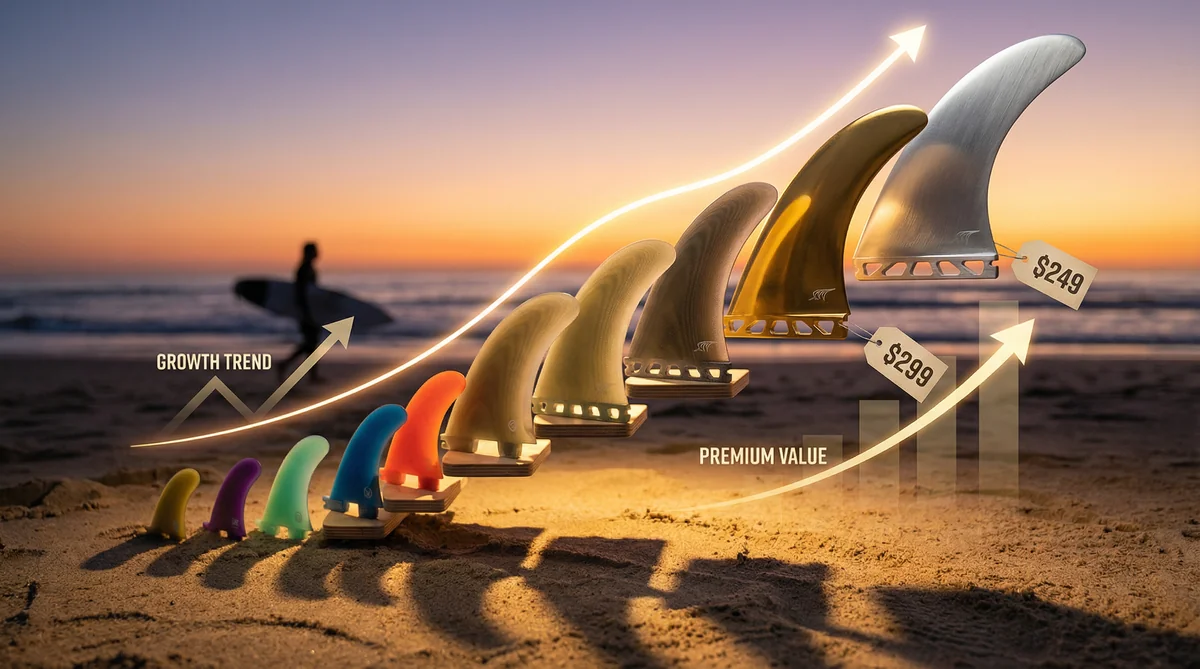
Let's be real. Your fins probably work. But working and optimized are two different things. The global surfboard fin market is sitting at solid growth right now, with brands pushing real innovation in materials, designs, and customization options. All that matters because the fin choices in 2026 are legit better than they were five years ago.
The problem is most surfers have no system for figuring out what actually works. You paddle out with your thruster, maybe you get a good day, and you think "great, these are my fins now." But that good day might've been the swell angle, or the tide, or the fact that you were fresh that morning. You don't really know if the fins made it happen.
This is where a real quiver makes sense. Not for the flex of having multiple boards. For the science. For actually tracking what works.
The Three-Setup Foundation: Building Your Real Quiver
You don't need 47 fin combinations. You don't need to overcomplicate it. You need three solid ones that cover the conditions you actually surf.
Setup 1: Your Daily Driver Thruster
Thrusters are thrusters for a reason. They work. A solid thruster setup gives you speed, hold, and pivot all in one package. You're not looking for anything exotic here. FCS II or Futures boxes, stable foil, moderate base. This is your 70% setup. If you surf 100 sessions a year, 70 of them are going to be thruster days.
The key: match the size to your board and your style. Too big and you're fighting the fins. Too small and you're sliding around like you're on a boogie board. A good thruster is responsive but stable. Think control without stiffness.
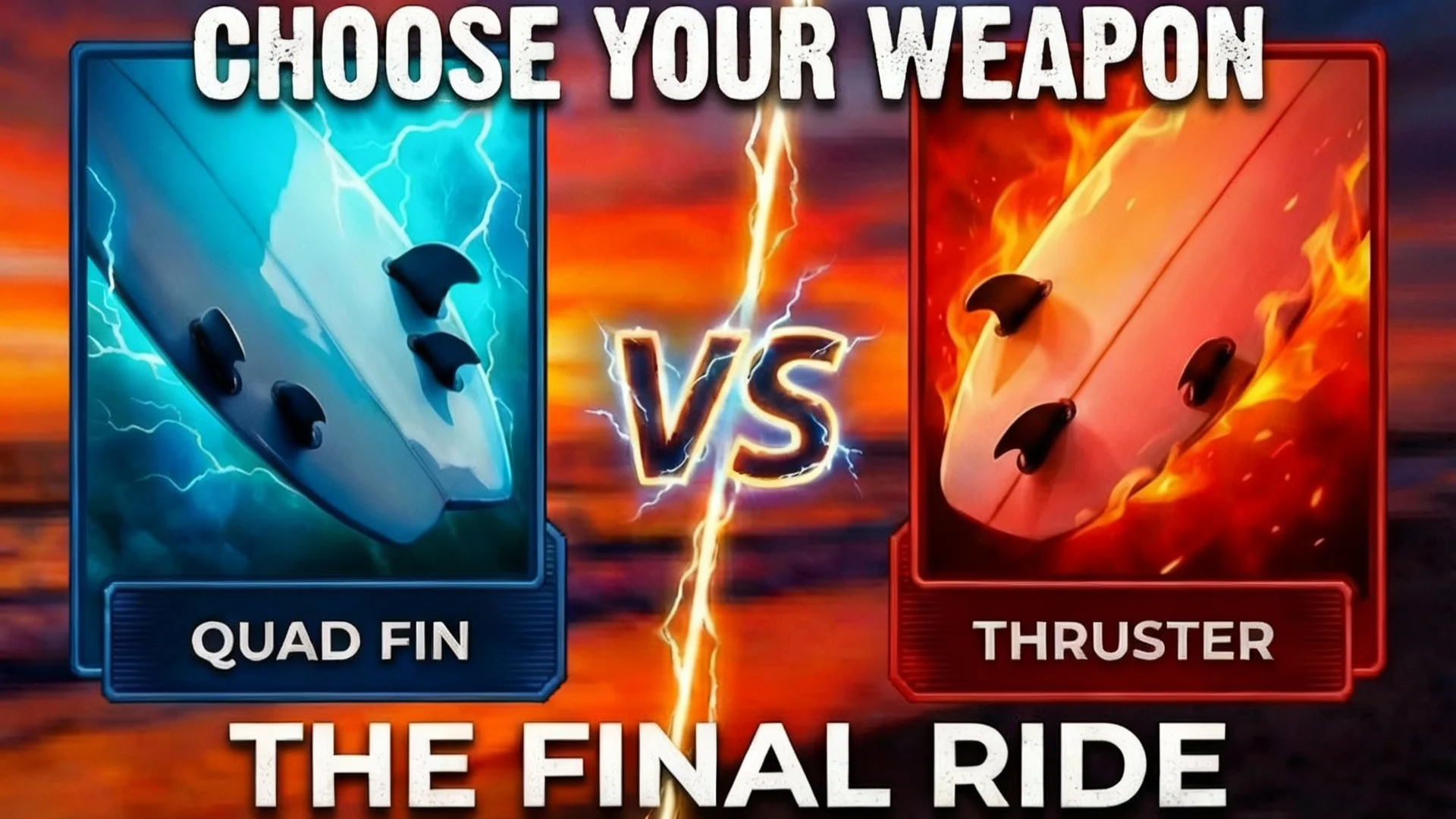
Setup 2: The Smaller Wave Tweaker (Quad or Modified Thruster)
Here's where it gets interesting. Most surfers skip this step and then wonder why small surf feels meh. Quads are fast. Like, stupidly fast for waist-high mushers. You get the drive of a twin fin, the control of a thruster, and the speed of something that actually wants to go somewhere.
Or, if you're not ready to commit to full quad, grab a thruster with a smaller center fin and slightly larger side fins. This is a tweaked setup that sits between your daily driver and pure quad energy.
The real talk: this is the setup that makes mediocre days actually fun. You're going to get more waves, make more sections, and actually enjoy yourself when it's small.
Setup 3: The Power Fuel (Larger Thruster or Single Fin)
Bigger days need fins that hold. A larger thruster set with more foil and a taller profile gives you control when the ocean's working. Or go full single fin on that 7'2" for when it's head-high and lined up. Single fins are underrated for bigger, cleaner days. Way more control than people think.
The 2026 Fin Innovation Moment
It's worth paying attention to what's actually happening in fin design right now. Carbon fiber and advanced composite materials are making fins that flex when they need to and stay locked when they need to. We're talking fins that respond to pressure instead of just being blocks of plastic.
3D-printed fins are becoming real too. Custom foils, personalized designs based on your style. It's not just rich-person flex anymore. Some shops are offering customization at reasonable price points.
The bigger shift: modular systems. FCS and Futures have basically won the box game, and now the whole industry is pushing easy swaps and compatibility. You don't need a new board to experiment. You just need to try different fins in the same box.
This matters because it removes the excuse. "Oh, I can't tell if quads are better because I don't have a quad board." Wrong. You can try quads in your board right now.
How to Actually Know What Works
This is the move that changes everything. Start tracking.
Not in some nerdy spreadsheet way (though if you want to, no judgment). I mean actually paying attention. Next time you paddle out with your thruster in small, choppy waves, notice how it feels. Then grab your quad setup for the same conditions a week later. Feel the difference.
Write it down. Or remember it. Just be conscious about it instead of assuming everything's the same.
The challenge with all this testing and tweaking? Keeping track of what actually worked in what conditions. You'll have a great session on quads in small waves and think "okay, so quads are always better." Then you try them in bigger, cleaner surf and they feel weird. You forget which conditions made them shine.
This is exactly where having a tool that knows your style and conditions makes all the difference. Instead of relying on your memory (which gets fuzzy after a few weeks), you'd have actual data on what worked when. Which conditions favored your thruster. When the quad really shined. What your back-up single fin actually excels at.
That's the whole point of dialing in your quiver. You're not just buying fins. You're building knowledge about your own surfing.
The Specific Fin Models Actually Worth Your Attention
If you're looking to upgrade, here's what's legit:
- Thrusters: FCS II systems give you the most flexibility. Futures Blackstix fins generate real speed through turns if you want a bit more response. Don't sleep on classic shapes either. Sometimes the most reliable fin is the one that's been working since 2005.
- Quads: Go with a name brand's quad set. You want consistency between fins. Mixed quads are a recipe for weirdness.
- Single Fins: For longboards or bigger wave days, Futures or FCS have solid single fin options. Test a few foils. They're more different than most people think.
The key here: don't get caught up in the brand wars. All the major manufacturers make solid fins. Your job is finding the one that matches your style, not your ego.
Stop Overthinking Your Fin Setup
Look, you've got the knowledge now. You know why your current fins might not be optimized. You know what a basic three-setup quiver looks like. You know that 2026 is the year the fin game actually got good with real innovation and customization options.
The hard part isn't picking fins. It's remembering what actually worked.
Every surfer faces the same problem: you get a good session, it feels amazing, and then three weeks later you forget the exact conditions, the wind direction, which fin setup you were using, and why it worked so well. So you end up guessing again.
The smarter way is to track it. Log your sessions with enough detail that you can actually remember what performed when. Conditions, board, fins, how you felt. This isn't complicated. It's just being intentional.
Get personalized fin recommendations that actually stick. No more guessing. Just track what works in different conditions, and FinFinder.ai learns your style. When conditions change, you get instant suggestions based on what's actually worked for you. Stop wasting time experimenting and start surfing with confidence.
The Bottom Line
New Year, New Setup isn't about having the flashiest fins or the most expensive quiver. It's about being intentional. It's about understanding that fin choice matters, that different setups solve different problems, and that you deserve to actually optimize your surfing instead of just hoping for the best.
You've got three setups to build: your daily driver thruster, your small wave tweaker, and your power fuel. Track what works. Remember it. Adjust based on reality.
That's dialing in your quiver. That's 2026.
Helpful Resources
Ready to Find Your Perfect Fins?
Use our expert fin recommender tool to get personalized suggestions based on your needs.
Try Fin Recommender