You paddle out and something feels off. Board's slower, turns feel weird, maybe there's a faint humming sound when you're moving. First thought? Time for new fins.
Hold up. Before you drop $80 to $150 on a new set, there's a solid chance your fins just need 20 minutes of attention. Most of the time, what feels like a "dead fin" is really just a beat-up one. Sand scratches, trailing edge nicks, grime in the boxes. All fixable without buying anything new.
I'm not saying fins last forever. But I am saying most surfers replace them way too early because they don't realize how much performance you lose from basic wear and tear.
Why Your Board Suddenly Feels Slow
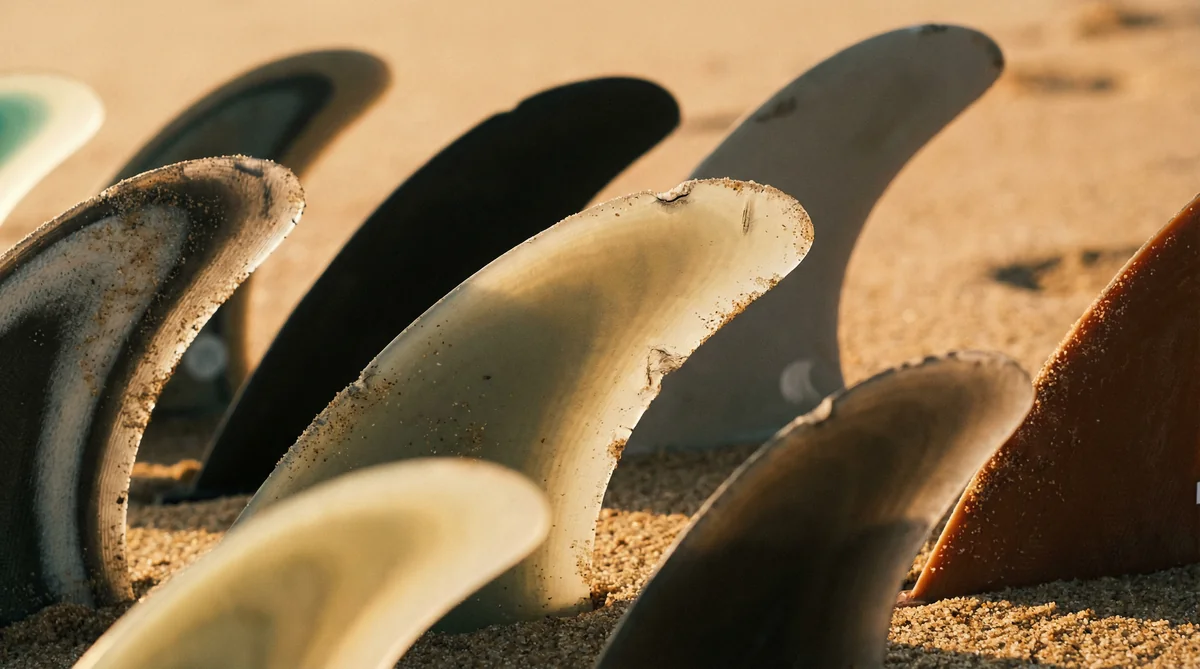
Fins take a beating. Every beach landing, every paddle through sandy shore break, every time your board bounces around in the car, your fins pick up damage. Little scratches along the sides. Chips on the trailing edge. Sand packed into the fin box grinding against the base.
Each nick creates drag. Water doesn't flow smooth anymore. Instead of clean release off the back of the fin, you get turbulence. That's where the humming comes from. That's also why your board feels like it's working harder to generate speed.
Here's the thing: fins make up about half your board's wetted surface when you're riding. If they're even a little messed up, you feel it. Turns get mushy. Speed drops. You start blaming your setup when really you just need to clean and smooth your fins.
The Real Culprit: Sand
Beach sand is gnarly on fins. It gets everywhere. Fin boxes, the base, between the fin and the plug. Over time it grinds away at surfaces, leaving them dull and textured instead of smooth and fast.
The fix is stupid simple but most people skip it: rinse your board with fresh water after every session. Especially if you surf beach breaks. Salt crusts up and traps sand. Fresh water washes it out. Takes 30 seconds. Saves you a ton of money and performance headaches down the line.
What You Actually Need to Maintain Fins
No need to get complicated. Here's the kit:
- Fresh water and a hose
- An old toothbrush
- 220-grit sandpaper
- 400-grit sandpaper for finishing
- Maybe a small sanding block if you want to stay even
That's it. Total cost like ten bucks if you don't already have this stuff lying around.
How to Actually Do This
Pull your fins every few weeks. I know, it's annoying, but it matters. When you do, rinse the fins and the boxes. Use the toothbrush to scrub out sand and salt buildup in the box. You'd be surprised how much crap hides in there.
Next, run your fingers along the trailing edge of each fin. That's the back edge where water releases. If it feels rough or you can feel little chips and imperfections, that's your problem. That roughness is killing your flow.
Grab the 220-grit sandpaper and lightly sand the trailing edge. You're not trying to reshape anything or make it razor sharp. Just smooth out the rough spots. Work gently, follow the curve of the fin, and keep it even. If you overdo it on one side, you'll throw off the balance between your fins.
Once it feels smooth, hit it with 400-grit to finish. Should feel clean when you run your finger along it. No catches, no bumps.
If you've got deeper dings or gouges, you can fill them with a little epoxy resin, let it cure, then sand smooth. But honestly, most of the time you're just dealing with surface stuff that sands out easy.
When You Actually Need New Fins
Sometimes a fin is legitimately done. Here's when:
- If there's a crack going deep into the core, replace it.
- If the base is broken and won't lock into the box properly, replace it.
- If the fin is bent or warped and won't straighten, replace it.
- If it's been repaired multiple times and keeps breaking, replace it.
But here's what doesn't mean you need new fins: cosmetic scratches, minor dings you can sand out, a humming sound (that's just a rough edge), or feeling bored with your setup. That last one is a you problem, not a fin problem.
Why This Matters
A well-maintained fin feels responsive. Water flows clean. Turns snap. Speed comes easy. You're connected to the board.
A trashed fin feels mushy and unresponsive. You work harder for less result. It's frustrating because you know something's off but you can't quite pin it down.
The difference between the two is often just a little maintenance. Sand that trailing edge, clean those boxes, rinse after sessions. You'll get way more life out of your fins and way better performance while you're using them.
Stop Overthinking Your Fin Setup
Alright, so you've maintained your fins and they're running smooth again. But now you're wondering if you're even running the right setup for your board and the waves you surf. Should you go bigger? Smaller? Different template? Quad instead of thruster?
This is where FinFinder.ai actually helps. Instead of falling down a Reddit rabbit hole or guessing based on what some pro uses, just ask the AI. Tell it your board specs, your weight, the waves you're riding, and how you like to surf. It'll give you a straight answer about what fins make sense for your situation.
No BS. No sales pitch. Just clarity on what actually works for you.
Key Takeaways
- Most fin problems are maintenance issues, not broken fins
- Sand and rough trailing edges create drag and that humming sound
- Rinse your board after every session to prevent buildup
- A quick sand with 220-grit and 400-grit solves most roughness
- Only replace fins for real structural damage
- If you need help choosing fins, use FinFinder.ai for personalized recommendations
Related Posts
- Fin Foil Explained: What It Changes In Your Turns - Understanding foil shapes and why they matter for your surfing style.
- What Size Fins Should I Get? A Simple Guide - Weight-based fin sizing without all the confusion and marketing hype.
- FCS vs Futures: What Actually Matters - Real differences surfers notice between the two main fin systems.
Helpful Resources
Ready to Find Your Perfect Fins?
Use our expert fin recommender tool to get personalized suggestions based on your needs.
Try Fin Recommender