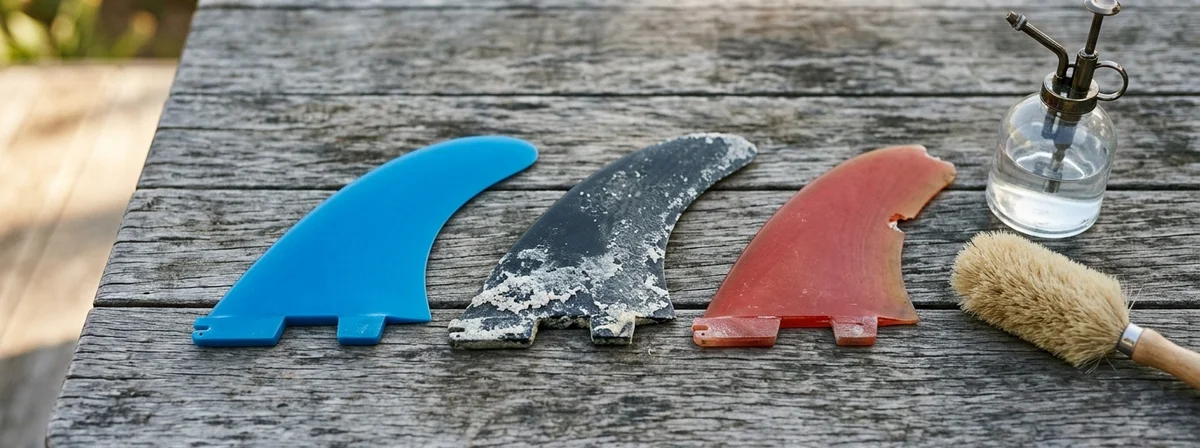
You pull your fins out of the board after a month of daily sessions and there's a white crust around the base that looks like someone dipped them in baking soda. The grub screw on your FCS tab is frozen solid. One of your side fins has a nick on the trailing edge you don't remember getting. And your board has felt a little off lately.
Welcome to fin maintenance, or the lack of it.
That's not a fin problem. That's a neglect problem.
Most surfers treat fins like they're indestructible. Snap them in, rip them out, toss them in the garage. But fins are precision tools with foil profiles, flex patterns, and edges designed to move water in specific ways. Let salt crust build up, store them in direct sun, or ride chipped edges for six months, and you're slowly degrading the thing that controls how your board turns, drives, and holds.
The Post-Session Rinse: 30 Seconds That Save You Money
This is the easiest maintenance habit in surfing, and almost nobody does it consistently.
After every session, rinse your fins with fresh water. If you leave them in the board, hit the fin area with a hose or a bottle of water from the car. If you pull them out (which you should do at least weekly), rinse the fins and the boxes separately.
Salt crystals form as seawater evaporates. Those crystals are abrasive. They grind against your fin tabs, corrode your grub screws, and build up inside the fin box channel. Over weeks, that buildup makes fins harder to install and remove.
Over months, it can damage the box itself.
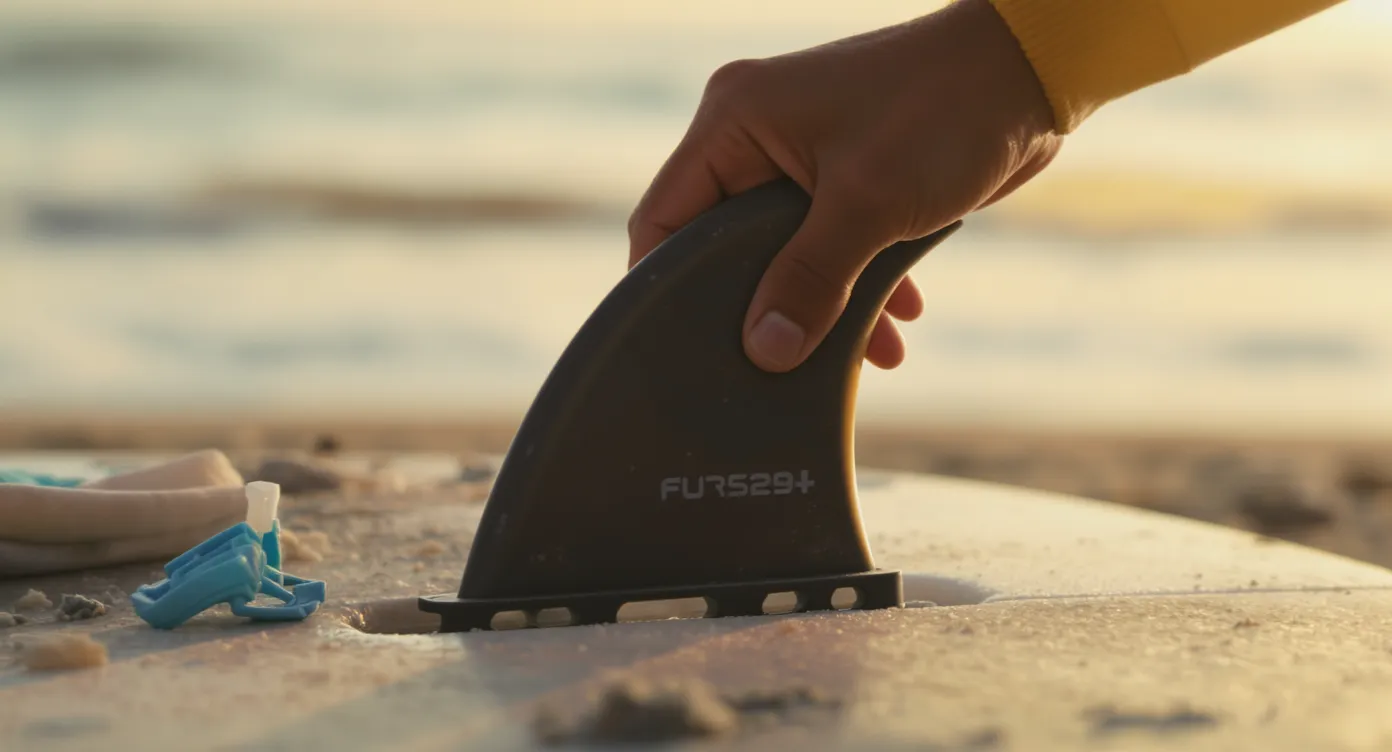
Futures fins are especially prone to this because the single-tab design has a tight-tolerance channel. Salt buildup in a Futures box can make the fin feel like it's glued in. If you've ever had to hammer a Futures fin out with a block of wax at the Trestles parking lot, you know exactly what skipping the rinse costs you.
Deep Cleaning: When the Rinse Isn't Enough
Every few weeks, do a proper cleaning. Here's the routine:
For the fins: Soak them in warm fresh water for 10-15 minutes. Use a soft brush (old toothbrush works great) to scrub the base, the tabs, and both sides of the foil. Pay extra attention to the trailing edge where wax residue and salt tend to collect.
For the fin boxes: Use a cotton swab or thin brush to clean inside the channels. A little white vinegar on the swab dissolves stubborn salt deposits. Rinse with fresh water after.
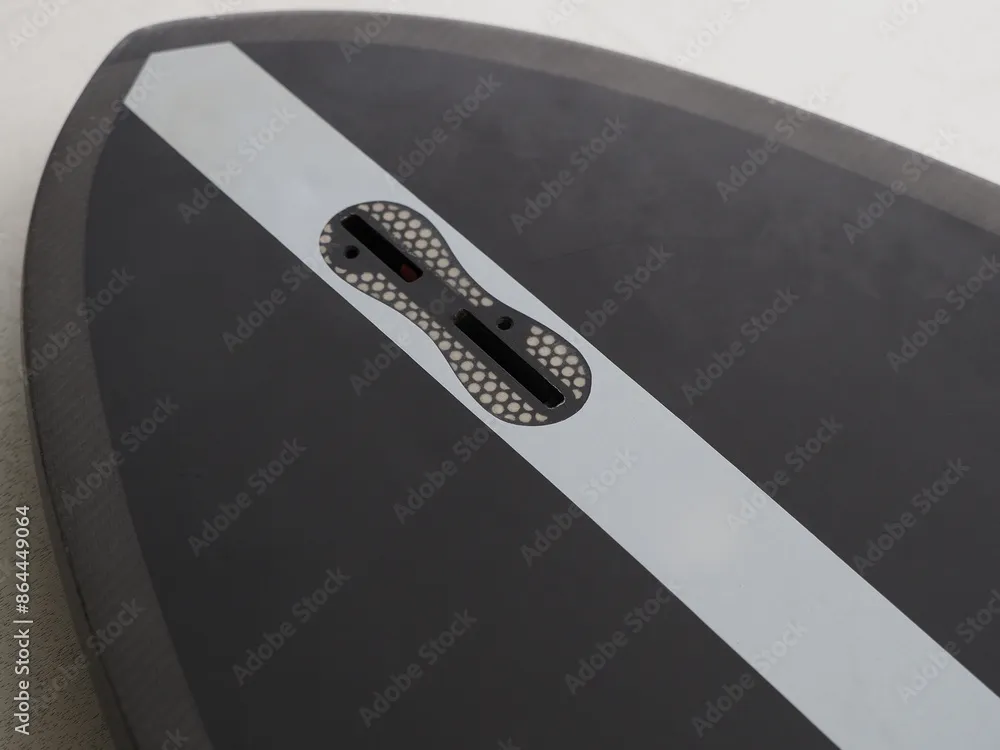
For the screws: Check your grub screws every time you deep clean. FCS II fins don't have screws on the side fins (they click in), but the center fin screw can corrode fast. Futures fins use a single screw at the front of the box.
If it's rusty, stiff, or stripped, replace it. A $2 screw is cheaper than a damaged fin box.
Pro tip from every surf shop tech on the planet: a tiny drop of marine-grade lubricant on your grub screws prevents corrosion and makes install/removal smooth. Don't use WD-40. It attracts dirt and breaks down in salt water. Use something like Boeshield T-9 or a silicone-based marine lube.
Storage: Where Your Fins Live When They're Not in the Water
Most surfers store fins in one of three places: loose in a board bag pocket, rattling around in a box in the garage, or still installed in the board leaning against a wall in direct sunlight.
All three are wrong. Well, mostly wrong.
Heat and UV are the enemies. Direct sunlight degrades fiberglass, yellows resin, and can warp plastic fins over time. That cheap set of nylon fins you left on the dashboard of your truck in July? They might look fine, but the flex pattern has changed.
Stiffer in spots they shouldn't be, softer in others.
That's what heat damage feels like in the water. Not a dramatic snap. A slow, creeping deadness.
The fins don't respond the way they used to. Turns feel flat. Drive disappears. You think you're surfing badly, but it's the fins.
Best practices:
- Store fins in a padded fin wallet or case. FCS and Futures both sell them, and generic ones work fine too.
- Keep them out of direct sunlight and away from heat sources.
- Store them upright or laid flat. Don't stack heavy stuff on top of them.
- If you travel, use a dedicated fin case inside your board bag. Loose fins rattling around cause dings on your board and chips on the fins.
If you're headed overseas, we covered the full breakdown on packing fins for travel, including TSA rules and what to bring for Indo.
When to Replace: Reading the Signs
Fins don't come with expiration dates. But they do wear out, and the signs are easy to miss if you're not looking.
Chips and Cracks
Small chips on the leading or trailing edge are common and usually cosmetic. A nick the size of a grain of rice? Sand it smooth with 400-grit sandpaper and keep riding.
But if you've got a crack that runs into the body of the fin, or a chip bigger than a pea on the trailing edge, that fin is compromised. Cracks change flex patterns and can propagate under stress. A fin that cracks further mid-session isn't just annoying. It can damage your fin box.
The Hum Test
If your fins hum or whistle during fast bottom turns, something's off. That sound is turbulence created by an imperfection in the fin's edge.
Could be a chip you can't see. Could be salt buildup on the trailing edge. Could be a warp from heat exposure.
Clean the fins first. If the hum persists after cleaning and careful edge inspection, replace them. That turbulence is costing you speed, and it's one of those things you don't realize was dragging you down until it's gone. Like surfing with a fresh wax job after months of riding a brown sheet of basecoat.
Flex Degradation
This is the sneaky one. Fiberglass and carbon fins can lose their flex response over time, especially if they've been heat-stressed or ridden hard for years. The fin still looks fine. No visible damage.
But the snap-back that used to push you out of turns is gone.
Test it: hold the fin at the base and flex the tip with your other hand. Compare it to a new fin of the same model if you can. If it feels noticeably softer or doesn't spring back with the same authority, the resin matrix has fatigued. Time for a new set.
Tab Damage
Check the tabs regularly, especially on FCS dual-tab fins. If the tabs are chipped, worn, or don't click in cleanly anymore, the fin isn't seating properly in the box. A loose fin is a dangerous fin. It can pop out mid-surf or slowly rock in the box and damage it.
How Long Different Fins Last
Not all fins age the same way.
Plastic/nylon fins (the ones that came with your board) have the shortest lifespan. They're the most susceptible to UV damage and heat warping. If you surf 3-4 times a week, expect to replace stock fins every 6-12 months. Or just upgrade to fiberglass from the start.
You'll notice the difference immediately. The board will feel alive again, responsive in a way that makes you wonder what you've been missing. Like going from dragging a grocery bag through Huntington mush to actually gliding.
Fiberglass fins are the workhorses. With proper care, a quality set from FCS, Futures, or Captain Fin will last 2-4 years of regular use. They're more resistant to UV and heat than plastic, but they can still chip and develop flex fatigue over time.
Carbon fins are the most durable and hold their flex properties the longest. A good set can last 3-5+ years. But when they do fail, they tend to crack rather than gradually degrade.
Check carbon fins for hairline cracks periodically. For a full breakdown on how these materials compare, we've got a separate piece on that.
The Repair vs. Replace Decision
Not every damaged fin needs to go in the trash.
Repair it: Small edge chips (under 3mm), minor scratches on the foil surface, surface-level nicks. Sand with 400-grit, smooth with 800-grit. If you're handy, UV-cure resin can fill small chips.
Replace it: Cracks running into the fin body, tab damage, persistent humming after cleaning, noticeable flex change, or any damage to a carbon fin. Carbon doesn't do gradual. It's fine until it's not.
And honestly? If you're riding $30 stock fins and one gets damaged, just replace the set. Life's too short to sand a $10 fin back to mediocre.
Key Takeaways
- Rinse your fins with fresh water after every session. It takes 30 seconds and prevents the salt corrosion that destroys boxes and tabs.
- Deep clean fins and boxes every few weeks. Soak, scrub, and check screws for corrosion.
- Store fins in a case, out of direct sun and heat. UV and heat warp plastic and degrade flex patterns quietly.
- Replace fins when you see cracks running into the body, hear persistent humming, or feel reduced snap-back in the flex.
- Plastic fins last 6-12 months of regular use. Fiberglass lasts 2-4 years. Carbon lasts 3-5+ years with proper care.
If your fins are past their prime and you're not sure what to replace them with, the FinFinder recommender matches you to the right set based on what you ride and how you surf. Takes about a minute, and it beats wandering the surf shop squeezing random fins.
Helpful Resources
Ready to Find Your Perfect Fins?
Use our expert fin recommender tool to get personalized suggestions based on your needs.
Try Fin Recommender