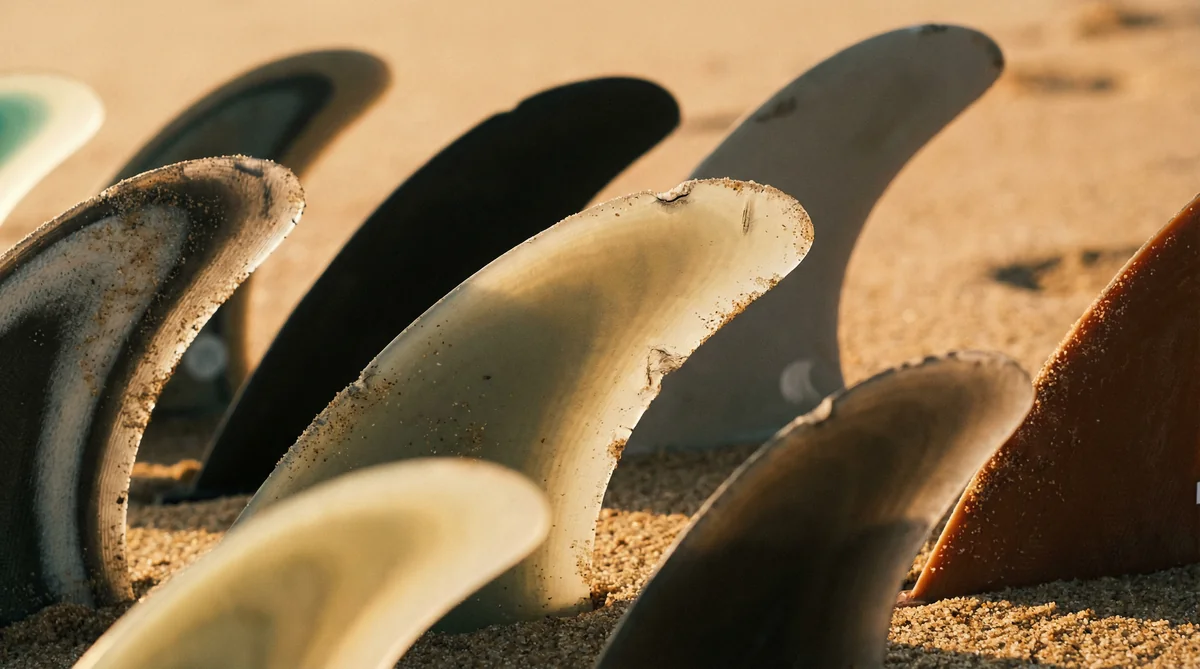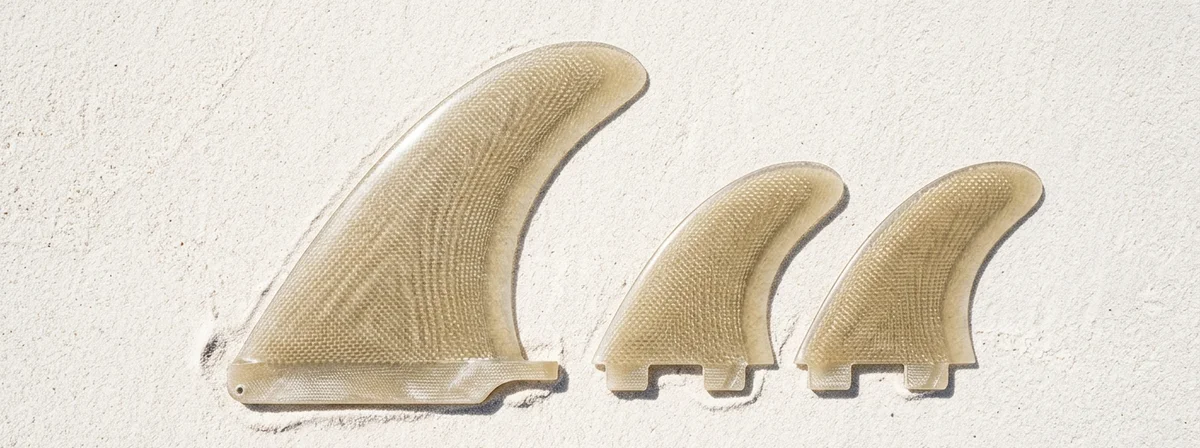
You're staring at a set of fins where one side is clearly bigger than the other. Not damaged. Not a manufacturing defect. Intentionally, deliberately, unapologetically lopsided.
Your first instinct says this is wrong. Your second instinct says someone is messing with you.
Neither. Asymmetric fins might be the most logical idea in surfboard design that almost nobody uses. And once you understand why, you'll wonder why all fins aren't built this way.
The Simple Idea That Changes Everything
Here's the thing about surfing that everyone knows but nobody thinks about: you don't turn the same way on your forehand and your backhand. Your body mechanics are fundamentally different. Toeside and heelside are two different movements, two different pressure points, two different arcs.
So why would you use identical fins on both sides?
Carl Ekstrom asked this question in 1965 while shaping boards in La Jolla. He surfed Windansea regularly and noticed he liked different board characteristics for his frontside versus his backside turns.
His solution was radical: build a board with different rails, different outlines, and different fins on each side. He patented the asymmetric surfboard in 1967.
Sixty years later, the rest of the world is slowly catching up.
How Asymmetric Fins Work
The toeside rail (the one facing the wave when you're surfing frontside) gets a larger fin. More surface area, more drive, more hold. Your toeside turns are longer arcs where you want the board to grip and project. A bigger fin gives you that committed drive through a drawn-out bottom turn.
The heelside rail gets a smaller fin. Less surface area, tighter radius. Your heelside turns are naturally shorter and more pivotal. A smaller fin lets the tail release quicker so you can whip the board around on a cutback or snap off the top without fighting the fin.
The result? A board that feels tuned to how your body actually moves. Toeside: drive and hold. Heelside: release and pivot.
Two different fins solving two different problems.
What It Feels Like in the Water
You drop into a right on your forehand and set your toeside rail. The bigger fin digs in and you feel this surge of drive through the bottom turn. It's confident, committed, like the board knows exactly where it's going.
You project off the bottom with speed you didn't have to manufacture.
Then you wind up for a frontside cutback on your heelside. The smaller fin lets the tail swing around with less resistance. The turn feels quicker, more responsive, almost effortless.
You're not muscling the board through the arc. It just goes.
That contrast is the whole point. Two turns, two different fin responses, both optimized for how your body generates force.
Who's Riding Asymmetric Fins
The asymmetric movement has been quietly building. Ryan Burch has been shaping and riding asymmetric boards for years, pushing the concept with experimental outlines. Dane Reynolds has been spotted on asymmetric shapes.
And brands like Album Surfboards and Chemistry have been producing asymmetric models that regular surfers can buy off the rack.
It's still niche. You won't see asymmetric fins at your local Surfside Sports. But in the shaping bays of San Diego, Santa Cruz, and the Gold Coast, the conversation has shifted from "that's weird" to "why didn't we do this sooner?"
The Setup Breakdown
Twin Asymmetric
The most common asymmetric setup. One larger keel-style fin on the toeside, one smaller upright fin on the heelside. This is what most asymmetric boards run. It's simple, effective, and the difference is immediately noticeable.
Thruster Asymmetric
Three fins, but the two side fins are different sizes. The toeside fin is larger with more rake for drive. The heelside fin is smaller and more upright for quick release.
The center fin stays symmetrical. This is less common but works on more conventional board outlines.
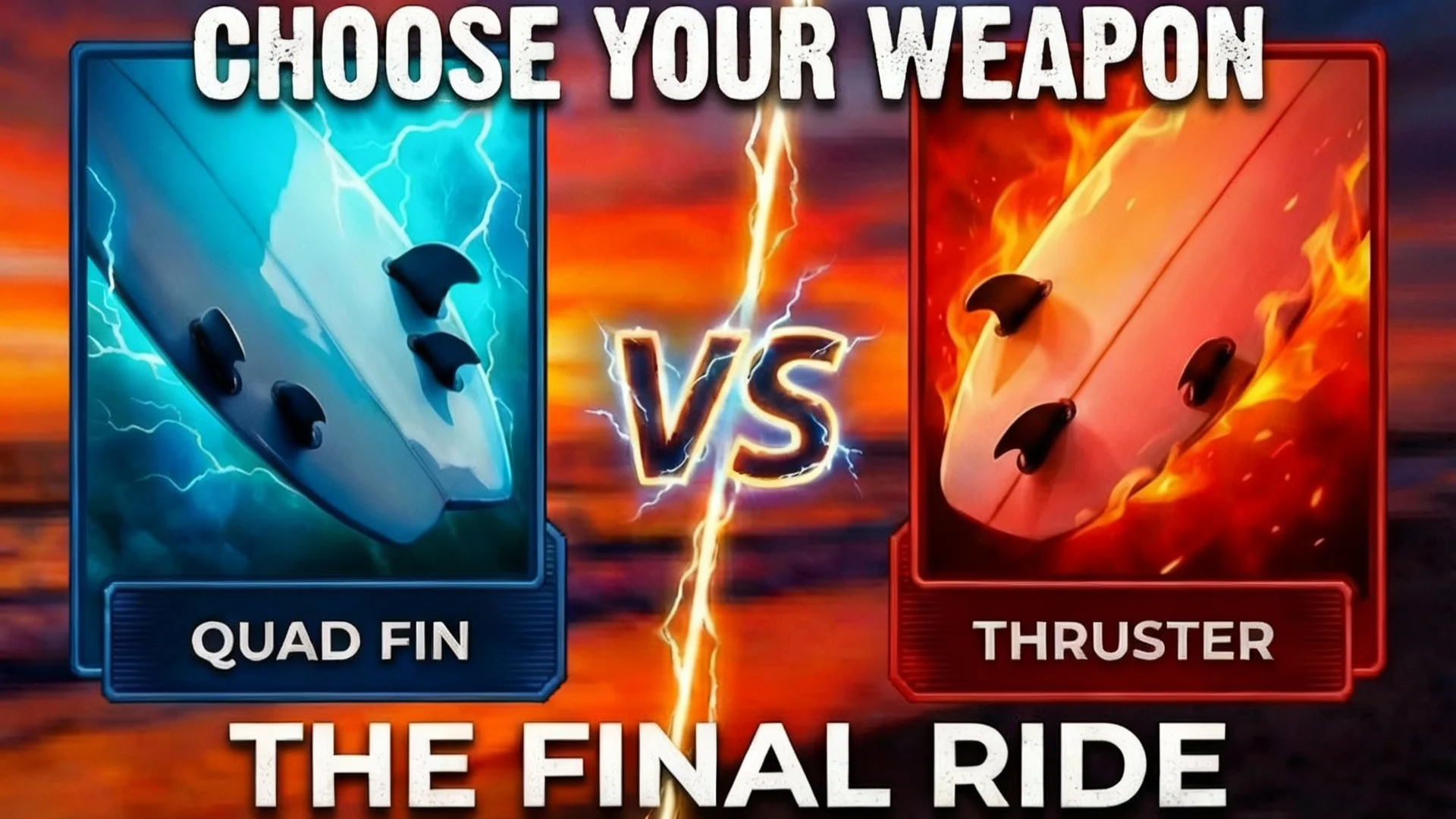
Quad Asymmetric
Four fins with the toeside pair larger than the heelside pair. This pushes the concept further, giving you asymmetric drive and release through both front and rear fins. It's the most experimental setup and the hardest to dial in.
For a broader look at how these compare to standard configurations, the fin setups guide covers the full range.
The Honest Downsides
Asymmetric fins are not a magic bullet. Let's talk about the real limitations.
First, you can only surf them one way. An asymmetric setup designed for a regular footer's forehand becomes wrong-footed on a goofy footer. If you switch boards with a friend, the fins are backwards for them.
Second, good luck finding replacement fins. This isn't an FCS-or-Futures decision where every surf shop has options. Asymmetric fin sets are specialty items. You're ordering online or going custom.
Third, the performance gains are subtle. We're talking about a 10-15% improvement in specific turn mechanics, not a total transformation of your surfing. If you're still working on basic turns, asymmetric fins won't fix fundamentals. They refine what's already there.
And finally, your board probably needs to be asymmetric too. Running mismatched fins on a symmetrical board creates weird handling. The rails need to match the fin philosophy for the whole thing to click.
Should You Try Asymmetric Fins?
If you're an intermediate-to-advanced surfer who's already comfortable on alternative shapes and wants to push into something genuinely different, absolutely. Especially if you ride a lot of point breaks where you're predominantly turning in one direction.
If you're still figuring out which fin size works for your weight and board, get that dialed first. Asymmetric fins are a refinement, not a starting point.
The honest verdict: asymmetric fins make more sense than symmetrical fins from a pure physics standpoint. Your body is asymmetric. Your turns are asymmetric. Your fins should be too.
The only reason they haven't gone mainstream is that the surf industry is conservative and surfers are creatures of habit. Give it ten years.
Key Takeaways
- Asymmetric fins use a larger fin on the toeside for drive and a smaller fin on the heelside for quick release, matching how your body actually turns.
- Carl Ekstrom pioneered the concept in 1965 at Windansea in La Jolla. It took 60 years for the industry to pay attention.
- The most common setup is a twin asymmetric: one keel-style toeside fin and one smaller upright heelside fin.
- The performance gains are real but subtle (10-15% improvement in turn mechanics). This is a refinement for experienced surfers, not a beginner upgrade.
- You need an asymmetric board to match. Mismatched fins on a symmetrical board creates weird handling.
Wondering how asymmetric setups stack up against what you're currently riding? Run your board through the FinFinder recommender and see what the numbers say.
Helpful Resources
Ready to Find Your Perfect Fins?
Use our expert fin recommender tool to get personalized suggestions based on your needs.
Try Fin Recommender