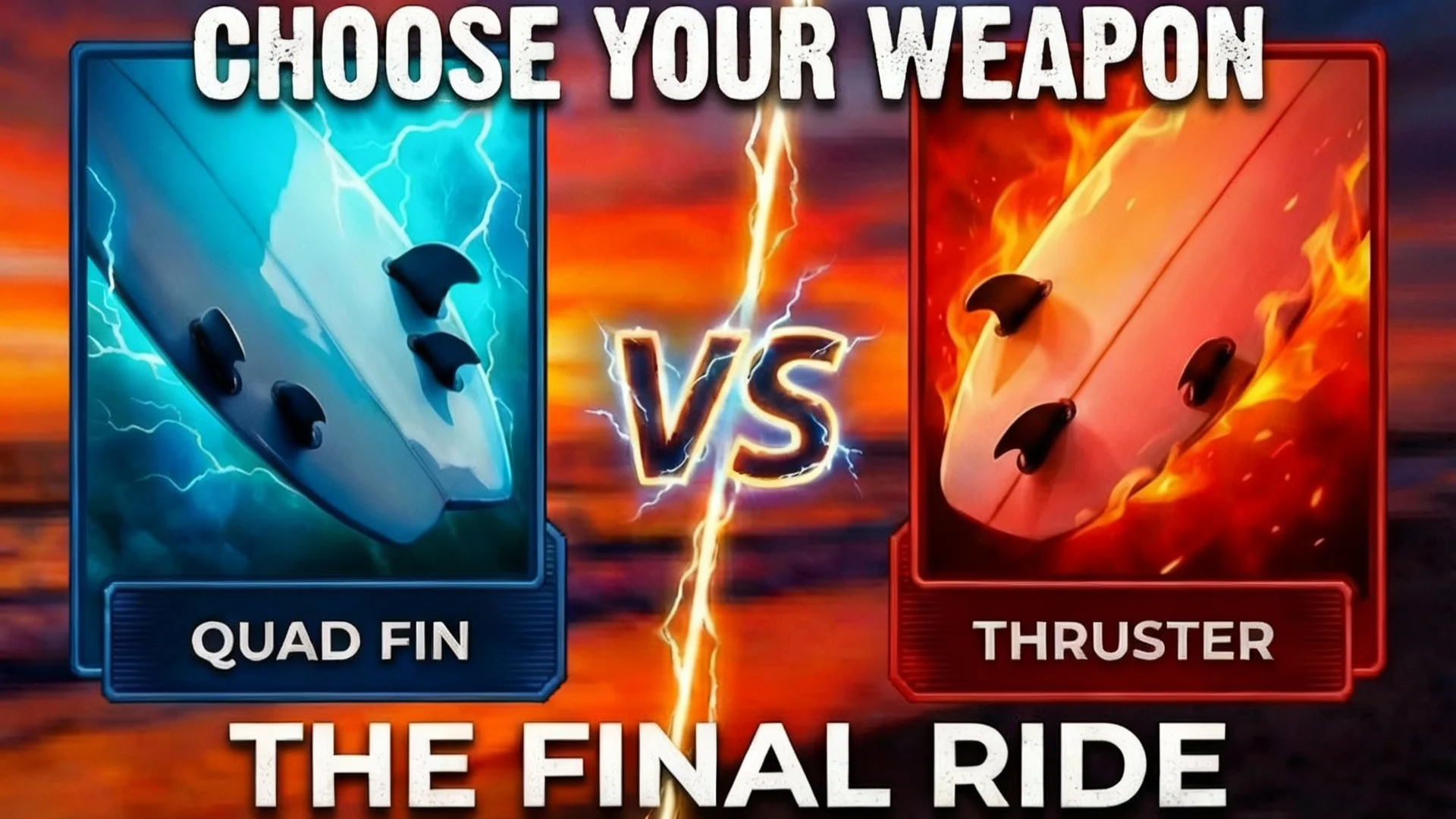
You're standing in the surf shop holding two fin sets. One's a pair of fat keels that look like they belong on a 1970s board. The other is a quad set with four sleek blades. Both say "fish surfboard fins" on the packaging. Both cost north of a hundred bucks.
You bought a fish because someone told you it would change your small-wave life. And it did. But the fins it came with feel like training wheels on a Ferrari. Too stiff, too generic, too meh.
The fin setup on a fish matters more than on almost any other board in your quiver. Here's why, and here's what to actually run.
Why Fish Fins Are Their Own Animal
A fish surfboard is wide, flat, and short. The swallow tail splits the water. The rails are lower. Everything about the design screams speed and glide in gutless waves.
But all that width and flatness means the fins are doing overtime. On a shortboard, the rocker and concave help control direction. On a fish, the fins are basically the steering wheel, the brakes, and the gas pedal all at once.
Get the fins wrong and a fish feels squirrelly at speed or sluggish through turns. Get them right and the board comes alive in ways that make your regular shortboard feel boring. Learn more about how different fin configurations change the way a board rides.
Keel Fins: The Classic Fish Setup
Keels are the OG fish fin. Wide base, short height, big surface area. They look like someone took a normal fin and stretched it sideways. And that shape is the whole trick.
The long base generates drive. Tons of it. You set a rail on a waist-high wall and the board shoots forward with this effortless acceleration that feels like someone flipped a switch. No pumping. No working for speed. Just go.
Mark Richards won four world titles on twin fins in the late '70s and early '80s, and those original keel templates still influence every keel fin on the market today. The modern versions are refined, but the DNA is the same: speed through surface area, hold through base length.
When Keels Shine
Keels are built for drawn-out turns on open faces. Long, sweeping bottom turns. Smooth cutbacks that arc wide and reconnect with the whitewater. If your surfing is more about flow than snaps, keels will feel like the board is reading your mind.
They're at their absolute best in waist-high to shoulder-high surf with some wall to work with. Think a clean south swell at Cardiff Reef or a fun day at Rincon when the crowd thins out. Glassy conditions, open faces, room to draw lines.
Where Keels Struggle
Keels don't pivot. That's not a flaw, it's the design. But if you're trying to do tight snaps off the lip or quick direction changes in a steep pocket, keels will fight you. The board wants to carve wide arcs, and forcing it into vertical surfing feels like trying to parallel park a boat.
They also lose grip in steep, hollow waves. The short depth means less fin is biting into the face, so late drops and critical bottom turns can get sketchy fast.
Best Keel Fins Worth Buying
Machado Keel (Futures, ~$125): The benchmark. Fiberglass construction with a flat foil that feels almost like a glass-on. Insane down-the-line speed. The newer version has slightly less area and more curve out the back for better release through turns. If you own a fish, these should be the first keels you try.
FCS II Christenson PG Keel (~$120): Chris Christenson collaborated on these, and the Performance Glass layup gives them a lively, responsive feel. More hold than the Machado keels in steeper sections. Great for surfers who push their fish into bigger conditions.
Futures Mikey February Keel (~$120): New for 2025. Mikey surfs with this flowing, stylish approach that matches what keels do best. Modern template with a touch more rake than traditional keels, which means smoother transitions between turns. Worth a look if you surf with finesse over power.
Captain Fin Christenson Keel (~$95): The budget pick that doesn't surf like a budget pick. Slightly smaller template works well on fish under 5'8". Solid fiberglass construction.
Quad Fins: More Grip, More Options
Quads turn a fish from a down-the-line cruiser into something closer to a performance board. Four fins, no center drag. Two larger fronts for drive, two smaller rears for release and control.
Where keels give you that buttery, flowing feel, quads add bite. You can push harder into turns, get more vertical, and hold your line in steeper sections. The trade-off is you lose some of that effortless, skatey glide that makes keels feel so addictive.
You drop into a punchy beach break on a quad fish and throw a hard bottom turn, and the board holds. Four fins gripping the face, two on each rail, and you redirect up toward the lip with a confidence that keels just can't match in that situation. It's a different board. Same shape, completely different personality.
When Quads Make Sense on a Fish
If your local breaks are punchy, steep, or hollow, quads give you the control a fish needs in those conditions. They're also the call when you want to surf a fish more aggressively, throwing spray instead of drawing smooth lines.
Quads also handle chop and bump better than keels. The four-fin spread stabilizes the board through messy conditions where keels might slide or skip.
Best Quad Sets for Fish
Futures Controller Honeycomb (~$130): Designed specifically for wide-tail boards. The upright rear fins give you a skatey feel similar to keels but with more control when things get critical. This is the quad that makes your fish feel like two boards in one.
FCS II Modern Keel Quad (~$125): A split-keel design that bridges the gap between traditional keels and modern quads. You get keel-style speed from the fronts with added control from the rears. Best of both worlds, or close to it.
Machado Seaside Quad (~$120): Smooth, stylish, and built for everyday surfing in average conditions. Not the most aggressive quad set, but it matches the way most people actually ride a fish.
Twin Plus Trailer: The Middle Ground
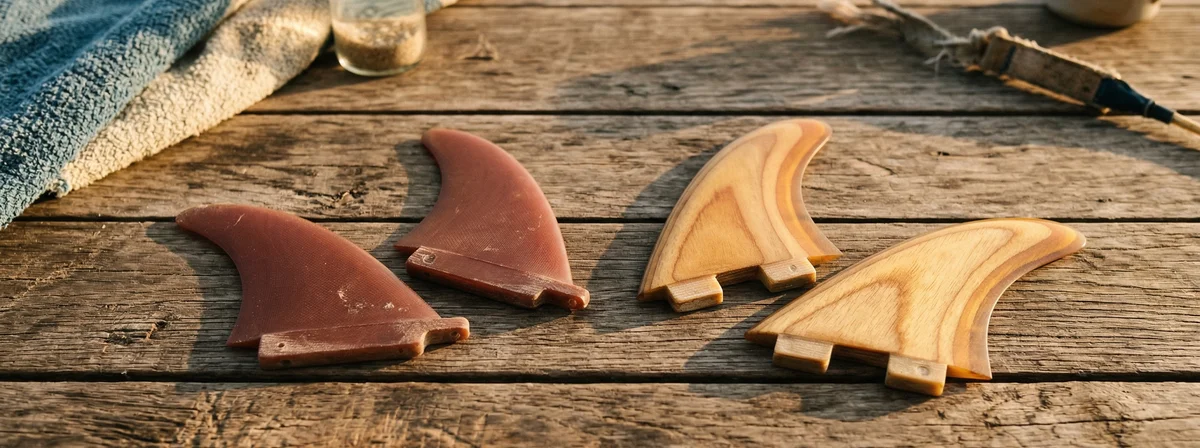
If your fish has five boxes, you've got a third option that splits the difference. Run twin fins in front with a small trailer fin in the rear center box.
The trailer acts like a tiny rudder. It doesn't overpower the twin feel, but it adds just enough hold to keep the tail from sliding out when you push into steeper turns. Think of it as training wheels for your twins, except these training wheels actually make you surf better.
Rob Machado has been running this setup for years, and watching him surf a fish with twins and a trailer at Seaside is basically a masterclass in controlled looseness. The board flows like a twin but catches when you need it to.
Most twin-plus-trailer combos run around $130 to $150 for the full set. The Futures Machado Twin + Trailer is the go-to, but FCS and Captain Fin both make compatible trailer fins if you already own a twin set.
How to Match Fins to Your Specific Fish
Not all fish are built the same. A stubby 5'4" San Diego summer fish needs different fins than a stretched-out 6'0" fish with more rocker and narrower rails.
Short, Wide Fish (5'0" to 5'6")
These boards have maximum planing surface and want to go fast and loose. Keels are the natural match. The wide outline already generates plenty of hold, so you don't need extra fin area. Go with medium-sized keels and enjoy the ride.
Mid-Range Fish (5'6" to 5'10")
The sweet spot where both keels and quads work well. Your choice comes down to style. Want to flow? Keels. Want to rip? Quads. Want both? Twin plus trailer. Check the fin sizing guide for exact dimensions based on your weight.
Stretched Fish (5'10" to 6'2")
Longer fish with more entry rocker can handle quads or even thrusters. The added length means more rail line, which means more fin options. Quads work especially well here because the board's length provides the glide while the quads add performance.
Tail Shape Matters
A deep swallow tail channels water between the two halves, creating natural drive. Keels complement this because the board's tail is already doing directional work. A shallower swallow or a rounded fish tail benefits more from quads, which add grip the tail shape doesn't provide on its own. Understanding how fins interact with board design helps you make smarter choices.
The Honest Verdict
If you surf your fish in small, clean waves and your style is about flow, trim, and long arcs, keels are the answer. Don't overthink it. Grab the Machado keels or the Christenson PGs and go surf.
If you want to push your fish into bigger, punchier conditions or surf more aggressively, quads give you the control keels lack. The Futures Controller is the safest bet.
And if you can't decide, a five-fin fish with a twin-plus-trailer setup lets you experiment without committing. Run twins when it's mellow, add the trailer when it gets real.
The wrong move is doing nothing. Stock fins on a fish are almost always generic compromises that don't match the board's design intent. Swapping fins is the single cheapest upgrade that makes the biggest difference in how your fish surfs.
Key Takeaways
- Keels are the classic fish fin for a reason: unmatched down-the-line speed and buttery, flowing turns on open faces.
- Quads add bite and vertical control but sacrifice some of that effortless glide keels provide.
- Twin plus trailer splits the difference and works great on five-fin fish in variable conditions.
- Match your fin choice to your tail shape: deep swallow tails pair naturally with keels, shallower tails benefit from quads.
- Stock fins are almost always the weakest link on a fish. Upgrading is the single best bang-for-your-buck improvement.
If you're staring at too many options and your brain is melting, plug your board specs into FinFinder and let it narrow things down. Sixty seconds, zero guesswork.
Helpful Resources
Ready to Find Your Perfect Fins?
Use our expert fin recommender tool to get personalized suggestions based on your needs.
Try Fin Recommender