You're pumping down a clean shoulder at your local beach break, board feels fast, fins feel locked in. Next session, different fins, same board. Suddenly everything feels sluggish off the bottom and weirdly twitchy in the pocket.
You check the height, check the rake. Both look similar.
So what changed? The fin base length.
That measurement along the bottom of the fin where it meets your board. It's the spec most surfers skip right past on the packaging, and it's the one doing the most work.
What Fin Base Length Actually Measures
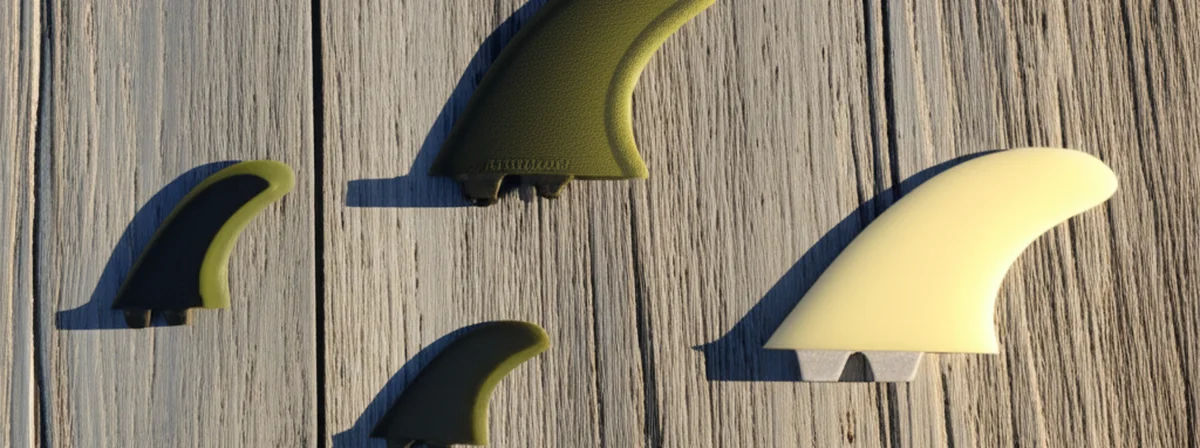
Base length is the distance from the front (leading edge) to the back (trailing edge) of the fin, measured right where the fin sits against the board. Think of it as the fin's footprint. A wider footprint grips more water, pushes harder, and generates more forward momentum. A narrower footprint lets the tail break free and pivot faster.
Most thruster center fins fall between 4.0 and 4.7 inches (roughly 102 to 119mm). Side fins tend to run slightly shorter. That range sounds tiny. It's not.
Even 5mm of base length separates a fin that drives like a freight train from one that pivots like a skateboard. John John Florence's signature Futures template runs a longer base for that trademark drive off the bottom turn. Filipe Toledo's FCS setup goes shorter and more upright for quick vertical snaps.
Same general fin size. Completely different feel under your feet.
Longer Base: More Drive, More Speed, Less Pivot
A longer base does three things at once. It increases the surface area pushing against the water. It distributes pressure across a wider span, which means more efficient energy transfer. And it creates a longer arc for water to travel across, which adds acceleration.
In plain terms: longer base fins feel drivey. You pump once and the board keeps going. Bottom turns feel powerful and drawn out, like the fin is grabbing the face and slingshotting you back up. That heavy, connected sensation where you set a rail and the board says "I've got this."
This is why point break surfers and barrel riders tend to gravitate toward longer-base templates. At a spot like Rincon or J-Bay, you need sustained speed down a long wall. Every pump needs to count. A longer base turns each pump into momentum that carries through three more sections.
When Longer Base Fins Shine
- Point breaks and long walls where sustained speed matters more than quick direction changes
- Bigger, more powerful surf where you need drive to match the wave's energy
- Bottom-turn-dominant surfing where you're drawing long lines and projecting off the bottom
- Heavier surfers who need more fin engagement to generate the same drive lighter riders get naturally
Shorter Base: Quick Pivot, Loose Feel, Less Drive
Cut the base length down and the opposite happens. Less surface area means the fin releases easier. Turns get tighter and more responsive. The tail feels looser, almost skatey, like the board wants to whip around rather than carve a long arc.
Short-base fins are the choice when the wave is steep, punchy, and you need to change direction fast. Think beach breaks with quick, hollow sections. You drop in, hit the bottom turn, and you've got about two seconds before the lip throws.
There's no room for a drawn-out carve. You need the tail to snap, redirect, and get vertical.
The trade-off is real though. You lose that sustained acceleration between turns. In mushier waves, shorter-base fins can feel dead. You pump and pump and the speed just bleeds away between sections.
When Shorter Base Fins Work Best
- Punchy beach breaks with short, steep wave faces
- Small, weak surf where you need quick pivots to stay in the pocket (paired with the right fin setup)
- Progressive, vertical surfing with quick lip hits, airs, and snaps
- Lighter surfers who generate enough speed naturally and want more maneuverability
Base Length vs. Rake: They're Not the Same Thing
Most surfers mix these two up. Base length and rake (sweep) both affect turning, but they control different things.
Base length controls drive and acceleration. It's about how much the fin pushes the board forward. Rake controls turning arc. It's about whether your turns are tight and pivoty or long and drawn out.
You can have a long-base fin with low rake. That gives you tons of drive with a tighter turning radius. Or a short-base fin with high rake, which pivots quick but draws out each individual turn. The combinations create totally different board feel.
This matters when you're comparing fin templates. Two fins with identical height and area can feel completely different if one has a longer base and less rake while the other has a shorter base with more sweep. The spec sheet tells you one story. The water tells you another.
Real Numbers: How Popular Fins Compare
Here's where it gets practical. These are approximate base lengths for well-known thruster templates in medium size:
- FCS II Performer: ~4.47" base. The all-rounder. Moderate drive, moderate pivot. The Honda Civic of fin templates.
- FCS II Accelerator: ~4.39" base. Slightly shorter, built for quick transitions and vertical surfing. Less drive, more snap.
- FCS II Reactor: ~4.52" base. Longer base for more drive and speed. Best for powerful surfing and bigger waves.
- Futures F6 (Thermotech): ~4.46" base. Balanced template, similar to the Performer's philosophy.
- Futures JJF (John John Florence): ~4.56" base. Longer base for sustained drive. Built for Pipeline-level power.
Notice the range. Less than a quarter inch separates the shortest from the longest. But ride them back to back and the difference is obvious.
The Accelerator feels snappy and responsive in the pocket. The Reactor feels like it's pulling you through turns with authority.
Same brand, same size category, different base lengths, different surfing.
How to Pick the Right Base Length for You
Forget what the pros ride. Their waves, boards, and ability levels aren't yours. Here's what actually matters.
Your Home Break
Surf a point break most days? Lean toward longer base fins. Beach break with short, punchy sections? Go shorter.
You need that responsiveness more than you need raw speed.
Your Surfing Style
Power surfers who draw big lines and load up bottom turns want longer bases. That extra drive translates directly into projection and spray. Surfers who prefer quick, vertical moves and airs want shorter bases. Less base means faster transitions between rail-to-rail snaps.
Your Weight
Heavier surfers (180+ lbs) often benefit from slightly longer bases because they need more fin engagement to generate equivalent drive. Lighter surfers can get away with shorter bases because they're not loading the fins as hard. Check the fin sizing guide for weight-based recommendations.
Your Board's Tail Shape
Wide tails (squash, square) pair well with shorter-base fins because the wide tail already provides stability. Narrow tails (round pin, diamond) benefit from longer-base fins that add drive the tail shape doesn't provide on its own.
The One-Fin Experiment That Teaches You Everything
Here's the fastest way to feel what base length does. Borrow two sets of fins from a friend. One set with a noticeably longer base (like the Reactor), one shorter (like the Accelerator). Same brand, same size, same material if possible.
Surf one session with each. Same board, same break, as close to the same conditions as you can get. Don't overthink it. Just pay attention to two things: how the board accelerates out of turns and how quickly the tail responds when you push through a snap.
The longer base will feel like the board has a motor. More projection, more carry between turns. But it'll resist those quick direction changes. The shorter base will feel loose and responsive, almost twitchy, but you might find yourself pumping harder to keep speed between sections.
That feeling is base length. Once you've felt the difference, you can't unfeel it.
Key Takeaways
- Base length is the fin's footprint on your board, and it controls drive, speed, and pivot more directly than any other single fin spec
- Longer bases (4.5"+) generate more drive and sustained speed but resist quick pivots, best for point breaks and power surfing
- Shorter bases (under 4.4") pivot faster and feel looser but sacrifice acceleration, ideal for punchy beach breaks and vertical surfing
- Base length and rake are different specs that interact with each other, so don't confuse them when comparing fin templates
- Your home break and surfing style should dictate base length choice more than any pro's signature template
Want to figure out which base length and template actually matches how you surf? Feed your board and wave details into the recommender and let it sort the specs for you.
Helpful Resources
Ready to Find Your Perfect Fins?
Use our expert fin recommender tool to get personalized suggestions based on your needs.
Try Fin Recommender