You paddle out at 3pm and the ocean's turned on you. What was glassy and waist-high at dawn is now a chattering field of cross-chop, the wind stacking little walls of bump on top of the actual wave. Every drop feels like landing a bike on gravel. Your board skips across the choppy face, your fins let go for no reason, and you're kicking out of waves you should've made.
Most surfers blame their surfing here. Wrong. A lot of the time it's your fins.
The fin setup that feels magic in clean surf can turn into a liability the second the wind comes up. Choppy onshore conditions ask for the opposite of what most performance fins are tuned for. They want hold, not release. Grip over skate. And once you understand that trade, you can flip a junk session into a decent one just by changing what's screwed into your board.
Why Chop Breaks Your Fins Loose
Clean water is predictable. Your fins bite, the pressure stays constant through a turn, and the board tracks where you point it. Chop wrecks that predictability.
When the face is bumpy, the water hitting your fins is turbulent and uneven. One second there's solid water on the foil, the next there's aerated foam from a bit of blown-back whitewater. Fins tuned to release easily, the loose, skatey ones you love in summer mush, will let go the moment that clean flow gets interrupted. That's the spin-out you feel at the bottom of a windy drop.
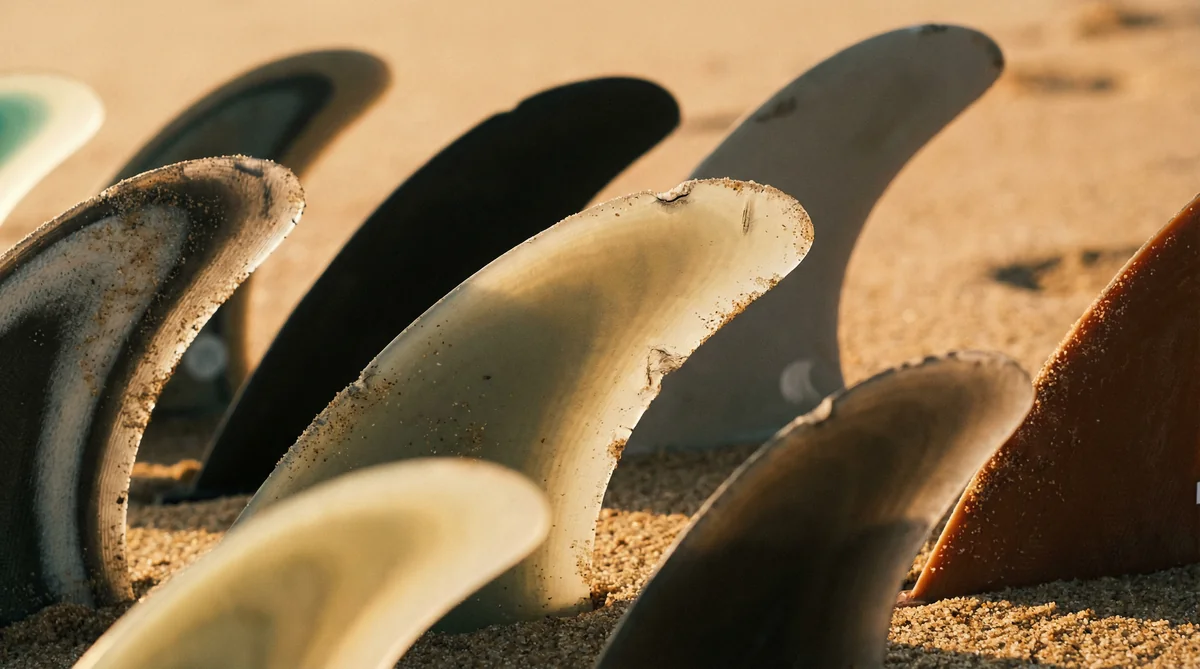
The fix is a fin that holds through the mess. More surface area to grip inconsistent water. More depth to reach below the surface chop into cleaner flow underneath. More rake to keep the board driving forward instead of sliding sideways. It's the exact recipe you'd run for steep, powerful surf, which makes sense, because chop and power both punish a loose setup.
The Three Numbers That Decide Hold
You don't need to memorize a spec sheet. You need to move three dials in the same direction: up.
Area: Bigger Grips Harder
Fin area is the total square inches of foil in the water, and it's the single biggest lever for hold. In chop, size up. If you're between templates, take the bigger one. A larger fin plants the board and refuses to skitter across the bumps.
The feel is night and day. You set your rail on a wind-battered bottom turn and instead of that stomach-drop of the tail washing out, the fins just grab and hold. Not sticky. More like the board finally quit arguing with you. We break down how square inches translate to hold in the fin area guide, and it's worth a read before you buy up a size.
Depth: Reach Under the Bump
Depth is how far the fin drops below the board. Deeper fins punch through the surface turbulence and find the smoother water a few inches down. That's why a taller fin feels steadier when the top layer of the wave is a washing machine.
This is also why longboard-length single fins hold so well in chop while a tiny groveler quad gets tossed around. More fin in cleaner water equals more control. Our breakdown of fin depth covers exactly how much difference a few millimeters makes.
Rake: Keep It Driving Forward
Rake, or sweep, is how far the fin curves back. High-rake fins want to go forward and carry through long, drawn-out turns. That forward drive is your friend in chop, because it keeps the board powering through the bumps instead of getting knocked off line.
Upright, low-rake fins pivot tight and release fast. Great for a clean pocket. A trap in the slop. If you're picking between an upright template and a swept one for a windy day, the swept one wins. The rake explainer gets into why.
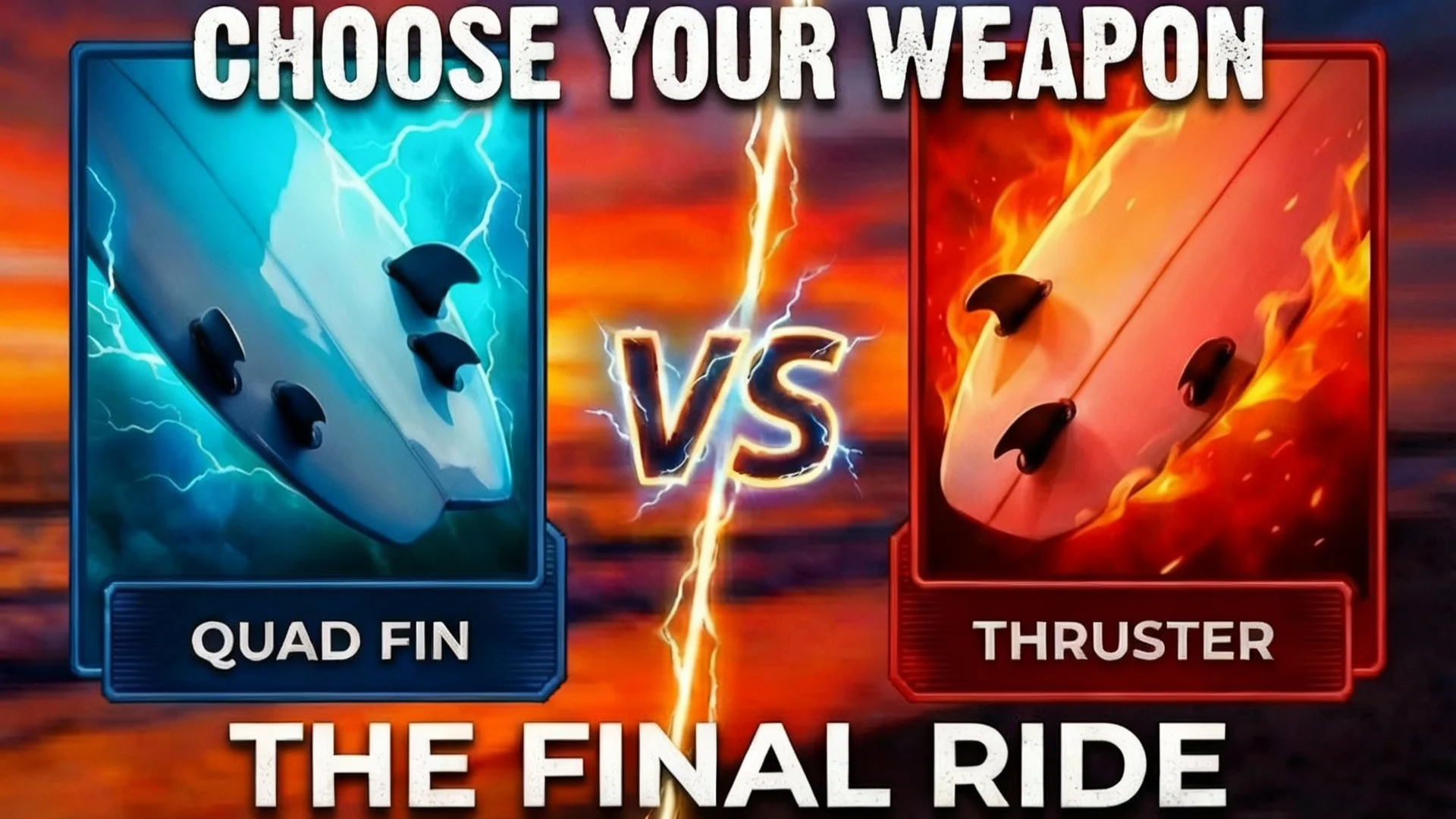
Quad or Thruster When It's Windy?
This is where surfers argue. Here's the honest answer: both work, and they fail differently.
A thruster with a proper set of medium-to-large fins is the safe pick. The center fin adds straight-line stability, which is exactly what you want when the wind's trying to knock your board around. It holds a line through chop like nothing else. The downside is you feel every bump a little more, since the center fin tracks straight and doesn't forgive.
Quads are the sneaky-good option. Pull the center fin out and the board gets faster and freer, which helps you outrun sections in gutless, wind-affected surf. Four fins spread the grip across the tail, so when one fin hits aerated water, the other three are still doing their job. That redundancy is underrated on a junky day. The catch is a loose quad can feel skittery, so you want a drivey, high-hold quad template, not your loose small-wave set.
My call for most surfers on most onshore days: a thruster you can trust, sized up half a step. If you already ride quads well and your set has real drive, stay on them and go bigger. There's no single right answer, which is the whole reason we built a fin recommender that weighs your board, weight, and conditions instead of guessing.
The Board Half of the Equation
Fins don't work alone. If you get to pick the board too, a narrower outline with more rocker slices through chop far better than a wide, flat groveler that slaps across every bump. That's why nobody's grabbing their fish when the afternoon onshore fills in at Hossegor and the whole beach turns to victory-at-sea slop.
But most of us don't have a full quiver in the car. You've got the board you brought. So the fastest, cheapest adjustment you can make on a windy day is the one thing you can change in the parking lot: your fins. Keep a bigger, higher-hold set in your bag for exactly these sessions.
Set Your Toe and Cant for Grip Too
If your board has an adjustable box or you're mounting side fins, small tweaks help. Less toe-in points the fins straighter, trading a bit of tail-throwing looseness for more forward hold. It's a minor move, but on a day where every bit of grip counts, it stacks with everything else.
Most surfers never touch this, and that's fine. But if you're the type who likes to fiddle, dialing your setup toward hold is the right direction when it's blown out. The cant and toe guide walks through it.
The Verdict
Onshore chop rewards the boring choice. Bigger fins, more rake, more depth, more control. This is not the day to ride your loosest, most playful set and hope the wind cooperates. It won't.
Size up, favor drive over pivot, and lean thruster unless your quads already have real hold. You won't be doing your best surfing in wind-wrecked water no matter what. But the right fins turn an unsurfable mess into something you can actually draw a line on, and that's the difference between kicking out frustrated and racking up a few keepers before the tide kills it.
Key Takeaways
- Chop makes water turbulent, so loose, easy-release fins spin out. Size up to bigger fins with more area for grip.
- Deeper fins reach past the surface bump into cleaner water underneath, which is why taller fins feel steadier in the slop.
- Favor high-rake, swept templates over upright pivot fins. Forward drive keeps you tracking through the bumps.
- Thrusters are the safe hold-everything pick. Quads work too if you run a drivey, high-hold set, not your loose small-wave one.
- Fins are the one thing you can change in the parking lot. Keep a bigger, grippier set in your bag for windy days.
Not sure which way to size up for your board and weight? Tell the recommender what you ride and what the wind's doing, and it'll sort the setup in about a minute. Then go make the best of a bad day.
Helpful Resources
Ready to Find Your Perfect Fins?
Use our expert fin recommender tool to get personalized suggestions based on your needs.
Try Fin Recommender