You bought one board. You're about to get three.
Look at the bottom of most shortboards built in the last five years and you'll count five fin plugs. Not three. Not four. Five.
And no, you're not supposed to jam fins into all of them at once. Those five boxes are a choose-your-own-adventure for every session, every swell, every mood.
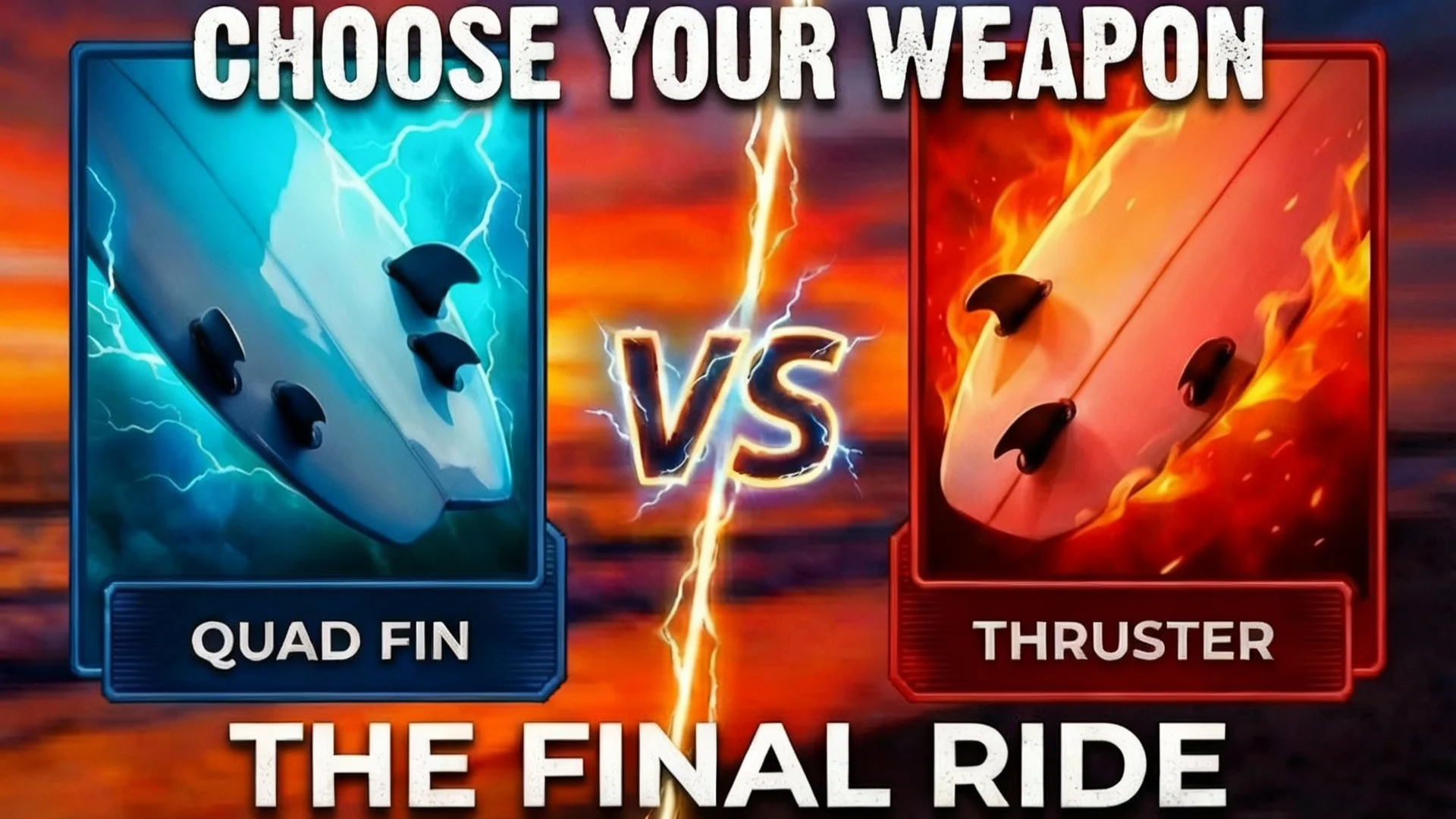
Thruster today. Quad tomorrow. Twin if you're feeling spicy.
That's the pitch, anyway. And for once, the pitch is accurate.
Why Five Boxes Instead of Three?
The five-fin box setup became the industry standard because shapers and surfers got tired of committing. A thruster board could only be a thruster. A quad board could only be a quad. If the waves changed mid-week, your board was wrong and your options were limited.
Five boxes fix that. You get two front side boxes, two rear quad boxes, and one center thruster box. Leave two empty and run a thruster. Pull the center fin and plug in quad rears.
The empty boxes sit flush under the board and create zero noticeable drag.
Kelly Slater ran five-fin boxes on every board during Stab in the Dark X, switching between thruster and quad setups across different waves on the Gold Coast. If it's good enough for the GOAT's testing process, it's good enough for your daily driver.
Configuration 1: The Thruster
Three fins. Two side fins plus a center fin. This is the setup that's dominated competitive surfing since Simon Anderson bolted that third fin on in 1981 and changed everything.
You use the two front side boxes and the center box. The two rear quad boxes stay empty. You get maximum control, a tight pivot point through the center fin, and the ability to surf vertically in the pocket.
When to Run Thruster
Overhead surf with power. Punchy beach breaks where you want to go vertical. Any time precision matters more than raw speed. If Trestles is firing and the sets are head-high with some push, thruster is the call.
You set your rail on a steep bottom turn and that center fin bites into the face of the wave. It's a pivot point, an anchor, a third hand holding the board exactly where you want it. The side fins drive you forward while the center fin keeps you honest. That's why every CT surfer runs a thruster when the judges are watching.
Configuration 2: The Quad
Four fins. Two fronts, two rears. No center fin. Pull the center fin out of the thruster setup and plug your quad rears into the rear boxes.
Without that center fin creating drag, the board is faster down the line. Water flows freely between the four fins and the board wants to go, go, go. You trade some vertical snap for speed and flow.
When to Run Quad
Small, mushy waves where generating speed is the battle. Fast, down-the-line barrels where you need to stay in the pocket. Anything where the wave doesn't have enough push to drive a thruster through sections.
You drop into a waist-high right and instead of that familiar pump-pump-pump just to stay ahead of the foam ball, the board glides. The quad rears release water off the tail and you're carrying speed through flat sections like they don't exist. It feels like cheating. Good cheating.
This is also the setup for hollow waves. Pipeline locals, Teahupoo chargers, and anyone surfing fast reef breaks will tell you quads hold better in the barrel because two fins are gripping the face instead of one center fin.
Configuration 3: The Twin (Yes, Really)
Some five-fin boards let you run just the two front side fins with everything else empty. It's a twin fin setup on a board that wasn't specifically shaped for it, so manage your expectations. But on the right board, especially wider-tailed shapes with some volume, it's a riot.
Twin on a five-fin box is the "I'm not trying to impress anyone today" setup. Loose, skatey, fast in small surf, and about as committed to a turn as a cat to a bath.
You'll slide. You'll drift. You might eat it on a harder snap.
But on a 2-foot summer day? Pure fun.
Not every board handles this well. If your fin setup options confuse you, the board's shape matters as much as the fins you choose.
The Fin Math: What You Need to Buy
Here's where the money conversation happens. Five boxes means you need multiple fin sets. But it's less painful than it sounds.
The Starter Kit
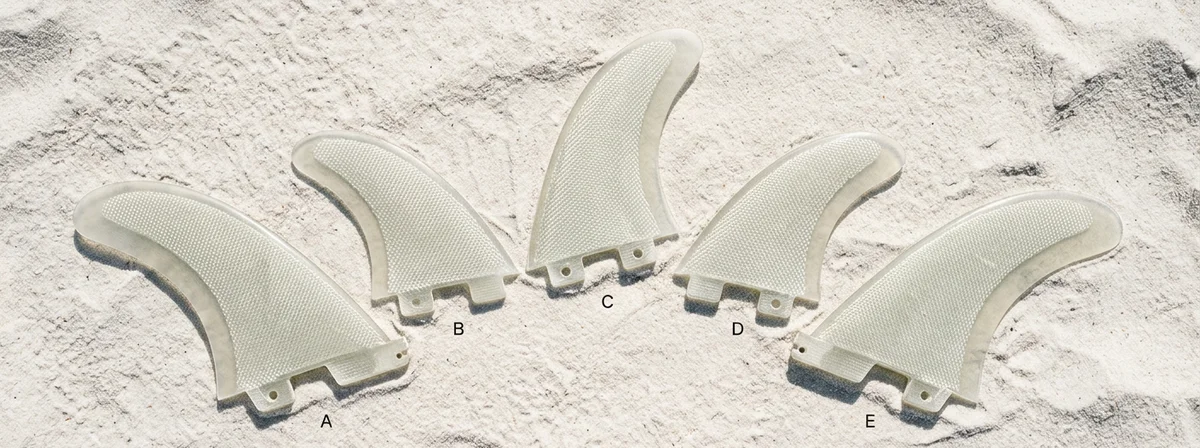
Buy one quality thruster set and one quad rear set. Your thruster side fins double as your quad fronts. That's five total fins covering two configurations.
Most fin brands sell "5-fin sets" that include exactly this: two large side fins, two smaller quad rears, and one center fin. FCS and Futures both offer these in the $100-150 range.
Going Deeper
If you want to optimize, you can buy dedicated quad fronts that are slightly different from thruster sides. Quad-specific fronts typically have more rake for extra drive and a slightly larger surface area.
But honestly? For 90% of surfers, using your thruster sides as quad fronts works great. Don't let the fin companies convince you that you need eight different fins.
Check out the fin sizing guide to match fin size to your weight and board. Getting this right matters more than which brand you pick.
Do Empty Boxes Create Drag?
Short answer: no.
This is the question everyone asks and the answer is always the same. Modern fin plugs sit flush with the board's surface when empty. The water flows over them like they're not there. You will not feel a difference.
Multiple tests and decades of real-world use confirm this. The drag from two empty boxes is so small it's unmeasurable in actual surfing conditions.
If someone tells you empty boxes slow your board down, they're either selling you a custom three-fin board or they've never tried it.
Which Boards Come With Five-Fin Boxes?
Almost all stock shortboards from major shapers now ship with five-fin boxes as the default. It's been the industry standard since the mid-2010s.
- Pyzel Ghost: The step-up slab hunter that John John made famous. Comes stock with five Futures boxes.
- Channel Islands Happy Everyday: Al Merrick's daily driver. Five FCS II boxes.
- Lost Puddle Jumper HP: Small wave weapon. Five FCS II or Futures boxes depending on region.
- Firewire Seaside: Rob Machado's fish-inspired shape. Five Futures boxes for thruster or quad.
- JS Monsta Box: Performance all-rounder. Five FCS II boxes.
If you're ordering a custom, ask for five boxes. There's zero reason not to. Learn more about how different fin configurations change your surfing.
The Honest Take: Is Five-Fin Worth It?
Yes. Without reservation.
Five-fin boxes cost nothing extra on most production boards. They add negligible weight (we're talking grams). And they give you the freedom to experiment without buying another board. If you surf the same beach break every day but conditions change week to week, having thruster and quad options means you're never stuck with the wrong setup.
The only surfers who don't need five boxes are dedicated single-fin riders or people who've been riding the same thruster setup for 20 years and don't want to change. And honestly? Even those people should try a quad day once. It might ruin thrusters for them forever.
Key Takeaways
- Five-fin boxes give you thruster, quad, and twin setups from one board. Empty boxes create zero meaningful drag.
- Run thruster for powerful, vertical waves. Run quad for small surf, speed, and barrels.
- A 5-fin set (two sides, two quad rears, one center) covers two configurations for $100-150.
- Your thruster side fins work as quad fronts for 90% of surfers. Don't overbuy.
- Almost every stock shortboard ships with five boxes. If yours doesn't, you're missing out on free versatility.
Not sure whether to paddle out with three fins or four? Plug your board and conditions into FinFinder and find out in 60 seconds which setup fits the day.
Helpful Resources
Ready to Find Your Perfect Fins?
Use our expert fin recommender tool to get personalized suggestions based on your needs.
Try Fin Recommender