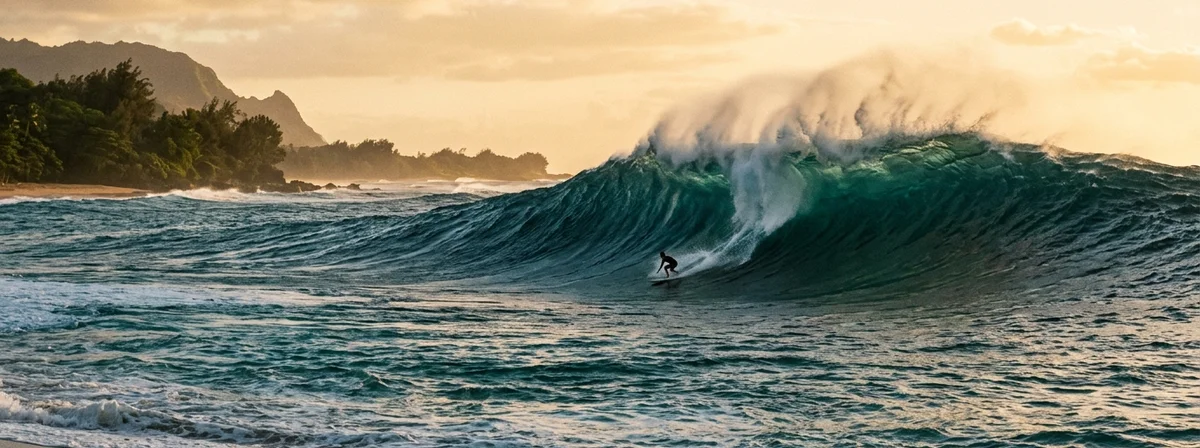
You're watching the 2024 WSL Finals at Trestles. John John Florence drops into a right, sets his rail, and draws this impossibly smooth bottom turn that carries him halfway up the face before he even thinks about redirecting. The board looks like it's on rails.
Not stiff, not mechanical. Just... quiet. Confident. Like the fins and the wave made an agreement before he paddled in.
He wins his third world title that day. And somewhere in your brain, a question forms: what the hell is he riding under that board?
The Short Answer: Futures Fins, Custom Templates, Pyzel Boards
John John Florence rides Futures fins exclusively. Has for years. His signature line includes four distinct models, each built for different conditions.
He pairs them with Pyzel surfboards shaped by Jon Pyzel, who's been building boards for him since JJF was five years old. That's 28 years of shaper-surfer refinement. The kind of relationship that produces equipment so dialed it borders on unfair.
His go-to competition setup is a Pyzel Ghost or Shadow, typically 6'0" to 6'1", around 18 7/8" wide, sitting at 29.5 liters. Tight dims for a guy who surfs Pipeline like it owes him money.
The Techflex: His Championship Fin
The JJF Techflex is what won those back-to-back titles in 2016 and 2017. It's a neutral-template thruster, medium sized, and it's the fin he defaults to when conditions are good and the waves have push.
Neutral template means the fin isn't biased toward speed or pivot. It sits in that sweet spot where you can draw long, flowing carves on a point break and still snap tight turns in a punchy beach break. That versatility is the whole point.
JJF doesn't ride one type of wave. He rides all of them. His fin needs to keep up.
The Techflex construction is where things get interesting. It's a blend of fiberglass and a proprietary flex pattern that's stable at high speeds but springy in smaller surf.
You feel the difference on a steep, late drop. The fin loads up under pressure, holds through the bottom turn with this locked-in certainty, then releases cleanly off the top. No chatter. No vibration. Just controlled energy transfer from rail to fin to wave face.
For most surfers riding chest-to-overhead waves with some power, the Techflex in Medium is the closest you'll get to JJF's actual competition feel.
The Scimitar: When the Waves Won't Cooperate
This is JJF's newer signature model, and it solves a specific problem: small wave speed generation. The Scimitar uses a pivot template with a blunted tip that Futures originally developed 18 years ago, now rebuilt with modern materials and JJF's input.
The design logic is counterintuitive. Chopping the tip off a fin seems like you'd lose hold. Instead, it tailors the grip characteristics so the fin releases earlier in turns, letting you whip through sections without that sticky, dragging feeling flat-faced fins create in gutless surf.
JJF described it himself: "It makes my boards feel almost lighter, like they're skimming on top of the water more." That's a three-time world champ telling you his fins make his board feel faster in weak waves. Worth paying attention to.
The Scimitar comes in Vapor Core construction. Hollow core, aerospace-grade materials, handmade at Futures' HQ in Huntington Beach. It's the lightest performance fin construction Futures has ever made. Lighter fins respond faster to small inputs, which is exactly what you need when you're trying to generate speed in two-foot mush.
Large Scimitar specs: 4.62" height, 4.57" base, 15.63 sq/in area on the sides, with a full Vector foil for extra lift. Those numbers put it right in the sweet spot for surfers 165 to 190 pounds.
The Full JJF Fin Lineup
Beyond the Techflex and Scimitar, JJF has two more signature models worth knowing about.
JJF Alpha
Same neutral template as the Techflex, but in a more accessible construction and price point. If you want JJF's competition template without dropping $160+, the Alpha gets you there for roughly $80-$100. Performance glass construction, available from extra-small through medium. It's the entry point into his setup.
JJF Honeycomb
A reissue of JJF's original 2008 Skull model. Honeycomb core, classic construction. This is the nostalgic option for surfers who've been following John since he was the 13-year-old prodigy terrorizing the North Shore. Still performs. The template hasn't changed because it didn't need to.
Why Neutral Template Is JJF's Secret Weapon
Here's an opinionated take: neutral template fins are underrated because they're boring to market. Nobody writes breathless copy about a fin that does everything well. "It's balanced" doesn't sell magazines. But balance is exactly why JJF rides neutral.
Think about what the CT demands. Pumping beach breaks in Portugal. Long, walling points at J-Bay. Heavy barrels at Pipeline. Mushy rights at Trestles.
A single template has to perform across all of that in a season. Speed-biased fins would bog in powerful surf. Pivot-heavy fins would feel squirrelly in big, open faces.
Neutral sits in the middle and lets the surfer dictate the performance. That's JJF's whole philosophy. He doesn't fight his equipment. He surfs through it. The right fin setup gets out of the way and lets talent do the talking.
For recreational surfers who hit different breaks and conditions week to week, neutral template is almost always the smartest default. You can read more about how fin templates affect your surfing to understand why.
What You Can Steal From JJF's Setup
You're not John John Florence. Neither am I. But his equipment choices reveal principles that translate down to every skill level.
Match Your Fins to Your Conditions, Not Your Ego
JJF doesn't ride his competition fins in two-foot slop. He switches to the Scimitar. If a three-time world champ changes fins based on wave size, you probably should too.
Having two fin sets covers 90% of conditions. A neutral all-rounder for good days. A speed-oriented option for small days. That's the whole quiver.
Construction Matters More Than You Think
The jump from basic plastic fins to Techflex or Vapor Core isn't just marketing. Lighter, more responsive materials translate to less energy wasted per turn. You won't surf like JJF, but you'll feel the difference on your very first wave. Your board will feel more alive under your feet, more responsive to small weight shifts, more connected to the wave face.
Size Your Fins to Your Weight
JJF rides Medium fins at around 170 pounds. That's textbook fin sizing. He doesn't oversize for extra hold or undersize for looseness. He lets the template and construction do the work. Follow the sizing charts. They exist because the math works.
The Price Reality
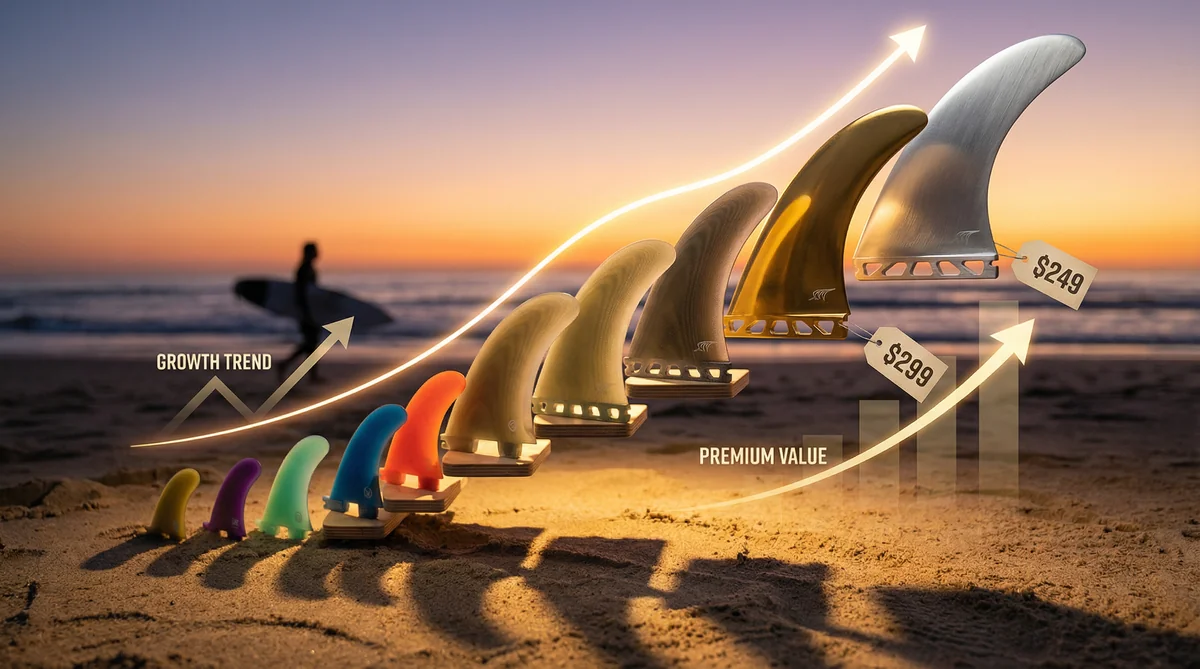
JJF's signature fins range from roughly $80 for the Alpha to $180+ for the Vapor Core Scimitar. That's not cheap. But compared to what a custom Pyzel board costs, fins are the most accessible way to tap into what a world champion actually rides.
You can't buy JJF's talent. You can't buy his wave knowledge or his 28-year relationship with his shaper. But you can run the exact same fin template he used to win three world titles. For $100-$180, that's a legit performance upgrade that translates regardless of your skill level.
Key Takeaways
- JJF rides Futures fins exclusively, with four signature models covering different conditions.
- The Techflex (neutral template) is his competition default and the best all-around option for most surfers.
- The Scimitar (pivot template, blunted tip) is built for speed generation in small, weak waves.
- Neutral template fins are underrated because they let the surfer dictate performance instead of the fin.
- Even a three-time world champ switches fins based on conditions. You should too.
Not sure which JJF model fits your board and wave conditions? Plug your setup into FinFinder and get a match in about 60 seconds. Faster than watching JJF's highlight reel. Almost.
Helpful Resources
Ready to Find Your Perfect Fins?
Use our expert fin recommender tool to get personalized suggestions based on your needs.
Try Fin Recommender