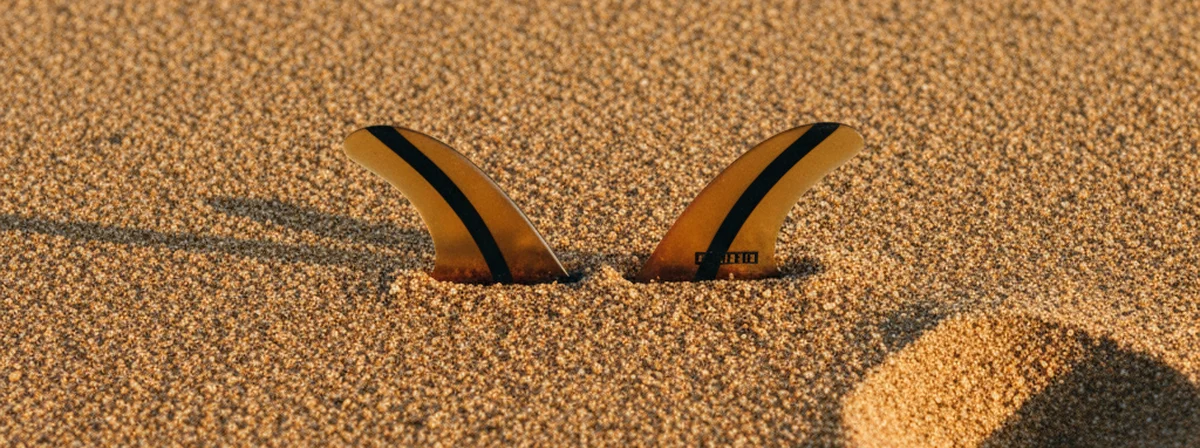
You're scrolling through fin options for your new fish and there they are. The Machado Keels. Bamboo inlay. That clean upright template. They look like something you'd frame on your wall, not drag through a closeout at Scripps. But at $125 for a twin set, you need to know if they actually rip or if you're buying a Rob Machado poster that clips into FCS II boxes.
Short answer: they rip. But not the way you'd expect.
What Makes the Machado Keel Template Different
Most keel fins follow the same basic playbook. Wide base, lots of area, swept-back outline. They generate speed and hold, but they turn like a shopping cart with a locked wheel. Rob's template breaks from that formula in a few key ways.
The Machado Keel sits more upright than a traditional keel. Less sweep, more height. The base measures 4.61 inches with a depth of 5.50 inches and a sweep angle of 39 degrees. For comparison, a classic keel template like the Mark Richards style sits wider and more raked, which gives you drive but fights you when you try to redirect.
The result is a fin that holds like a keel but pivots closer to a modern performance twin. You get that down-the-line speed keels are famous for, but you can actually turn the thing when the section demands it.
How They Feel in the Water
First session, chest-high Tourmaline on a 5'8" fish. You drop in on a soft right and the board just goes. No pump needed for the first two sections. The fins grab the face with this steady, locked-in feeling that makes you trust the rail completely. It's not aggressive. It's confident. Like the fins already know where you're heading.
Where things get interesting is in the turns. Traditional keels make you commit to big, sweeping arcs. The Machado template lets you tighten that arc up. Not shortboard-tight, but enough to hit a section and redirect without losing all your speed. The flat foil with bevel keeps the drive honest while the upright profile lets the tail release when you lean into it.
Second session, punchy 3-foot walls at Cardiff Reef. This is where the Machado template really shows off. Quick drops into short sections, the kind of waves where you need the board to turn NOW. The fins respond. You push through a bottom turn and instead of that wide keel arc, the board snaps back up the face with enough speed to hit the lip. Not thruster-sharp, but for keels? Borderline unfair.
In overhead surf at Blacks, the story changes a little. They hold, but they're not stiff enough for serious power. If you're surfing head-high-plus on the regular, you might want something with more area and more rake. These fins live in the waist-to-overhead sweet spot, which is where 90% of fish sessions happen anyway.
The Too Fish Keels: What Changed in Version 2
Rob released a second version of the keel specifically for the Firewire Too Fish. The Too Fish Keels have slightly less surface area, more height, and more curve out the back compared to the original Go Fish keels. They dropped 3 grams per fin too.
The practical difference? They're livelier. The originals had this planted, drivey character that worked perfectly on the Go Fish's wider outline. The Too Fish Keels feel quicker in the pocket, more willing to snap into tight turns. If you're riding a narrower fish or a retro twin, the Too Fish version is probably the better call.
Both versions work across most fish and twin fin setups. You're not locked into Firewire boards. I've run the originals on a Christenson Fish and they felt right at home.
Machado Keels vs. the Competition
At $125, these sit in premium territory. Here's how they stack up against the alternatives.
vs. Captain Fin Christenson Keel ($90-100)
The Christenson Keel is lighter, slightly more maneuverable, and about $30 cheaper. It's a legit all-rounder. But it doesn't have the same down-the-line drive as the Machado template. If you surf beach breaks with short walls, the Christenson might actually be the better pick. For point breaks and longer walls, Machado wins.
vs. Generic FCS/Futures Keel ($50-70)
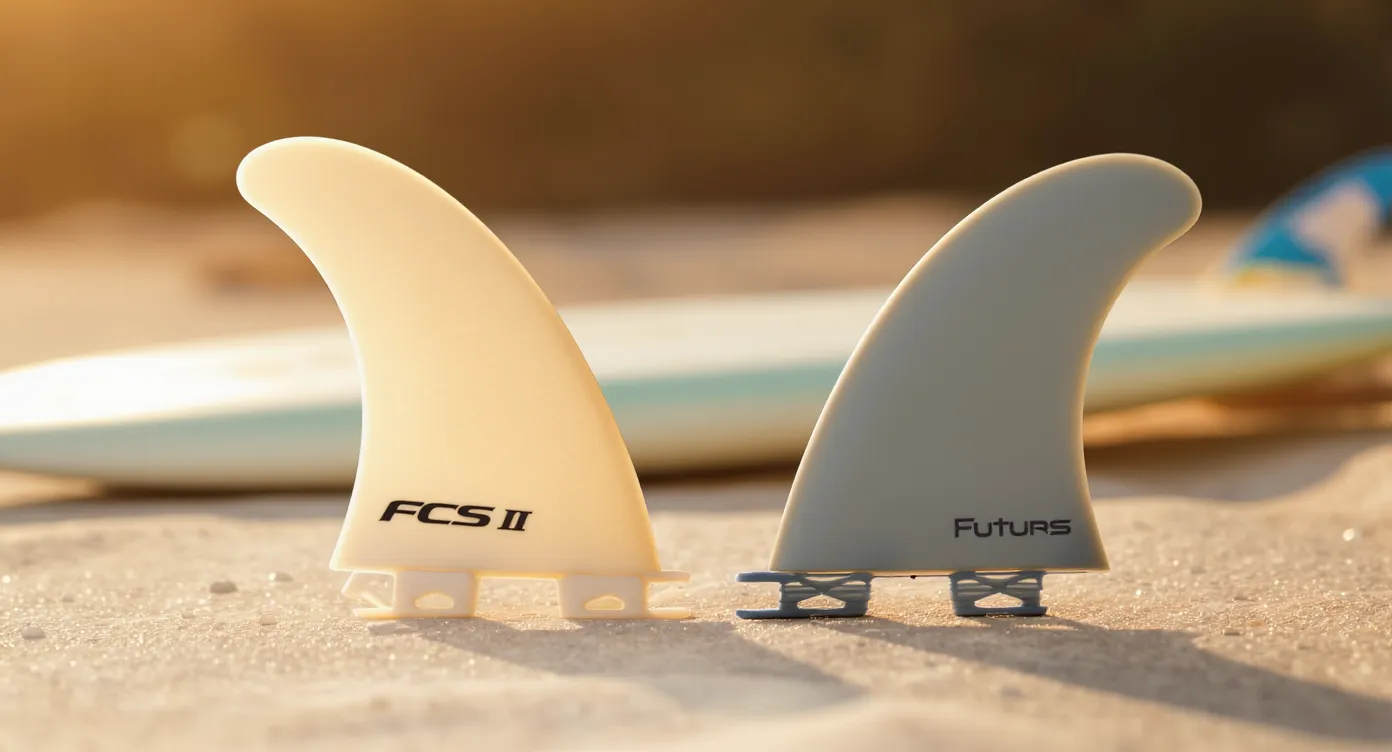
The stock keels that come with a lot of boards are fine. They work. But they feel dead. Stiff, heavy, no personality. Upgrading to the Machados is one of those changes where you feel the difference in the first wave. The board goes from functional to alive. It's the same reason you notice the jump from plastic to fiberglass fins on a thruster.
vs. Captain Fin Mikey February Keel ($95-110)
Similar outline to the Machado but a bit heavier. The February Keel has its own vibe, a little more traditional in feel. Good fin, but the Machado's Performance Core construction gives it an edge in responsiveness. You're paying for that lighter swing weight, and you feel it in quick transitions.
Who Should Buy These (and Who Shouldn't)
Buy them if you ride a fish or retro twin in waist-to-overhead waves and you want something that drives hard but doesn't feel like a boat anchor in turns. They're especially good on point breaks and lined-up reef setups where you can draw out your turns and let the speed build naturally.
Skip them if you're surfing a longboard or a board with a single-fin box. Skip them if most of your sessions are overhead-plus. And honestly, skip them if you're still figuring out what you like in a fin. At $125, these are a refined choice for someone who knows they want a keel and wants one of the best versions available. If you're experimenting, start with a $50 set and figure out whether keels are even your thing first.
That's not gatekeeping. That's protecting your wallet.
The Verdict
The Machado Keels are one of the best keel fin options on the market. Full stop. The upright template splits the difference between traditional keel drive and modern twin maneuverability in a way that most keels don't even attempt. The Performance Core construction keeps them light and responsive. And they work on way more boards than just the Go Fish and Too Fish they were designed for.
Are they worth $125? If you surf a fish regularly, yes. The difference between a $60 keel and the Machado set isn't subtle. You'll feel it in your first bottom turn. But if you're a once-a-month fish rider, a Captain Fin or solid budget keel will get the job done without the premium price tag.
Key Takeaways
- The Machado Keel's upright template offers more pivot than traditional keels while keeping the drive and speed that make keels addictive
- The Too Fish Keel (Version 2) is livelier and lighter, better for narrower fish boards and tighter turns
- At $125, these are premium keels best suited for regular fish riders who know they want the keel feel
- For overhead-plus waves or experimental surfers, look at cheaper alternatives first
- They work on most fish and twin fin boards, not just Firewire models
If you're weighing keels against performance twins or trying to figure out what fin style matches your board, the recommender can sort that out in about a minute.
Helpful Resources
Ready to Find Your Perfect Fins?
Use our expert fin recommender tool to get personalized suggestions based on your needs.
Try Fin Recommender