You paddle out at Blacks on a clean head-high morning, set your rail on a bottom turn, and the board holds like it's on rails. Next session, same break, same board, different fins. You set the same rail and the tail lets go in the wrong part of the turn. The setup didn't change. The tip shape did.
Fin tip is the last inch of the fin. The part farthest from the base. It's also the part nobody looks at when they're shopping fins online. Rake gets the attention. Base gets the spec sheet. The tip quietly decides how your board releases off the top and whether your bottom turn feels planted or twitchy.
Pointed Tips vs Rounded Tips: The Actual Difference
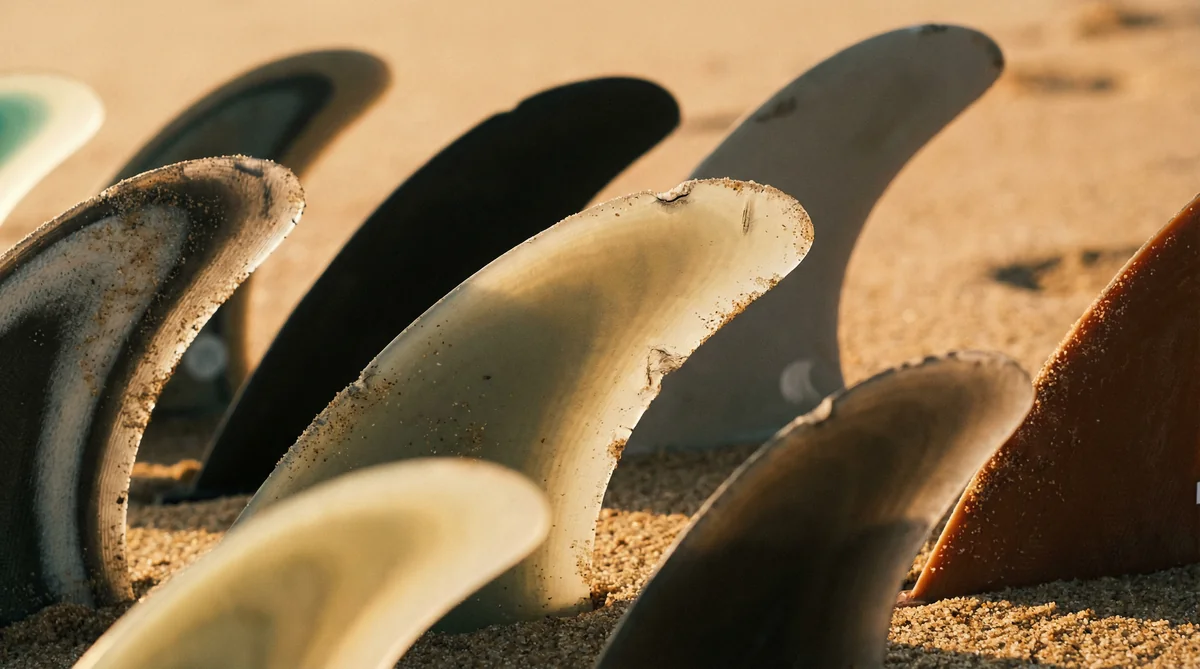
A pointed tip tapers to a sharper, thinner point. A rounded tip keeps more material at the top and finishes in a softer curve. Visually the difference looks small. In the water it's enormous.
Pointed tips release water faster at the top of a turn. When you pivot off the lip, the water has less surface to grip, so the tail lets go sooner and with less drama. Think snappier, looser, more skatey off the top. The tradeoff is less hold when you're loaded up on the rail.
Rounded tips keep more fin in the water through the full arc of a turn. That extra surface area at the top grips longer, which translates to more drive, more hold, and a turn that feels like it commits all the way through. The tradeoff is a board that doesn't want to release. Great for cranking a long rail turn. Less fun when you're trying to whip a fins-free reo.
Point is: pointed tips finish your turns fast. Rounded tips finish them long.
The Tip Flex Thing Nobody Mentions
Here's the part the spec sheets skip. A pointed tip flexes more than a rounded tip, even if the base and foil are identical. Less material at the top means less stiffness at the top, which means the fin tip bends when loaded and springs back when released.
That flex is why pointed tips feel alive. You load up on a bottom turn, the tip bends slightly, and when you exit the turn it snaps back and adds a small burst of drive. Rounded tips have less of that flex because there's more material holding the top rigid. They feel steady. Locked in. Predictable.
Neither is better. They're different tools. The question is what you want your board to do.
Which Tip Shape for Which Surfer
Pointed tips work best when you want the board to feel loose, playful, and quick to pivot. Most modern performance thruster sets lean pointed. The FCS II Accelerator, the Futures AM, the FCS II AM2 all taper hard at the top. These fins are built for surfers who want release and pop more than they want locked-in drive.
Rounded tips make sense when you want hold and drive through longer turns. Keel fins are the classic example. The rounded, almost squared-off tip is what makes a fish go trimmy and drivey instead of snappy and twitchy. Machado keels, True Ames keels, FCS II MR twin fins all keep the tip full on purpose. The design says "we're committing to this turn, not jumping off of it."
Where it gets interesting is in the middle. Fins like the Futures Pancho or the FCS II Carver sit in between. Tip's not aggressively pointed, not fully rounded. More of a soft peak. These are the "does everything reasonably well" fins that don't excel at any one thing.
Real Boards, Real Surfers
Watch footage of Filipe Toledo going huge at Trestles. The fins on his JS are pointed at the top. That release off the lip, the way the tail snaps free before he rotates, is partly tip shape doing its job. If those tips were rounded, he'd have to muscle the tail free. Wouldn't look the same.
Compare that to Tom Curren on a twin at Rincon. Those Fireballs he rides have fuller, rounder tips. You watch him draw a line on a point break wall and the tail never breaks free unless he wants it to. The turn is one continuous arc. That's tip shape too.
Rob Machado's keel setup on his Seaside is maybe the best rounded-tip example most surfers will recognize. The fins look almost blunt. The board goes like a freight train through trim sections and holds forever on a cutback. It's also why it's terrible if you try to snap it off the top. Wrong tool for that job.
What Tip Shape Feels Like in Your Feet
Pointed tips feel like the tail is always a half-beat away from letting go. You can feel it loading, then releasing. It's that quick, chatty feedback some surfers love and others find twitchy. Best in punchy beachbreaks and small to medium surf where you want quickness over hold.
Rounded tips feel quieter. You set the rail and the fins just stay there. No chatter. No surprise release. The board does what you tell it and doesn't get loose unless you unweight hard. Best in longer walls, point breaks, and anything where drive matters more than snap.
I've got a pointed-tip thruster set and a keel set in my quiver. They're not interchangeable. Some days I want the first. Some days I want the second. The board's the same. The session's completely different.
The Mistake Most Surfers Make
Buying fins based on rake and base length while ignoring the tip. The shop describes a fin as "balanced" or "performance" and you trust the label. Meanwhile the tip shape tells a totally different story.
Two fins with identical rake and base length can feel nothing alike in the water if one has a pointed tip and the other has a rounded one. Look at profile photos next time you're shopping. Compare the top inch. That's where the real personality lives.
If you're riding a board that feels too loose and spits out of turns, try a fin with a rounder tip. If you're riding one that feels stuck and won't release, try something more pointed up top. Small change. Big difference.
Key Takeaways
- Pointed tips release water faster, giving looser, snappier turns off the top.
- Rounded tips hold longer through the arc, giving drive and committed rail turns.
- Pointed tips flex more because there's less material at the top. That flex adds spring and liveliness.
- Modern performance thrusters usually run pointed. Classic keels and twin fins run rounded.
- Tip shape matters as much as rake or base. Ignore it at your own risk.
- If your board feels twitchy, try rounder tips. If it feels stuck, try pointed.
The fin-tip detail matters more than most surfers realize, but matching it to your board, your waves, and the way you actually surf takes a bit of thinking. If you'd rather skip the guesswork, FinFinder's recommender will sort through the tip shape, rake, base, and foil combinations for you in about a minute. For the bigger picture on fin geometry, the all about fins guide breaks down how all the shapes work together.
Helpful Resources
Ready to Find Your Perfect Fins?
Use our expert fin recommender tool to get personalized suggestions based on your needs.
Try Fin Recommender