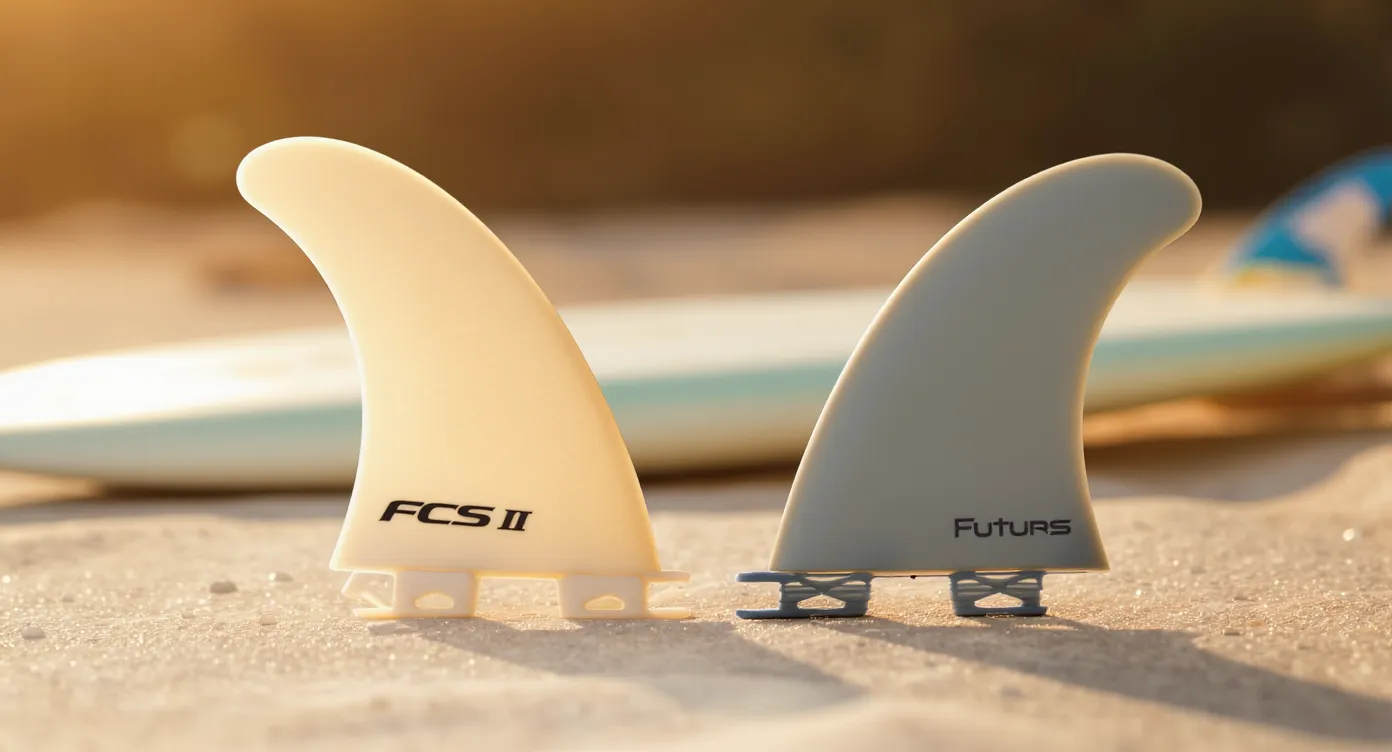
You're at the fin wall in your local shop, scanning for the template you've ridden since 2019. There it is. Same shape, same price, except this box has a little green leaf on it and the words "made from recycled fishing nets" running down the side. Your gut says marketing.
Your gut is mostly right. The surf industry will staple "sustainable" onto anything that moves units. But a small handful of recycled surfboard fins are the genuine article, and they happen to be some of the best fins you can buy, regardless of what they're spun from.
Let's sort the real engineering from the ocean-themed sticker job.
What recycled surfboard fins actually means
The term covers four very different things: recycled fishing nets melted into a composite, recycled PET from plastic bottles used as a core, recycled glass fiber, and bio-resin where the petroleum binder gets swapped for a plant-based one like castor oil.
Here's the tell. A serious eco fin names its material and its source. A greenwashed one says "eco-friendly" in a nice font and stops there.
Three lines pass that test. Everything else, treat with suspicion.
Futures Alpha: recycled nets that beat honeycomb
This is the one that ended the debate. The Futures Alpha line blends Bureo's NetPlus material, recycled commercial fishing nets, with Futures' Compound 6 carbon and air-infused construction. It's molded in Huntington Beach, and Futures developed the composite with help from 3M.
The nets come out of Bureo's Net Positiva program in Chile, which sets up collection points so old gillnets don't end up wrapped around a sea lion. Fishermen get paid to hand them in. That part is real, not a hangtag.
Now the part that matters to you. Futures says the Alpha blend is lighter than their Honeycomb core, and you feel it. Pop one into your thruster boxes and the board comes off the bottom with this snappy, almost springy energy off the top.
The fin loads up through a hard bottom turn and fires you out of it without that dead, planted feel cheap injection plastic gives you. It's not a compromise fin. It's a performance fin that happens to be recycled.
If you want the deeper comparison, we broke the Alpha down against its main rival in the Futures Alpha vs FCS II Accelerator showdown, and the core construction story sits right next to our honeycomb fin breakdown.
FCS Neo Glass Eco: the swap nobody notices
FCS took a quieter route. The Neo Glass Eco range is built with 50% glass content and a bio-resin called EcoBlend, where roughly half the petroleum-based resin is replaced with renewable castor oil. The castor program runs through Arkema and the Pragati sustainable castor initiative, which trains farmers on yields and runoff. Boring on paper, legit in practice.
The reason this one works is that FCS didn't change the flex. Ride a Reactor or Performer in standard Neo Glass, then ride the Eco version of the same template, and you won't feel a difference. Same active flex pattern, same drive off the bottom, same release when you unweight at the top. You're getting the exact fin you'd buy anyway with a smaller carbon footprint stapled on, and no tax on your surfing.
It comes in the templates most people already ride: Reactor, Performer, Accelerator, Carver. If you're not sure which template even fits your board, start with our guide to how fins work before you worry about what they're made of.
Endorfins: Slater and Machado's recycled core
Endorfins, the Firewire fin brand shaped around input from Kelly Slater and Rob Machado, builds around a recycled PET core. The recycled plastic creates internal air cavities, the fin absorbs zero water, and the result is light without going brittle. Watch Machado glide through a Lowers wall on a single fin and you're watching the same design language that feeds these.
Is it the absolute best fin in every condition? No. But it's a properly engineered fin with a recycled heart, not a virgin-plastic blank wearing a green sticker.
Do recycled fins actually last?
This is the fair worry. Recycled plastic has a reputation for going soft or cracking, earned by a decade of cheap soft-top fins that snapped if you looked at them wrong. The honest answer for the three lines above is that durability isn't the trade-off anymore.
The NetPlus in the Alpha is bound into a carbon composite, not run as raw recycled plastic, so it shrugs off rail-to-rail loading the same way the Honeycomb does. Endorfins' recycled PET core absorbs zero water, which is the thing that quietly kills a fin over a few seasons of sitting wet in a board bag. A fin that doesn't soak up the ocean it lives in tends to outlast the board it's screwed into.
Where you still see failures is the bargain-bin stuff. A no-name "recycled" fin with no composite reinforcement will flex out and stay flexed. That's not a recycling problem. That's a cheap-fin problem dressed up in a leaf.
How to spot the greenwash
Quick field test before you spend money:
- No named material. "Eco-friendly construction" with no specifics means nothing. NetPlus, recycled PET, 50% castor bio-resin: those are claims you can check.
- No source. Real programs name where the waste comes from. Bureo names Chilean fishing fleets. Vague brands name nothing.
- No third-party stamp. The ECOBOARD label from the nonprofit Sustainable Surf is independently verified, and Firewire has qualified its full production for it since 2014. A leaf icon a marketing team drew is not a certification.
- A green premium with no performance story. If it costs more and the only upgrade is the box art, walk.
Smaller outfits like Rebel Fin Co in Europe and Marlin Fins out of Portugal are doing honest work in recycled materials too. The point isn't brand worship. It's that specificity is the difference between a product and a poster.
So are recycled surfboard fins worth it?
For the three lines above, yes, without an asterisk. The performance gap people assumed was there in 2018 is gone. Pros ride Alpha on tour because it's fast and light and resilient, not to feel good about ocean plastic. The recycling is a bonus, not the pitch.
For everything else wearing a leaf and charging extra for it, no. You're paying for the sticker.
The honest move is to pick the right template for your board and your waves first, then choose the recycled version if it exists in that template. Material is the last decision, not the first one.
Key Takeaways
- Futures Alpha, built with Bureo NetPlus recycled fishing nets, is a genuine performance fin: lighter and snappier than standard honeycomb.
- FCS Neo Glass Eco swaps in 50% castor bio-resin with zero change to flex or feel. It's the easiest no-compromise eco choice.
- Endorfins uses a recycled PET core that stays light without going brittle.
- Real eco fins name the material, name the source, and carry independent certification like ECOBOARD. Vague "eco-friendly" labels are marketing.
- Choose your fin template by board and conditions first. Pick recycled within that template, not instead of it.
Not sure which template you should even be on before you start sweating the material? Tell the FinFinder recommender what you ride and where you surf, and it'll hand you the template that fits. Whether that one comes spun from old gillnets is the easy part to sort out after.
Helpful Resources
Ready to Find Your Perfect Fins?
Use our expert fin recommender tool to get personalized suggestions based on your needs.
Try Fin Recommender