You're three sessions into surfing. You caught a few waves on that 8-foot Costco board, felt the glide, got hooked. But something's off.
Every time you try to angle across the face instead of going straight, the board slides sideways like it's on ice. You dig your rail in, lean hard, and the tail just... drifts. Your soft top surfboard fins are the problem, and nobody told you.
That's not you. That's your fins.
Most beginner soft-tops ship with the cheapest fins the manufacturer could bolt on. Floppy rubber things that bend under any pressure, wash out in turns, and basically exist so the board doesn't spin in circles. They're placeholder fins. Training wheels that nobody told you to take off.
What's Actually on the Bottom of Your Soft-Top
Pull your board out of the water and flip it over. If you bought a Wavestorm, Gerry Lopez, South Bay, or any sub-$200 foamie, you're probably looking at soft plastic fins held in by screws that poke through the deck. These are "bolt-through" or "plug" fins. They're flexible enough that you can bend them with two fingers.
That flex is the problem. When you try to turn, the fin bends instead of biting into the wave face. When you try to generate speed by pumping, the fin flexes and absorbs the energy you're putting into the board. It's like trying to sprint in sandals.
Higher-end soft-tops from brands like Catch Surf and MF Softboards have started installing real fin boxes. FCS II or Futures compatible. That's a massive upgrade out of the box, because it means you can run the same fins that go into fiberglass shortboards. If your foamie has proper fin boxes, you're already ahead of the game.
The Feel Difference Is Immediate
I swapped the stock rubber fins on an 8-foot foamie for a set of stiff composite thrusters last summer at San Onofre. First wave, the difference hit me before I even tried to turn. The board tracked straight down the line with this steady, confident feel instead of the usual wobble. Like going from a shopping cart to a skateboard.
Then I leaned into a bottom turn. The fins grabbed. Not aggressively, not like a shortboard snapping off the bottom. More like the board finally understood what I was asking it to do.
The tail held, the rail engaged, and I actually made it across a section I'd been bogging on for weeks.
That's what proper fins do on a soft-top. They don't turn your Wavestorm into a performance shortboard. They turn it into a functional surfboard that responds when you shift your weight.
Three Levels of Soft-Top Fin Setups
Level 1: Stock Rubber Fins (What Came in the Box)
Fine for your first session or two. They keep the board going roughly forward. They won't break when you beach the board or run into someone. That's about all the praise they deserve.
If you're still learning to pop up and just riding whitewater to the beach, don't stress about upgrading yet. Stock fins do the job at that stage. But the moment you start angling on green waves and attempting turns, they become the bottleneck.
Level 2: Aftermarket Composite Fins ($20-$40)
This is the sweet spot for most beginners. Companies like Perfect Storm, Shapers, and even Catch Surf's own hi-perf replacement fins make stiffer composite fins that screw right into the same bolt-through holes your stock fins use. No modification needed.
What changes: the fins don't flex under load. You get actual drive when you pump. Turns feel connected instead of mushy.
The board holds a line through sections that used to wash you out. For $25-$35, it's the single best upgrade you can make to any foamie.
Better than new wax. Better than a new leash. Better than anything.
Level 3: FCS/Futures Box Conversion ($40-$80)
If you're getting serious and your board has the standard bolt-through plugs, you can install aftermarket FCS or Futures fin boxes. This opens up the entire world of performance fins. Companies like True Ames, Captain Fin, and the major brands all become options.
Fair warning: this requires cutting into your board and gluing in the boxes. It's not hard, but it's permanent. YouTube has a dozen tutorials.
If you're planning to ride this foamie for a while and want real performance, it's worth it. If you're about to graduate to a hard-top in a month, skip it.
Sizing Fins for a Soft-Top
Soft-tops are thick, buoyant, and wide. They're not going to respond to fins the same way a 27-liter shortboard does. Here's what works.
Go bigger than you think. The extra volume in a foamie means you need more fin area to control it. If a fin sizing chart says Medium for your weight, go Medium-Large for your soft-top. The extra surface area gives you more hold and drive through that thick, floaty hull.
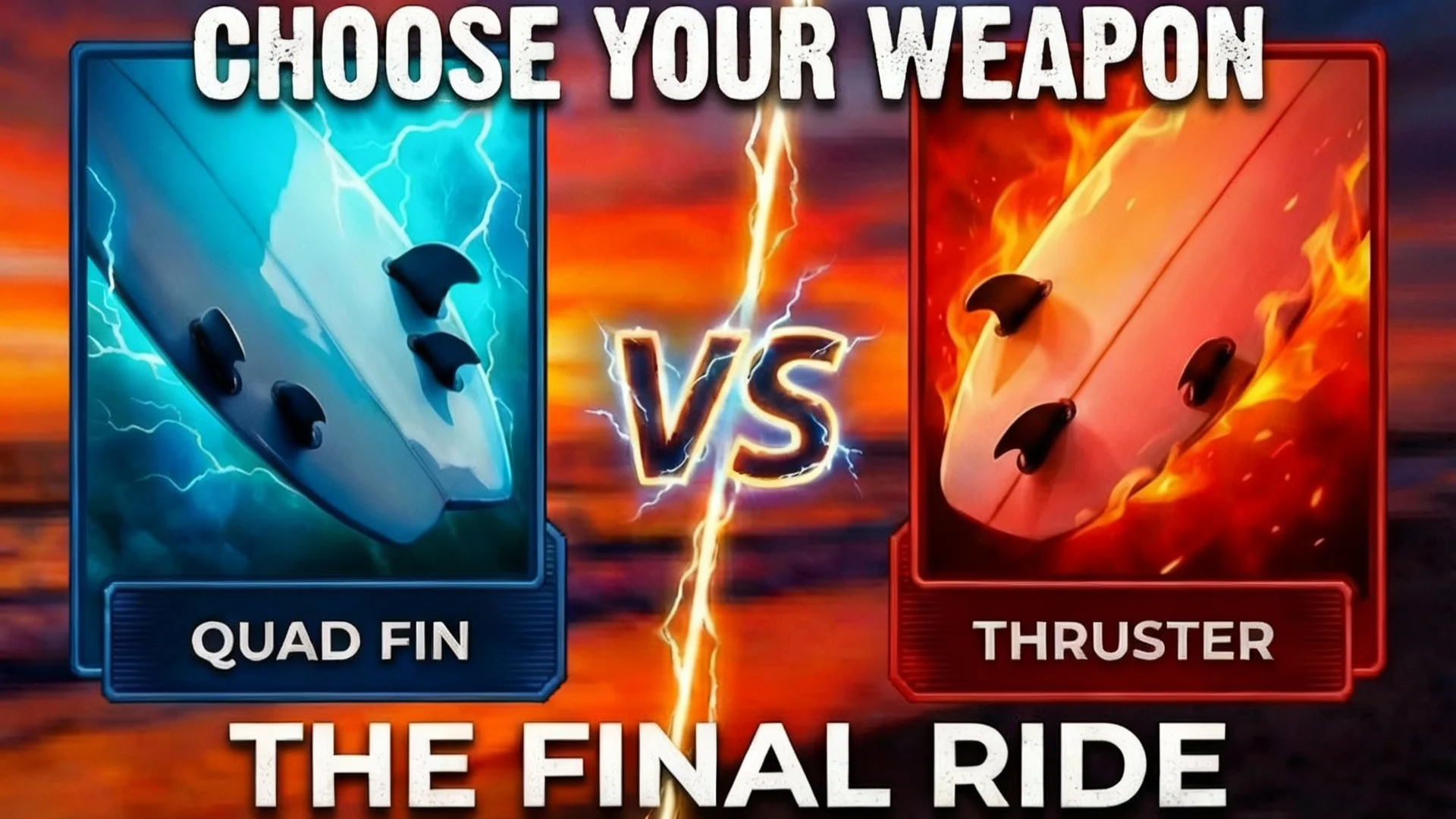
Thruster setup is your friend. Three fins give you the most control and the easiest learning curve. Quads are fun on foamies too, but start with a thruster. The center fin acts as a stabilizer and makes the board more predictable while you're building muscle memory.
Skip the single fin on short foamies. If you're on a 7-foot or 8-foot soft-top, a thruster or 2+1 setup gives you way more control than a single fin. Single fins work great on 9-foot soft-top logs, though.
That's where they shine. Check out our longboard fin guide if you're riding a 9-footer.
The Brands Actually Worth Your Money
Not all aftermarket soft-top fins are created equal. Some are just slightly stiffer versions of the same rubber garbage.
Catch Surf Hi-Perf Fins: Made by the company that builds the Odysea line. They know foamies better than anyone. Stiffer nylon construction, designed specifically for their boards but fit most bolt-through systems. Around $15-$25 for a set.
Perfect Storm Fins: The 9-inch single fin is a cult favorite for Wavestorm owners. Molded composite, way stiffer than stock, and it transforms how those big foamies track and turn. About $20.
Shapers Soft-Top Tri Set: Fiberglass composite thrusters designed for bolt-through systems. These are legit performance fins crammed into a soft-top compatible package. $30-$40 range.
True Ames (if you have FCS/Futures boxes): If your foamie has real fin boxes, True Ames makes some of the best longboard and mid-length fins on the market. Their 2+1 setups on a 9-foot Odysea Log are genuinely fun.
When NOT to Upgrade Your Soft-Top Fins
Hot take: not every beginner needs to rush out and buy new fins.
If you're still working on your popup and spending most of your time in the whitewater, stock fins are fine. They're forgiving, they're cheap to replace when you ding them on the bottom, and they slow the board down slightly, which is actually helpful when you're learning speed management.
The upgrade matters when you start catching unbroken waves and wanting to turn. That's the inflection point. Before that, spend your money on surf lessons instead. A good coach will do more for your surfing than any fin ever will.
Jamie O'Brien rides Catch Surf foamies at Pipeline and makes it look effortless. But even he upgraded the fins. The stock rubber fins on an Odysea aren't touching a wave at Pipe. Point is: the board matters less than you think, but the fins matter more than you'd expect.
Key Takeaways
- Stock soft-top fins are floppy rubber placeholders that kill your ability to turn and generate speed.
- A $25-$35 composite fin upgrade is the single best modification you can make to any foamie.
- Go one size bigger on fins than weight charts suggest because soft-tops have more volume to control.
- Thruster setups give beginners the most control and predictability on soft-tops.
- Don't bother upgrading until you're catching green waves and attempting real turns.
If you're not sure which fins fit your foamie or what size to run, toss your board details into FinFinder and it'll match you with the right setup in about a minute. Beats staring at Amazon listings for an hour.
Helpful Resources
Ready to Find Your Perfect Fins?
Use our expert fin recommender tool to get personalized suggestions based on your needs.
Try Fin Recommender