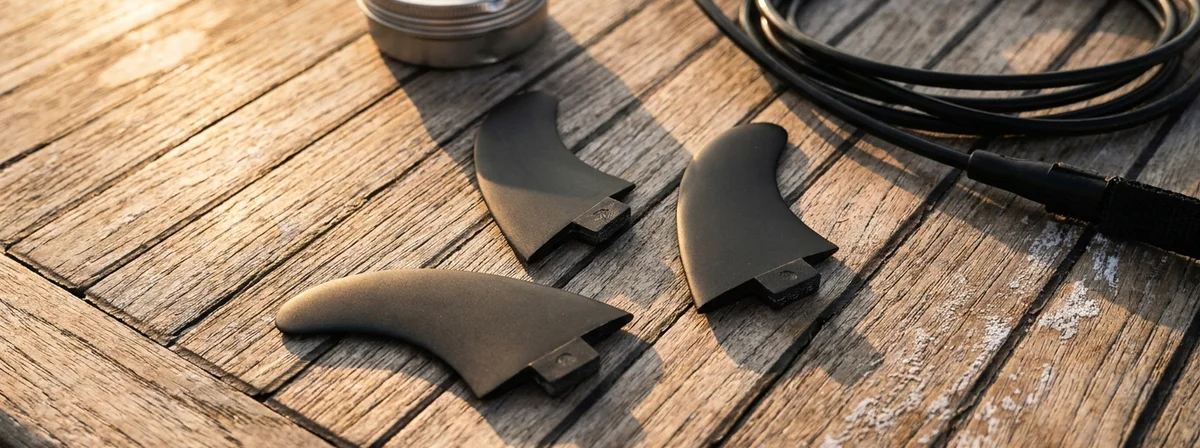
Hold a Performance Core fin up to the sunlight at the shop. Look closely at the surface. There's a faint honeycomb pattern bleeding through the resin, like a beehive trapped in glass.
That's not a graphic. That's the entire reason the fin works.
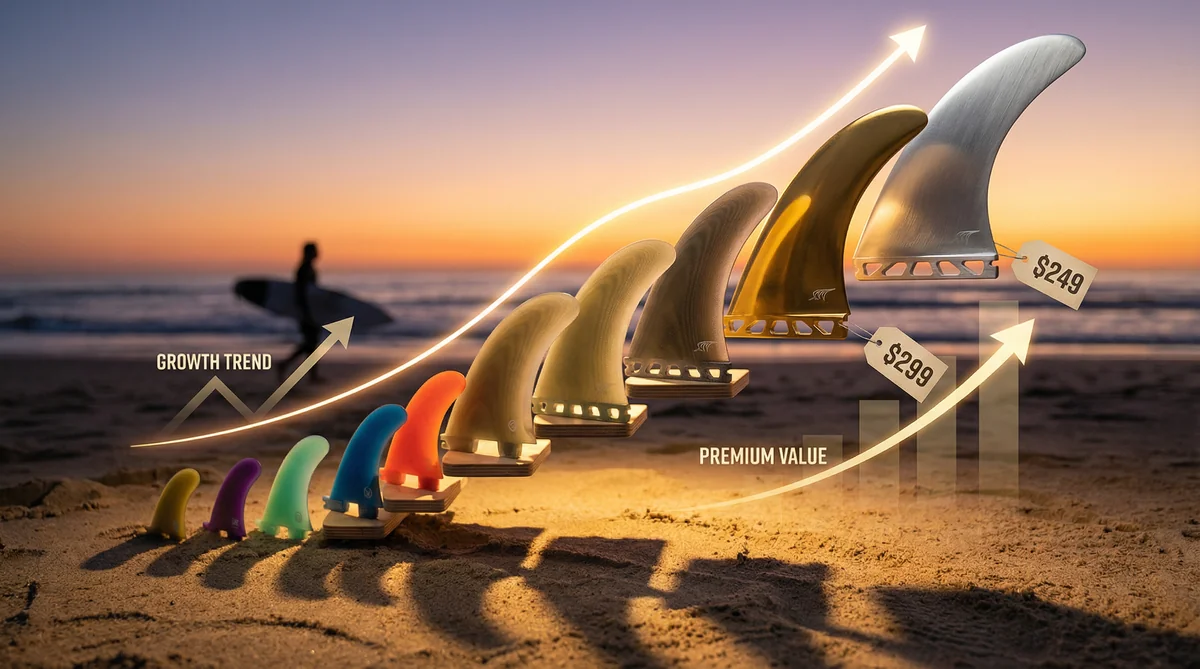
Most surfers walk past honeycomb fins without thinking about what's actually inside them. They see the FCS PC label, note the price (somewhere between $80 and $130), and assume it's the middle option between fiberglass and carbon. Which is true. But the construction itself is way more interesting than the price tag suggests.
The hex pattern is the structural backbone of probably 60% of the fins on your local surf shop wall. Once you understand what it's doing, you'll understand why a lot of pros stick with PC fins instead of jumping to full carbon.
What's Actually Inside a Honeycomb Fin
The honeycomb core is a thin lantor mat with hexagonal cells, sandwiched between sheets of fiberglass. The whole thing gets dropped into a mold and the resin gets vacuum-injected through the layers. The process is called Resin Transfer Moulding. RTM if you want to sound like a fin nerd at the bar.
That hex shape isn't decorative. Hexagons are nature's strongest geometric tile. Bees figured this out millions of years ago. Engineers copied it for aircraft wings, F1 chassis, and yes, your surfboard fin.
The grid lets the fin be hollow without being weak. You're replacing solid resin with structured air pockets, but the geometry holds the load. The result is a fin that weighs about 20 percent less than a solid fiberglass equivalent without losing the stiffness you need to drive through a turn.
Why Engineers Use Hexagons
A hex cell distributes pressure evenly across six walls instead of four. Square cells fail at the corners. Hex cells don't have weak corners. That's the whole trick.
When your foot loads up the rail and the fin twists trying to grip the wave face, the load travels through the hex grid like water through a watershed. No single cell takes the hit. The fin flexes predictably, recovers fast, and doesn't fatigue the way a solid plastic fin will after a few months of hard surfing.
Futures runs the same concept under their Honeycomb construction. FCS calls it Performance Core. Roam, Captain Fin, and a dozen smaller brands all use a hex-core RTM process. Same factory in some cases, different sticker, same structure inside.
How Honeycomb Feels in the Water
Drop in on a chest-high right at Cardiff Reef on a clean Tuesday morning. Set your rail. The fin grabs without a fight, holds through the bottom turn, and snaps back to neutral as you drive up the face. That's the honeycomb doing its job.
Compared to a solid glass fin, honeycomb feels lighter under your back foot. You won't notice it on your first wave. You'll notice it on wave fifteen when your legs aren't as cooked and your turns still feel sharp.
Three grams per fin doesn't sound like much. Multiply by three fins and a 90-minute session and you feel it.
Compared to plastic, the difference is night and day. Plastic fins feel dead. They don't flex, they just bend reluctantly and snap back stiffly. Honeycomb has a quiet liveliness to it.
Compared to full carbon, honeycomb feels softer through the tip. Carbon is rigid. Locked.
Sometimes too locked, especially in mush. Honeycomb releases off the top a little easier and forgives small mistakes.
The Flex Pattern Conversation
Here's where it gets interesting. The honeycomb itself isn't doing all the flex work. The fiberglass skin around it is. The core controls how that flex is distributed.
PC fins typically run a stiffer base and a slightly looser tip. The base needs to hold to give you drive. The tip needs to give so the board doesn't feel locked.
The hex core lets the engineer tune that flex zone by zone, which solid materials can't do. This is why PC fins from a good template (the AM2, the H4, the Performer PC) feel completely different from a no-name honeycomb fin off Amazon for $35. Same construction concept, totally different engineering.
If you want to go deeper on how flex zones change your surfing, we broke down the full picture in our fin flex guide.
What Honeycomb Fins Are Bad At
They're not magic. A few honest limitations.
Honeycomb fins crack when you slam them into reef. The hex core is light, but it's not impact-rated. A solid plastic fin will survive a reef hit better than a PC fin every time. If you surf nothing but Pipeline or Restaurants, plastic might be smarter.
They're also overkill for total beginners. If you're still learning to read a wave, the difference between PC and plastic is a difference you can't feel. Save the money and buy a basic glass set. Upgrade when your surfing actually warrants it.
And honeycomb has a feel. Some surfers love it. Some prefer the dead-locked sensation of full carbon. Try both before you commit to a $130 set.
How a Honeycomb Fin Wears Out
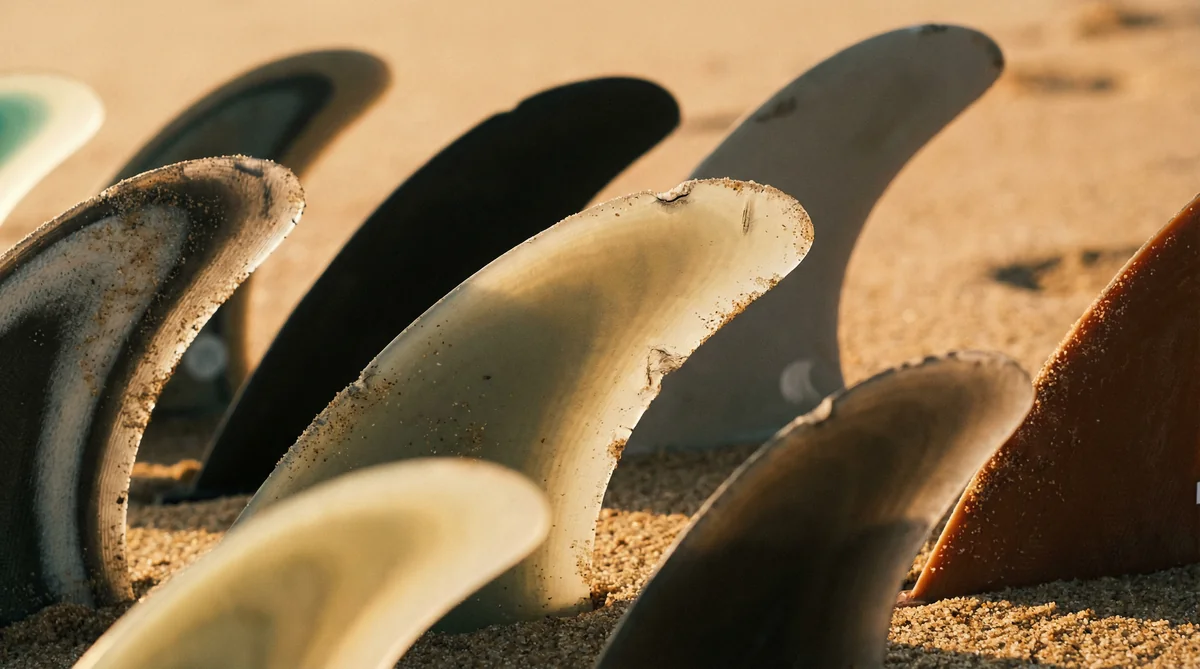
PC fins don't last forever. The fiberglass skin slowly delaminates from the hex core after a few hundred hours of hard surfing, especially if you store them in a hot car between sessions.
You'll feel it before you see it. The fin loses its snap. Turns that used to feel crisp start feeling soft and sluggish. The base feels fine, but the tip flex goes mushy.
Hold the fin against a flat surface and look for any wave or curve in the trailing edge. A new PC fin is dead straight. A fatigued one will show a slight bow. That's the core breaking down.
Most surfers replace their main set every two to three years. Pros replace them every six months. Your call depends on how much you actually surf and how much you trust the feel under your feet.
Why This Construction Won the Wall
Walk into any surf shop in 2026 and the wall of fins is mostly honeycomb-cored. Why? Because the flex-to-weight ratio is the best engineering compromise on the market.
Pure plastic is too heavy. Pure carbon is too rigid for most surfers. Pure fiberglass costs almost as much as PC and weighs more. Hex-core RTM splits the difference better than anything else available right now.
The Channel Islands AM2 PC, the FCS H4 PC, the Futures Vapor Honeycomb. All built on the same core idea. Pros gravitate toward PC fins because they're consistent batch to batch, they survive a season of hard use, and they let board flex do its job without damping it.
Key Takeaways
- Honeycomb fins use a hexagonal lantor core wrapped in fiberglass and pressed in an RTM mold. The hex isn't aesthetic. It's load-bearing structure.
- They run about 15 to 20 percent lighter than solid fiberglass without losing stiffness, which is the biggest reason pros pick them over heavier alternatives.
- Compared to plastic they feel alive. Compared to full carbon they feel forgiving. Honeycomb is the middle path most surfers actually want.
- Cheap honeycomb fins from off-brand manufacturers use the same concept but worse engineering. The hex pattern alone doesn't make a fin good.
- Honeycomb cracks under reef impact more than plastic. If you surf shallow heavy slabs, factor that in.
If you're not sure whether honeycomb, fiberglass, or carbon makes sense for the boards in your quiver, plug your setup into our fin recommender and let the model run the math. It accounts for your weight, the boards you ride, and the conditions you surf, then matches you to a construction and template that fits.
Helpful Resources
Ready to Find Your Perfect Fins?
Use our expert fin recommender tool to get personalized suggestions based on your needs.
Try Fin Recommender