You're sitting in the lineup on a knee-high summer morning, watching some guy on a stubby twin fin fish absolutely fly past you. No pumping. No effort. Just effortless lateral speed while you're bogging on your thruster.
He kicks out grinning. You paddle back out wondering what you're doing wrong.
You're not doing anything wrong. He's just riding twins.
Why Twin Fins Took Over Small Wave Lineups
Twin fins aren't new. Mark Richards won four world titles on them in the late '70s and early '80s. But then Simon Anderson invented the thruster and twin fins got shelved for three decades. The surfing world moved on.
Until it didn't. Somewhere around 2018, the retro fish revival kicked into high gear. Shapers like Ryan Burch and the Channel Islands crew started pushing modern twin fin designs. Rob Machado's Seaside became one of Firewire's best-selling shapes.
And suddenly every lineup from Lowers to Noosa had more twin fins than you could count.
The reason is simple: most of us don't surf overhead barrels every day. We surf waist-high mush. And twin fins absolutely destroy in waist-high mush.
The Physics of Why Twins Are Faster
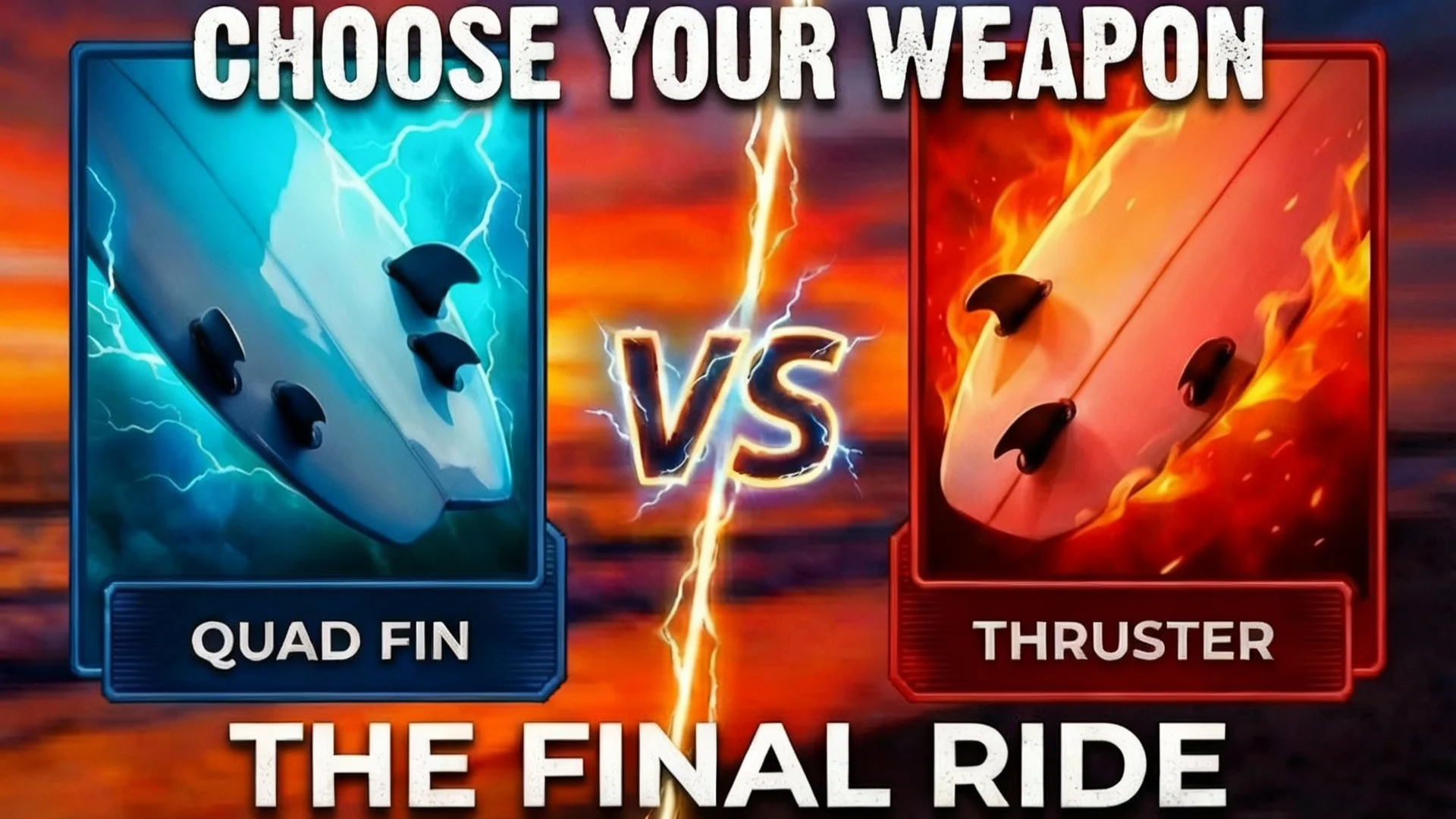
A thruster has three fins. That center fin creates drag every time you go straight. In powerful waves, that drag is worth the trade-off because you get control and a pivot point.
In small waves? That drag is just slowing you down.
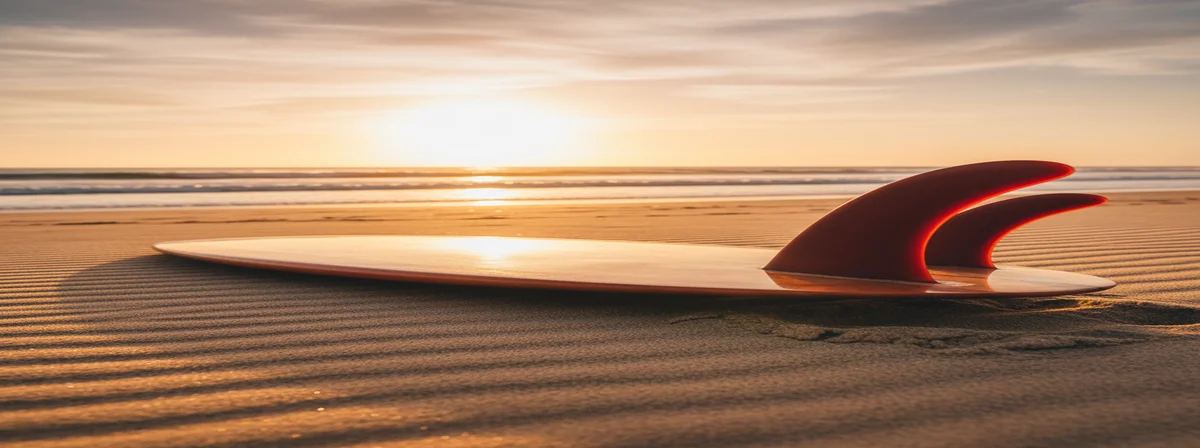
Twins have two fins and no center fin. Water flows freely under the tail. Less drag means more speed from less energy. You're not fighting your equipment to generate momentum.
You drop into a waist-high wall and instead of that familiar sluggish feeling where you have to pump three times just to get moving, the board just goes. It picks up speed off the drop and carries it through the flat section.
That sensation of effortless glide is what hooks people. Once you feel it, thrusters in small surf start to feel like work.
Keel Fins vs Modern Twins: Pick Your Vibe
Not all twin fins are the same. The two main categories feel completely different in the water.
Keel Fins
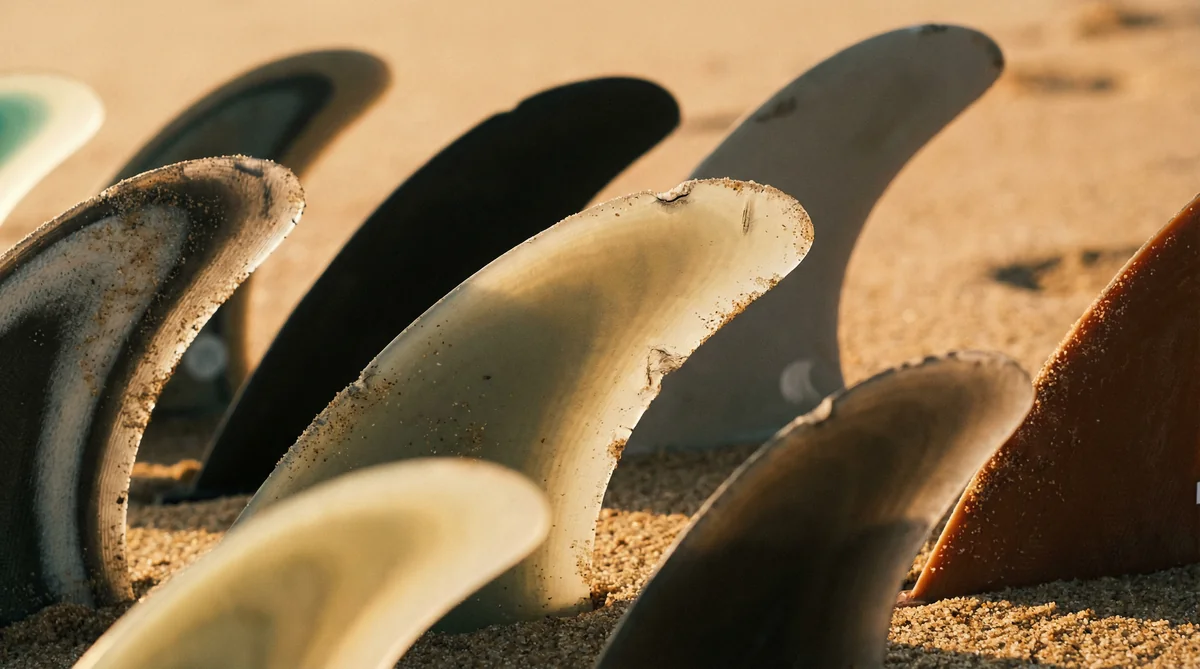
Keels are the classic twin fin shape. Wide base, low profile, tons of surface area. Think of them as the cruiser truck of the fin world. They give you smooth, sweeping turns, tons of drive down the line, and a buttery flow that feels like you're drawing long arcs with a paintbrush.
Keels are perfect for classic fish shapes and surfers who want that retro, soulful glide. The Machado Keel from Futures is the gold standard. If you want to feel like you're surfing a 1970s San Diego fish with modern materials, keels are the call.
Modern Performance Twins
Modern twins are taller, more upright, with less base and more rake. They sit deeper in the water and respond quicker. Think of them as the sport sedan version. Sharper turns, more responsiveness, less of that drawn-out cruiser feel.
The FCS II Modern Keel and Futures T1 are solid options here. If you're coming from a thruster background and want twin fin speed without giving up all your turning ability, modern twins bridge the gap.
What Boards Work Best With Twin Fins
Twins belong on fish, eggs, and hybrid shapes. Wider tails, more volume, flatter rocker. The board does half the work. Pair a classic fish outline with keel fins and you have a small wave weapon that makes 2-foot surf feel like 4-foot surf.
Some specific shapes worth looking at:
- Firewire Seaside: Rob Machado's design. The poster child for the modern twin fin revival. Fast, loose, and designed for everyday waves.
- Channel Islands Fish: Al Merrick's take on the classic San Diego fish. Clean lines, responsive under the feet.
- Lost RNF Retro: Matt Biolos went wider and flatter for maximum small wave speed.
- Album Surfboards Disc: A more progressive outline for surfers who want twin speed with modern pocket surfing.
Understanding how different fin setups change the ride is half the battle. The board shape and fin choice have to work together.
When Twins Don't Work
Let's be honest about the limitations.
Twins lose hold in anything overhead with power. That missing center fin means less control on steep drops and less bite through critical turns. If the waves are pumping head-high-plus at your local beach break, you'll wish you had a thruster.
They also feel sketchy in the barrel. Without a center fin anchoring the tail, the board can slide on steep, hollow faces. Quads are the better choice for speed in hollow waves because you still get that rear fin hold.
And if you surf tight, vertical, in-the-pocket? Twins don't snap. They flow. If your style is all about quick hacks and lip bashes, the loose feel of a twin will frustrate you.
Sizing Your Twin Fins
Twin fin sizing is different from thrusters. Because there are only two fins doing all the work, getting the size right matters more than usual.
General rule: go slightly larger than you would for thruster side fins. If you ride Medium thruster fins, try Large twin keels. The extra surface area compensates for the missing center fin. Check the fin sizing guide for specific weight-to-fin-size recommendations.
Too small and you'll spin out on every turn. Too big and you lose that skatey, free feeling that makes twins fun in the first place.
The Culture Shift
The twin fin comeback isn't just about performance. It's a vibe shift. Surfing got hyper-competitive and hyper-serious for a while. Everything was about airs and scores and CT clips.
Twin fins brought the fun back.
Watch Mikey February surf a twin at J-Bay and tell me it doesn't look more enjoyable than another above-the-lip rotation. There's a reason the "alternative" surfboard category has exploded.
Surfers are tired of trying to surf like John John on boards designed for Teahupoo when their home break is 3-foot Huntington.
The complete guide to fins covers where twins fit in the broader fin world if you want the full picture.
Key Takeaways
- Twin fins generate more speed in small waves by eliminating center fin drag. If your home break is usually waist-high, twins will transform your sessions.
- Keel fins give you smooth, sweeping drive for a retro cruiser feel. Modern twins give you sharper response closer to a thruster.
- Twins work best on fish, eggs, and wider-tailed shapes with extra volume and flat rocker.
- They lose hold in overhead surf and hollow barrels. Don't force a twin into conditions that need a thruster or quad.
- Size up slightly from your thruster side fins to compensate for the missing center fin.
Curious which twin fin template matches your board and wave conditions? Let FinFinder sort it out for you in under a minute.
Helpful Resources
Ready to Find Your Perfect Fins?
Use our expert fin recommender tool to get personalized suggestions based on your needs.
Try Fin Recommender