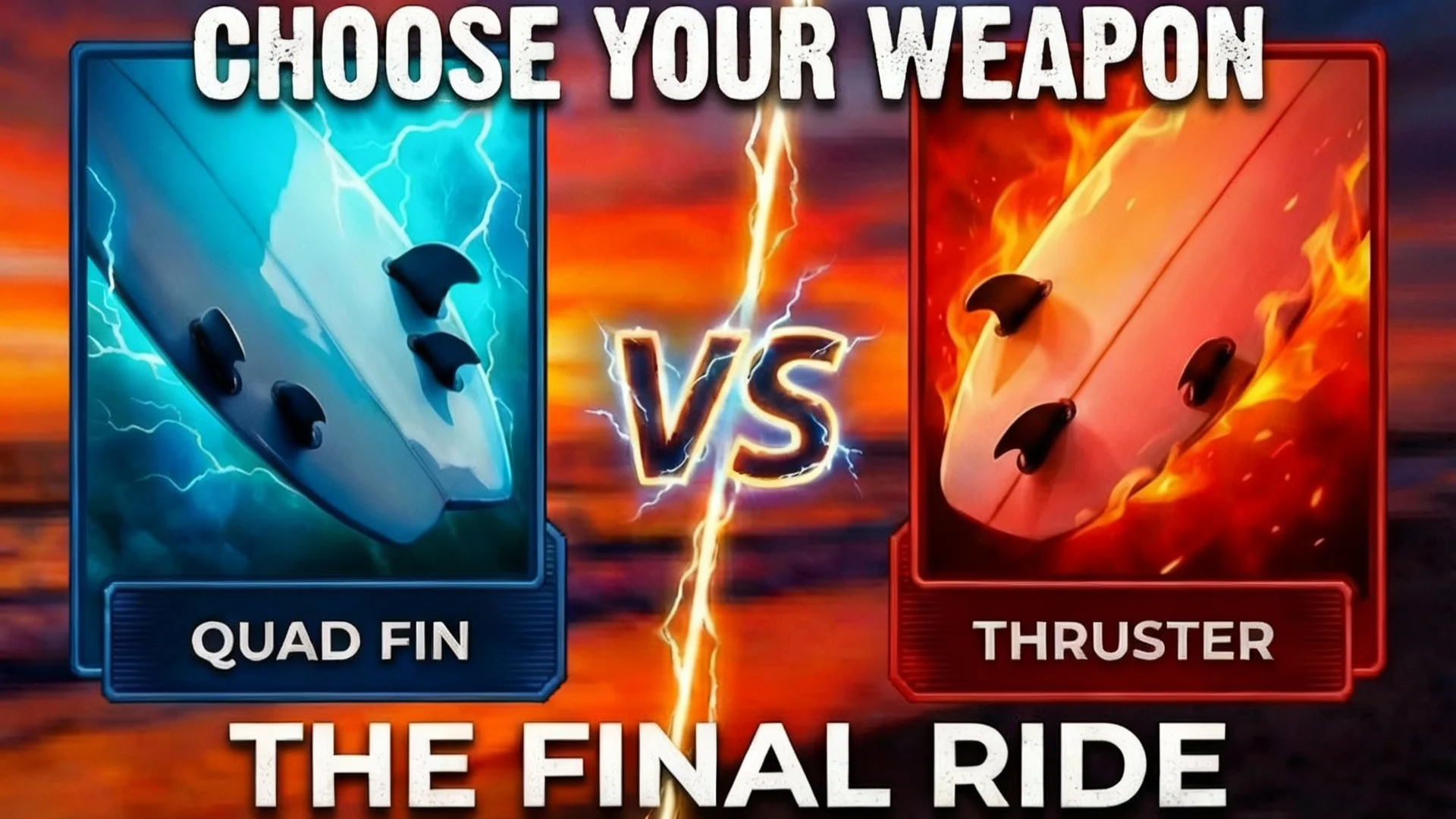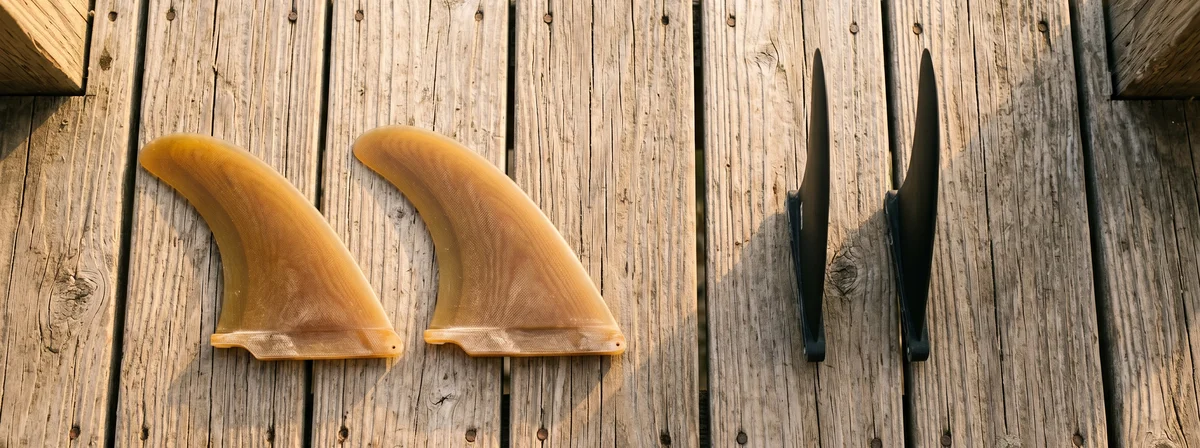
You're at the shop staring at two boards. Both 5'6 twins. One's loaded with these massive fish-style fins that look like they were ripped off a tuna. The other has tall, narrow fins that look like a thruster missing its center.
The shop kid says they ride completely differently. He's not lying. Twin keels and twin uprights are the same setup the way a station wagon and a sport bike are both vehicles.
If you've ever ridden a twin and thought it felt wrong, the fins are probably the reason. Not the board.
Same Two Fins, Different DNA
A twin setup is whatever two fins you bolt into the side boxes. That's the only rule. The two dominant templates surfers actually run come from completely different decades and produce different sensations under your feet.
Keels are wide, swept, and built for trim. They're the descendants of the Steve Lis fish from 1967. They want to point forward and stay there.
Uprights are tall, narrow, and built for pivot. They trace back to Mark Richards' world title runs in the late '70s and got modernized again recently by shapers like Daniel Thomson and Hayden Cox. They want to release.
Same fin count. Opposite priorities.
The Twin Keel: Glide, Drive, and a Locked-In Trim
Pull a true keel out of the box and the first thing you notice is the base. Four to four-and-a-half inches of straight base contact, sometimes more. The depth is shallow, usually under 4.5 inches. The rake sweeps back like a shark tail.
That geometry does one thing exceptionally well: it holds.
How Keels Feel Under Your Feet
You drop in on a chest-high reform at Cardiff, set your back foot, and the board points itself. Like rails on a track. There's no nervous energy in the fins.
They want one thing and one thing only: forward. The first time you feel it, you stop pumping. The board doesn't need it.
Speed shows up out of nowhere. You're not generating it. You're just standing there and the wave is doing the work.
That's the keel signature. The drag-to-glide ratio is so good that you'll catch yourself coasting through sections you'd normally have to fight for.
The downside is the same as the upside. Keels don't want to break free. Top turns feel sweeping and patient instead of sharp.
If you're a surfer who likes to redirect violently off the top, you'll feel like the board is fighting you. The tail won't slide.
Best Boards for Keels
Real fish. Lis-style retros, traditional fish in the 5'4 to 6'0 range, anything with a wide swallow tail and flat rocker. Throw keels on those and the board makes sense.
Names worth knowing on the fin wall: True Ames Greenough Stage IV in fiberglass, Captain Fin Co Reagan Wood, Futures Machado Keel, and the FCS II Modern Keel for the FCS crowd.
The Twin Upright: Pop, Pivot, and a Skatey Tail
Twin uprights are everything keels aren't. The base is shorter, often under 4 inches. The depth is taller, usually 4.5 to 5 inches. The fin stands up rather than sweeping back.
Aspect ratio matters here. A taller, narrower fin pivots faster and breaks loose easier. That's physics, not opinion.
How Uprights Feel Under Your Feet
Set up for a top turn and the tail slides through like it's on grease. The board pivots from under your back foot like you flipped a switch. It's the closest a non-thruster setup gets to snaps and airs without giving up the speed advantage of running two fins.
You feel the looseness in the bottom turn too. The rail engages, but the fins don't lock you in. You can adjust your line halfway through.
With keels you commit. With uprights you negotiate.
The trade-off shows up in heavier waves. An upright twin in overhead surf can feel skittish, like the tail is too willing to let go. The drive that keels hand you for free has to be earned with pumping and weight transfer.
Best Boards for Uprights
Modern high-performance twins. The Hayden Shapes Hypto Krypto twin, the Album Insanity, anything from Tomo's Modern Planing Hull lineup, the Pyzel Twinny that Asher Pacey rides. These boards have more rocker and narrower tails, and shapers tuned them around the upright template.
Fin wall names: Futures Asher Pacey Twin (literally signature), the FCS II Modern Twin, Captain Fin Co Christenson Twin Plus, and the True Ames AM2 if you want a quieter option.
The Mistake That Kills the Whole Setup
Run keels on a high-performance twin and the board feels stuck. The shape wants release. The fins refuse to give it. You'll be paddling in after an hour wondering why your $800 alt-craft surfs like a wet towel.
Run uprights on a Lis fish and the opposite happens. The board feels nervous. The tail wants to slide on a shape that was never designed to. You lose the glide that's the whole reason to ride a fish.
Match the fin to the shape's intent. That's the rule. Our fin setups guide covers the broader logic if you want to go deeper.
The Honest Verdict
If your daily wave is California summer mush, head-high points, or anything mellow and clean, and you're riding a true fish: keels every time. The glide is unbeatable when the wave isn't doing the work for you.
If you're on a modern hybrid twin and you want it to feel like a thruster that hates straight lines: uprights. The pivot is the entire point.
The split-the-difference templates exist (the True Ames AM2, the FCS Modern Twin) and they're decent, but they're decent at both jobs instead of great at one. We'd rather pick a side.
Key Takeaways
- Twin keels are wide, swept, and shallow. They glide, hold a line, and reward patient surfing.
- Twin uprights are tall, narrow, and vertical. They pivot, release, and reward modern aggressive surfing.
- Match the fin to the board. Lis-style fish wants keels. High-performance twin wants uprights.
- The fin template matters more than the brand. A True Ames keel and an FCS keel feel more alike than they feel different from any upright.
- Hybrid templates exist but they compromise the strengths of both. Pick a side if you can.
If you're staring at a twin board you already own and you can't tell which way to lean, punch your specs into the FinFinder recommender and it'll narrow the call in about a minute. Otherwise, the rule of thumb above will get you most of the way there.
Helpful Resources
Ready to Find Your Perfect Fins?
Use our expert fin recommender tool to get personalized suggestions based on your needs.
Try Fin Recommender