You're in the parking lot at Cardiff, phone in hand. Surfline says 4 feet. Period reads 17 seconds. You grab the quads with rake and walk down.
Two days later, same spot, same forecast height. Period reads 8 seconds. You grab the same quads because that's what worked last time. The session feels like pumping through wet cement.
Same wave height. Same board. Same fins. Different ocean.
Wave period is the number nobody talks about and almost everybody ignores. It decides how much energy is actually under the wave, which decides how much fin you need to ride it. If you're picking fins off the wave height number alone, you're basically guessing.
What Period Actually Means in the Water
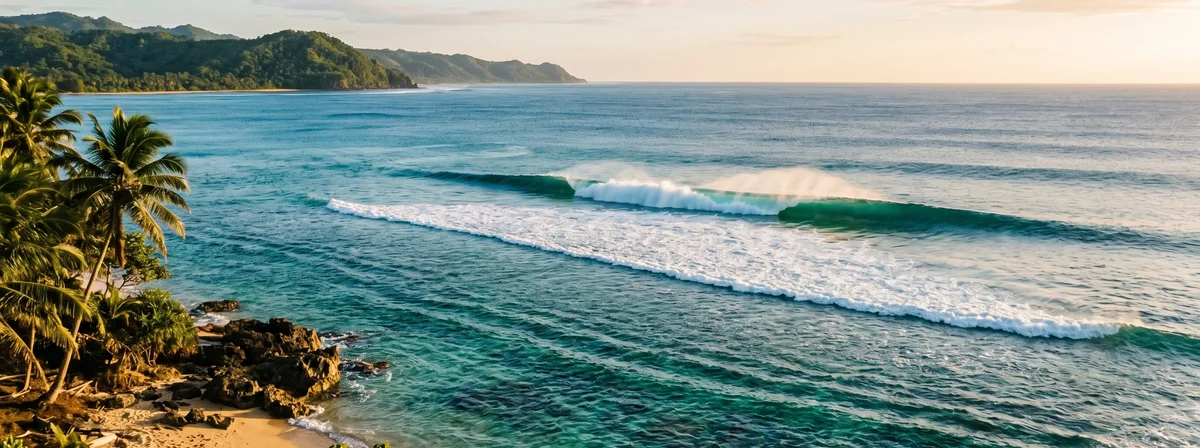
Period is the seconds between wave crests as the swell moves through deep water. Long period means the swell traveled across an ocean, organized itself, and stacked real energy. Short period means a local windstorm churned up the surface yesterday and what's hitting the beach is the leftovers.
Here's the thing. A 4-foot wave at 17 seconds and a 4-foot wave at 8 seconds will read identical on a forecast chart. They are not the same wave. The long-period one has more water moving up the face, steeper takeoffs, and a real push down the line. The short-period one is mush dressed up to look like surf.
Your fins have to deal with that difference. The setup that locks in on the powerful one will spin out. The setup that flies on the weak one will drag.
Long Period Surf Needs Hold
When a groundswell rolls in at 14 seconds and up, the wave gives you free speed. You drop in late, set your line, and the water pulls the board forward. Pumping becomes optional.
The problem is what happens when you put pressure on the tail. Loose, small-template fins under that kind of load will break free at exactly the wrong moment. The tail goes sideways, the rail releases, and a clean bottom turn becomes a recovery. You earned that wave. You don't want your fins giving it back.
This is when stiffer constructions and bigger templates earn their money. Larger base length for drive through the bottom turn. Real rake for hold through the steep face. Honeycomb or carbon for stiffness that doesn't flutter under speed.
A typical setup for Trestles on a 4-foot, 17-second south swell: a medium-to-large performance thruster with rake, or a stiff quad with a high-rake template. The board locks in like it's bolted to the wave. You set a line and trust it. Speed feels free.
Short Period Surf Is the Opposite Problem
Now switch to a 5-foot, 8-second windswell at Mission Beach. Same height on paper. Completely different physics. The wave walls up, gives almost nothing back, and you have to manufacture every inch of speed.
Big stiff fins are death in this stuff. Every gram of drag is a problem because the wave isn't pushing you forward. You're the engine. Drag isn't a small tax. It's most of the bill.
Twins, small-template quads, and looser thrusters are the answer. Less surface area, less hold, more release. The tail wants to slide, which actually helps you generate. You pump down a soft section, the fins release just enough to skate, and you pop out the other side with momentum the wave didn't give you.
You feel it instantly. The board breaks the surface tension instead of plowing it. Sections that felt impossible on quads with rake become makeable on a clean twin. Same wave. Different rules.
The 10 to 13 Second Middle Zone
Most surf you'll ride lives in this range. It's why a stock medium thruster works most of the time. The wave has enough push that you don't need to manufacture everything, and not so much that bigger fins are required.
The trick is reading the edges of the range. A 4-foot, 12-second day leans toward the long-period side. Run your standard thruster, maybe size up a fraction. A 4-foot, 10-second day leans short. Lean smaller, looser, or jump to a twin.
If you have one set of fins, default to the middle. If you have a quiver, the period number tells you which set to grab before you even leave the house.
How Real Breaks Read Differently
Lowers in July: classic 3 to 5 foot south swell at 16 to 18 seconds. Long-period groundswell that traveled from New Zealand. Use medium-large performance thrusters with rake, or quads built for hold. The wave does the work. You direct it.
Lowers in October on a NW windswell: 3 feet at 8 seconds, looks identical on the buoy. It is not the same wave. Twin keels in a fish, or small-template quads. You're not surfing the wave. You're using it as a base for what you generate.
Indo dry season at Uluwatu: pure 12 to 16 second Indian Ocean groundswell. Glass-on energy. Big rake, big base, stiff materials. The reef rewards commitment and punishes loose tails.
East Coast in March on a nor'easter: 4 to 6 feet at 10 to 11 seconds. Honest middle ground. Standard performance thrusters work. Nothing exotic required.
How to Actually Pick
Before you grab fins, look at the period reading. Every forecast shows it. Buoy data, Surfline, Magicseaweed, Windy. It's right next to the wave height number you've been staring at.
- 6 to 9 seconds: short-period windswell. Twins, small quads, looser templates. Generate your own speed.
- 10 to 13 seconds: standard performance thrusters. The everyday setup. Lean bigger toward the high end, smaller toward the low end.
- 14 seconds and up: long-period groundswell. Bigger, stiffer, more rake. The wave is doing work. You need hold, not release.
This is the variable behind half the bad sessions you've blamed on your surfing. The board wasn't wrong. The fins weren't broken. The setup was just built for a different ocean than the one you paddled out into.
If reading period charts and matching them to your fin quiver sounds like more homework than you signed up for, that's reasonable. Plug your weight, board, and the conditions you actually surf into our fin recommender and it'll do the matching for you. The fin sizing guide covers what to do once you know what template you want, and the fin fundamentals page explains why rake and base length react to swell power the way they do.
Key Takeaways
- Wave height tells you size. Wave period tells you power. They're different numbers.
- Long period (14+ sec) means more push and steeper drops. Run bigger, stiffer, more rake.
- Short period (6 to 9 sec) means weak waves you have to drive yourself. Run smaller, looser, twins or compact quads.
- Middle zone (10 to 13 sec) is where stock thrusters live. Default here if you only have one set.
- Check the period reading on Surfline or buoy data before you decide which fins to bring.
Helpful Resources
Ready to Find Your Perfect Fins?
Use our expert fin recommender tool to get personalized suggestions based on your needs.
Try Fin Recommender