You're 220 pounds, riding a 6'2 thruster at your local beach break, wondering why every bottom turn feels like the tail's about to wash out. You set your line, commit to the rail, and the board goes squirrelly. Same wave, same board, but the friend you handed it to (5'10, 160 pounds) made it look easy. It's not the board. It's almost never the board. You're riding fins that were designed for someone fifty pounds lighter.
This is the most common mistake in surfing gear, and almost nobody talks about it.
The "Medium Covers Everyone" Lie
Walk into any surf shop and ask what fins to buy. Nine times out of ten, the kid behind the counter hands you a Medium. Medium fits the bell curve, the warehouse has stock, and nobody gets fired for recommending Medium. The problem is that "Medium" was sized for a 145 to 180 pound rider, and a huge slice of the surfing population sits outside that bracket.
FCS publishes its size chart in plain text. So does Futures. Small is under 140 pounds. Medium is 140 to 180. Large is 165 to 200. Extra Large is 190 and up. There's overlap because these are guidelines, not laws. But if you weigh 210 pounds and you're riding a Medium because that's what was in the box, you've been working twice as hard as you need to.
The reason this matters comes down to physics. Fins generate lift and resistance based on surface area. More body weight on the board means more load on the rail during turns. A Medium fin trying to hold a 220 pound surfer through a critical section is doing the same job a Large would do for a 180 pound surfer, except it has less area to do it with. The result is what most heavier surfers describe as "the tail won't grip."
What Bigger Surfers Actually Feel
If you're riding fins that are too small, the symptoms are consistent. The board tracks fine in trim but loses control in critical moments. The tail slides when you'd want it to hold. Hard turns feel like wrestling. Drop-ins on steeper waves end with a chatter under the back foot, and you can't tell if it's chop or the fins giving up.
Compare that to riding the right size. Set your rail on a head-high bottom turn, and the fins grab with a quiet certainty. The board holds, releases off the top when you ask it to, and lets you stand on the gas through the inside section. Not because you got better overnight. Because the gear is finally doing its job.
One small adjustment we've seen change a heavier surfer's surfing entirely: same board, same wave, swap Medium thrusters for Large. The fix is that boring. The improvement is not.
The Templates That Actually Work
Not every Large fin is created equal. Two fins can both be marked "Large" and feel completely different in the water because base length, rake, and foil all matter as much as raw size. For surfers 195 pounds and up, a handful of templates have built reputations for handling bigger riders without dying in performance.
Thrusters for Power Surfers
Futures John John Large and JJ-2 Large are widely regarded as the gold standard for bigger surfers who want speed and hold. The base is long enough to drive through a turn, the foil is fast, and they don't lock you into a single style. FCS II Reactor Large is the equivalent on the FCS side: heavy on drive, predictable on release.
FCS II Performer Large is the safe pick if you're not sure where to start. It's a neutral template, slightly more forgiving than Reactor, and it pairs with almost any thruster. The Honda Civic of the heavyweight bracket.
Quads as the Secret Weapon
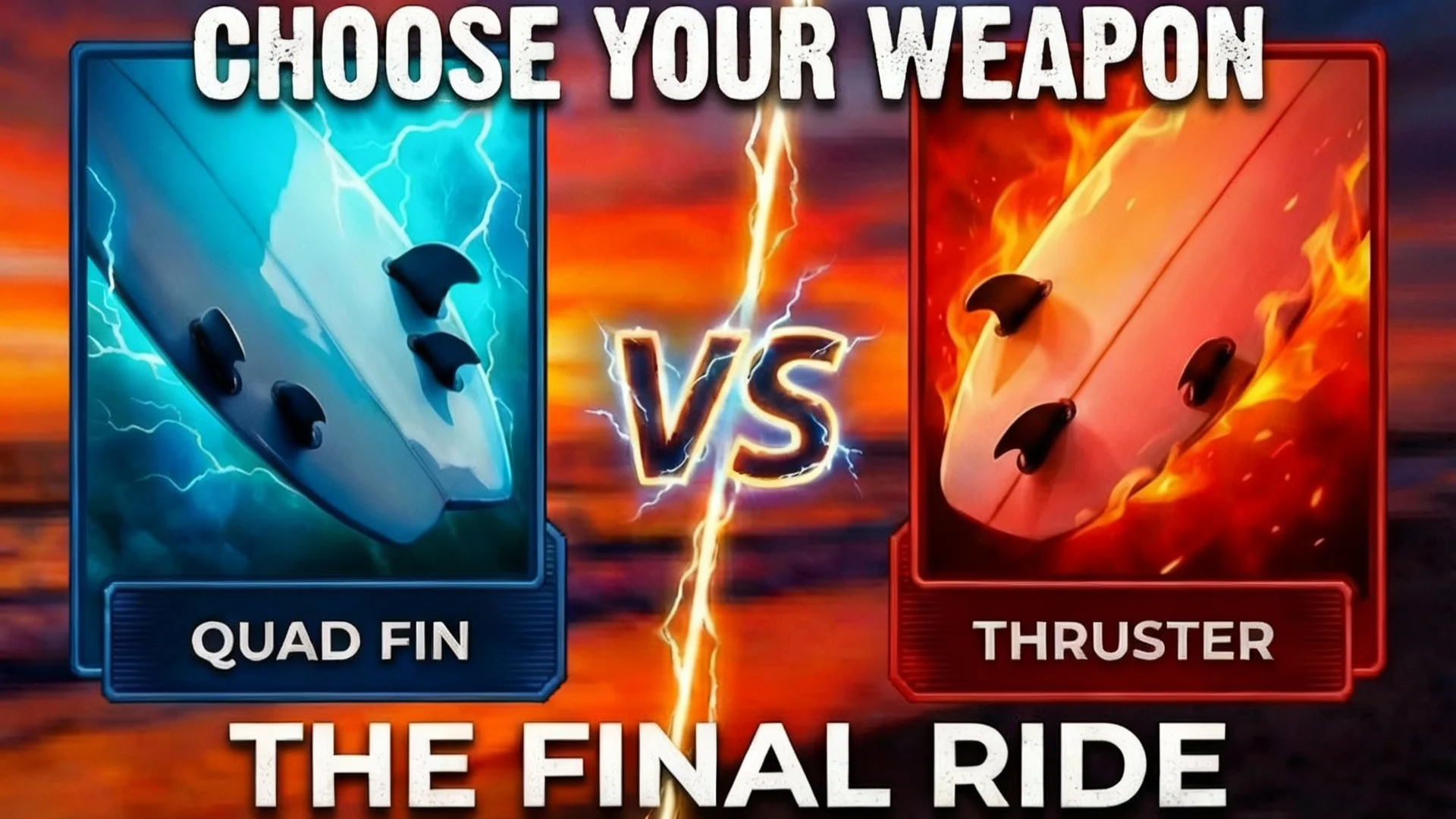
Here's where it gets interesting. Heavier surfers benefit from quads in small to medium surf more than lighter surfers do, and most of them don't know it. The reason is drag. A quad setup ditches the center fin, which removes the drag that turns into mush every time a heavier rider tries to pump out of a flat section.
Run Large quads on a fish or a groveler and the difference is immediate. The board accelerates instead of bogging. Bottom turns hold because there are two rear fins splitting the load. Quad setups for heavier surfers often outperform thrusters in anything under chest high.
The Mistakes That Keep Big Surfers Stuck
Three patterns repeat over and over with heavier riders who can't figure out why their surfing feels stuck.
First, they take a shaper's word that they should ride Medium because "you're an intermediate, not a power surfer." Skill level has nothing to do with fin size. A 230 pound beginner needs more area than a 230 pound pro. Physics doesn't care about your wave count.
Second, they buy a budget thruster set that only comes in Medium. Captain Fin and a lot of Captain Fin's competitors run a single size on cheaper templates. If your budget pulls you toward those, that's fine, but understand you're getting fins that were not designed for your weight class.
Third, they go too far the other way. Extra Large is overkill for most surfers under 215 pounds, and it can make a board feel stiff and slow to release. Larger is not always better. Right-sized is better.
What About the Surfer Who's Strong but Not Heavy?
Worth flagging because we get this question. A 175 pound surfer who's a former water polo player and can put real torque into a rail will sometimes feel like Mediums slip out. Going Large for that rider often does help, even though they're inside the Medium bracket on paper. Power matters. So does aggression. If you surf hard, the upper end of your size bracket or the next size up is worth testing.
The reverse is also true. A 195 pound surfer who's mellow, glides everywhere, and never pushes the tail can run Mediums and be perfectly happy. The bracket is a starting point, not a prescription.
A Quick Sanity Check Before You Buy
If you're over 190 pounds and you've never owned a fin marked Large, you're probably leaving performance on the table. Borrow a buddy's Large set, ride them for a week in your normal conditions, and pay attention to how the board feels in the moments that usually frustrate you. The difference shows up most in critical turns and in steeper drops.
One caveat. Fin weight matters too, and Larges in heavier construction (composite, longer base) will add a few grams over Mediums. That weight is doing useful work for you, but it's not free.
The Honest Verdict
If you weigh 195 pounds or more and you've been riding Mediums because that's what came with the board, switch to Larges. If you weigh over 215, look at Extra Large in the templates that offer it. Test quads in small surf. Stop blaming the board.
The surf industry sells to the bell curve and quietly assumes everyone else will figure it out. Most heavier surfers eventually do, after years of riding fins that were holding them back. You don't have to do the years.
Key Takeaways
- Most heavyweight surfers (190+ lbs) are riding Medium fins that were designed for the 140 to 180 pound bracket.
- Symptoms include tail slip, loss of control on critical turns, and chatter on steeper drops.
- Futures John John Large, JJ-2 Large, and FCS II Reactor Large are proven heavyweight thruster templates.
- Quads pay off more for heavier surfers than for lighter ones, especially in small to medium surf.
- Skill level doesn't change fin sizing. Body weight does. Trust the bracket.
If you want a faster answer than buying three sets and testing them yourself, plug your weight, board, and home break into the FinFinder recommender and let it do the sorting. Or check the fin sizing guide if you want to see the numbers in one place. Whichever route you take, get out of Mediums if they don't fit you. The waves you've been losing weren't your fault.
Helpful Resources
Ready to Find Your Perfect Fins?
Use our expert fin recommender tool to get personalized suggestions based on your needs.
Try Fin Recommender