You paddle out on your 7'2" midlength for the first time, and it catches everything. Shoulder-high sets, inside reform waves, that weird wedge nobody else wants. The board is magic.
But something feels off in the turns. The stock fins feel too stiff, too big. Like the board wants to dance but someone bolted its shoes to the floor.
That's a fin problem, not a board problem.
Midlengths are the fastest-growing category in surfing right now. Harley Ingleby's Mid 6 flies off shelves. The CI Mid is in every rental rack from Encinitas to Byron Bay.
But while shapers have figured out midlength design, most surfers are still running whatever generic fins came in the box. And it shows.
Why Midlength Fins Are Their Own Category
Midlengths live in no-man's-land. They're not longboards, so a 9-inch single fin is overkill. They're not shortboards, so your medium thruster set feels twitchy and undergunned.
The board's designed to glide AND turn, cruise AND carve. Your fins need to do both.
Most shapers will tell you "run a 2+1" and leave it at that. Which is fine advice if you also think "just add water" counts as a recipe.
The real question isn't which setup. It's which setup for which waves, which board, and which version of surfing you want to do that day. A midlength with the right fins feels like two boards in one. With the wrong fins, it feels like neither.
The 2+1: Default for a Reason
The 2+1 setup is the most versatile midlength configuration, and it's not close. A larger center fin provides the glide and drive of a single fin, while two smaller side bites add control when you lean into turns.
But not all 2+1 setups are equal. The ratio between your center fin and side bites changes everything.
Center Fin Sizing
The old rule says one inch of fin per foot of board. For a 7-footer, that means a 7-inch fin. But Devon Howard, one of the best midlength surfers on the planet, runs 6.5" to 7" center fins on boards that "should" take a 7.5" or 8".
Why go shorter? Because the side bites pick up the slack. A massive center fin in a 2+1 creates too much drag and makes the board feel like a longboard that's been cut in half. You want the center fin doing about 70% of the work, not 100%.
Here's the breakdown by weight:
- Under 160 lbs: 6" to 6.5" center fin with 3.5" side bites
- 160-200 lbs: 6.5" to 7" center with 4" side bites
- Over 200 lbs: 7" to 7.5" center with 4" to 4.5" side bites
Check our fin sizing guide for exact numbers based on your weight and board dimensions.
Side Bites That Do Real Work
Small side bites (3" to 3.5") give you a feel closer to a pure single fin. More flow, more trim, slightly less grip on steeper faces. Bigger side bites (4" to 4.5") add bite and hold but can stiffen the board if your center fin is already large.
The sweet spot for most midlengths: FCS GX side bites at 3.5" or Futures SB1 at 3.56". They add just enough grip without turning your glider into a thruster.
You drop into a shoulder-high right on a 2+1 midlength with a 6.5" Greenough center and small GX sides, and the board does this thing where it trims like a longboard through the first section, then bites into a bottom turn with enough hold to redirect up the face. Two boards in one wave. That's the 2+1 promise when the fins are dialed.
Single Fin: The Purist Move
Some days the midlength just wants to be a single fin. Glassy morning, clean lines, no rush. Pop out the side bites, drop in a 7.5" to 8" fin, and trim.
The True Ames Greenough 4A at 7" is the go-to for midlength single-fin setups. Wide base generates drive off the bottom, and the raked template lets you draw long, flowing lines without fighting the board. It's the fin that Devon Howard and Joel Tudor both reach for, and there's a reason it's been in production for decades.
Single fin works when the waves are clean and predictable. When it gets bumpy or you need quick adjustments, you'll miss those side bites.
But on the right day? Nothing feels better. You're surfing slower, smoother, and somehow catching more waves because you stopped trying to force turns.
Thruster: The Underrated Option
Here's a take that might get pushback: a thruster midlength is the most underrated setup in surfing right now.
If your midlength has five boxes and you're surfing chest-high-plus beach breaks, three equal fins give you more pivot and control than a 2+1 ever will. The board still paddles like a dream and catches everything. But now it turns like it means it.
This is the setup Harley Ingleby had in mind when he designed the Mid 6 for overhead days at Lennox Head. That board with a thruster set looks more like shortboard surfing than anything that's 7'6".
Futures F6 Thermotech or FCS II Performer in medium are solid starting points. Nothing exotic. The board provides the glide; the thruster setup just lets you do something with all that speed.
You bottom-turn and the board snaps around with a precision that makes you forget you're on a midlength. Three fins, three pivot points, zero excuses for straight-lining to the shoulder.
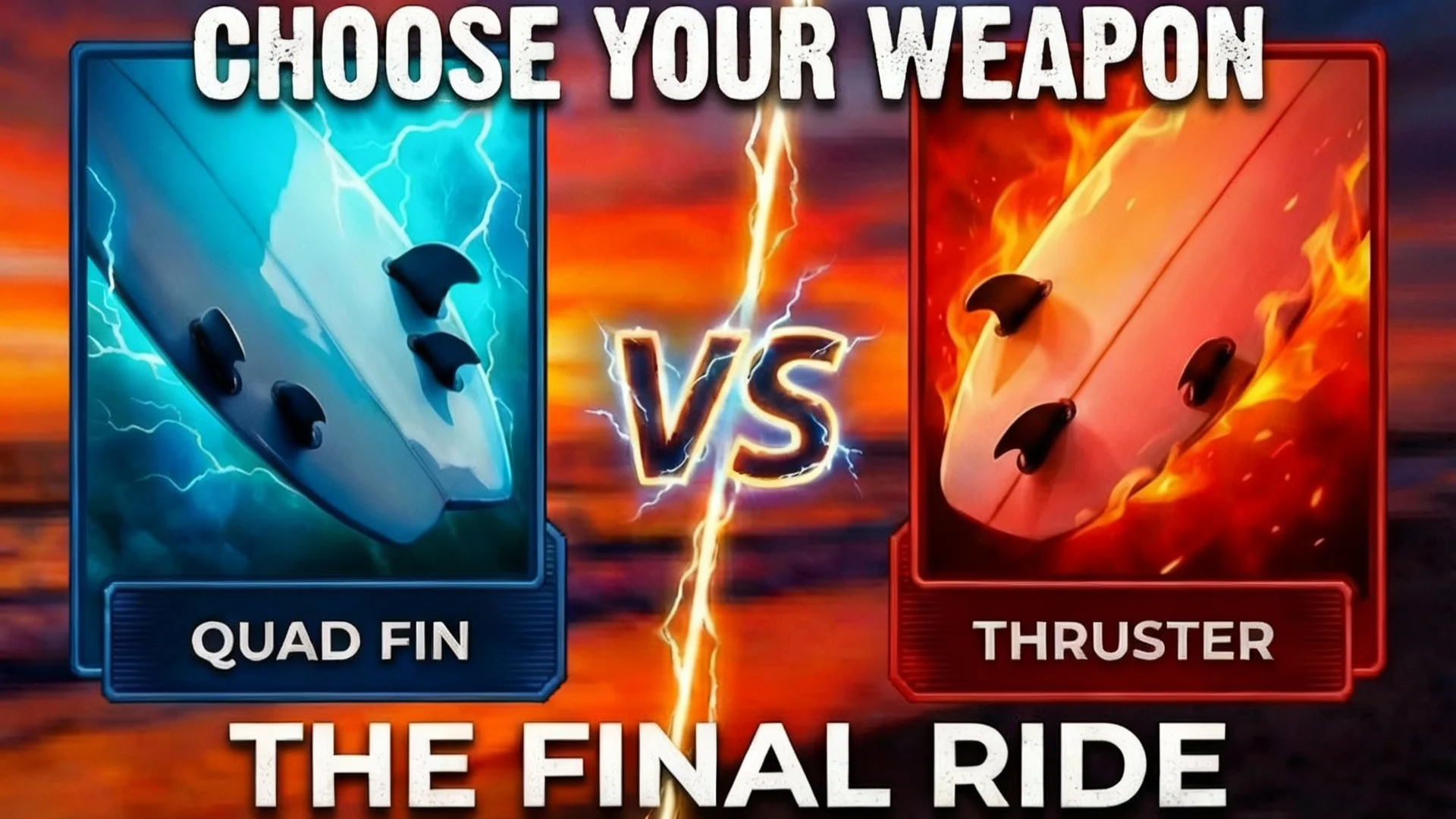
Quad: The Speed Cheat Code
Quads on midlengths are rare. That's a shame, because in mushy, slow waves, a quad midlength is borderline unfair.
No center fin drag, four points of hold, and all that paddle power from the board's volume. You generate speed from nothing and carry it through sections where a thruster midlength would bog. Think summer south swells in San Diego. Waist-high, barely breaking, and your quad midlength is gliding past everyone pumping on shortboards.
The catch: you lose the trim-and-glide feel that most people buy midlengths for. It becomes a speed machine, not a cruiser. If that's what you're after on small days, go quad. If you want to soul-arch and nose-ride in slow motion, stick with 2+1.
Match Your Fins to Your Tail Shape
Your tail shape dictates which setups work best. This matters more than most surfers realize.
Pin tail or round tail: 2+1 or single fin. These tails hold in steeper waves and the drawn-out turns suit larger center fins.
Round squash or squash tail: 2+1 or thruster. The wider tail has more surface area, so thruster fins can grip without feeling too pivoty.
Swallow tail: Quad or thruster. The channel between the swallows creates natural drive, and multiple smaller fins give you control across that wider template.
If you're not sure what tail you have, flip the board over. Takes two seconds. The answer tells you more about your ideal fin setup than any forum thread.
Best Midlength Fins Worth Your Money
True Ames Greenough 4A (7"): The gold standard for midlength center fins. Wide base, moderate rake, fiberglass construction. Around $52. If you only buy one midlength fin, make it this one.
CI Mid Fin Set (6.5" center + side bites): Channel Islands designed this for the CI Mid, but it works on any 2+1 midlength. The slightly smaller center fin keeps the board lively instead of plowy. Around $75 for the set.
FCS II Connect PG (thruster set): Purpose-built for mids and funboards. Medium-low template that generates speed without overpowering the board. Around $95.
Futures Machado Twin + Trailer: If your midlength has five boxes, try the Machado twins in front with a small trailer behind. Completely different feel. Loose, skatey, fun. Around $130 for the set.
Key Takeaways
- 2+1 is the default midlength setup for good reason, but the center fin and side bite ratio matters more than the configuration itself.
- Size your center fin shorter than the one-inch-per-foot rule suggests. Your side bites are picking up the slack.
- Single fin for clean, glassy days. Thruster for performance sessions. Quad for small-wave speed. Match the setup to conditions.
- Tail shape tells you which setups will work: pin/round for 2+1, squash for thruster, swallow for quad.
- True Ames Greenough 4A at 7" is the one center fin every midlength rider should own.
If you're staring at your midlength trying to figure out which fins go where, the FinFinder recommender sorts through the options based on your board, your weight, and the waves you surf. Takes a minute, saves you from buying the wrong set.
Helpful Resources
Ready to Find Your Perfect Fins?
Use our expert fin recommender tool to get personalized suggestions based on your needs.
Try Fin Recommender