The buoys just jumped. Yesterday it was waist-high and playful. Now the sets are stacking up at double overhead, the lineup has thinned out, and you're in the garage staring at your step-up for the first time in three months.
Board's waxed. Leash is fresh. You pop in your regular fins because that's what you've always done.
Bad move.
Why Your Daily Driver Fins Don't Belong on a Step-Up
Step-up boards exist because your shortboard can't handle real size. More length, more rocker, narrower tail, thicker rails. Everything about the board is built to manage speed and hold in powerful surf. But most surfers never change their fins to match.
That medium-flex, all-around thruster set you ride at your local beachbreak? It was designed for chest-high walls and punchy sections. Put those fins in overhead-plus surf at a spot like Sunset Beach, and they'll flex out on you mid-bottom-turn. You'll feel the tail slide, that split-second where the board disconnects from the wave face and your stomach drops.
That's not skill. That's equipment failure.
Stiffer Is Better (When It Matters)
In small waves, flex generates speed. We covered that in our groveler fins guide. Step-ups flip that equation.
When a six-foot wall of water is pushing against your fins, you don't want them bending and absorbing energy. You want them rigid, planted, transferring every ounce of force from your rail into the wave face. Stiff fins hold. Flexy fins wash.
You set your rail on a steep bottom turn at Blacks and the fins bite into the face with zero hesitation. No wobble, no drift. The board drives up through the pocket like it's on tracks, and you've got the confidence to commit to the next section because you trust what's under your feet.
That's what the right step-up fins feel like.
What to Look for in Step-Up Fins
Material: Go Glass or Carbon
Performance Glass (PG) fins from FCS and solid fiberglass layups from Futures are the standard for bigger surf. They're stiffer than honeycomb or composite alternatives, and they maintain their integrity under the kind of force that overhead waves generate.
Carbon fiber is the premium option. Carbon fins are lighter and stiffer than glass, which means faster response and more control at speed. The trade-off is price. You're looking at $140-$170 for a carbon thruster set versus $90-$120 for glass.
Is the upgrade worth it? If you're surfing overhead-plus more than a few times a season, yes. If your step-up comes out twice a year, glass is fine.
Size: Go Up, Not Down
Opposite of the groveler rule. When waves have power, you need more fin area to maintain hold and control. If you ride medium fins on your shortboard, go medium-large or large on the step-up.
More area means more bite on the wave face, especially through drawn-out bottom turns where the entire rail is engaged. It also means more stability at the speeds you'll reach on bigger waves, where a smaller fin would feel twitchy and unpredictable.
Check our fin sizing guide for the exact numbers based on your weight.
Rake: More Sweep for Bigger Surf
Rake (or sweep) is how far the fin tip extends behind the base. More rake means longer, more drawn-out turns. Less rake means tighter pivots.
On a step-up, you want more rake. You're not trying to do snappy pocket hacks in overhead surf. You're drawing long lines, setting deep bottom turns, and driving through sections. A fin with 33-36 degrees of rake holds through extended arcs without releasing early.
Less rake works on your beachbreak shortboard where you need quick direction changes. On a step-up at a point break or reef, that twitchy pivot becomes a liability.
The Best Step-Up Fins by Setup
Thruster: The Default for Good Reason
Most step-ups run as thrusters, and there's solid logic behind it. That center fin acts as a stabilizer and pivot point. In powerful waves where you're making critical drops and late takeoffs, the center fin keeps the tail planted.
FCS II Carver PG (Large): The go-to step-up thruster fin. Long template with high sweep, designed for drawn-out power turns. Performance Glass construction stays stiff under force. Built for reef breaks and point waves where you're surfing fast and on rail. Around $110.
Futures John John Florence TechFlex (Large): John John rides these at Pipeline. They've got a balanced template that handles both barrel riding and open-face power surfing. The TechFlex construction is slightly less stiff than pure glass, which keeps them responsive without going soft. Around $130.
FCS II FW7 PG (Large): Firewire's collab fin with FCS. Upright template with a wide base that generates drive off the bottom. More pivot-oriented than the Carver, so it works if your step-up has a wider tail or you want to maintain some shortboard-style maneuverability. Around $115.
Quad: When Speed Is Survival
In big, fast barrels, quads can be the smarter call. No center fin means less drag, which means you carry more speed through sections where stalling gets you caught inside.
Guys at Desert Point and Skeleton Bay run quads because those waves demand uninterrupted speed down the line. You're not turning. You're surviving. And quads let you hold a high line inside the barrel without pumping.
Futures Controller Alpha Quad (Large): Carbon-air construction keeps them light and stiff. The front fins have enough area to hold in overhead surf, and the upright rears give you release when you need to adjust your line inside a barrel. Around $170 for the set.
FCS II Carver PG Quad (Large): Same Carver template in a four-fin configuration. The rear fins are smaller and more upright, letting the board track straight at speed while the fronts provide hold on rail. Around $120.
The Five-Fin Box Advantage
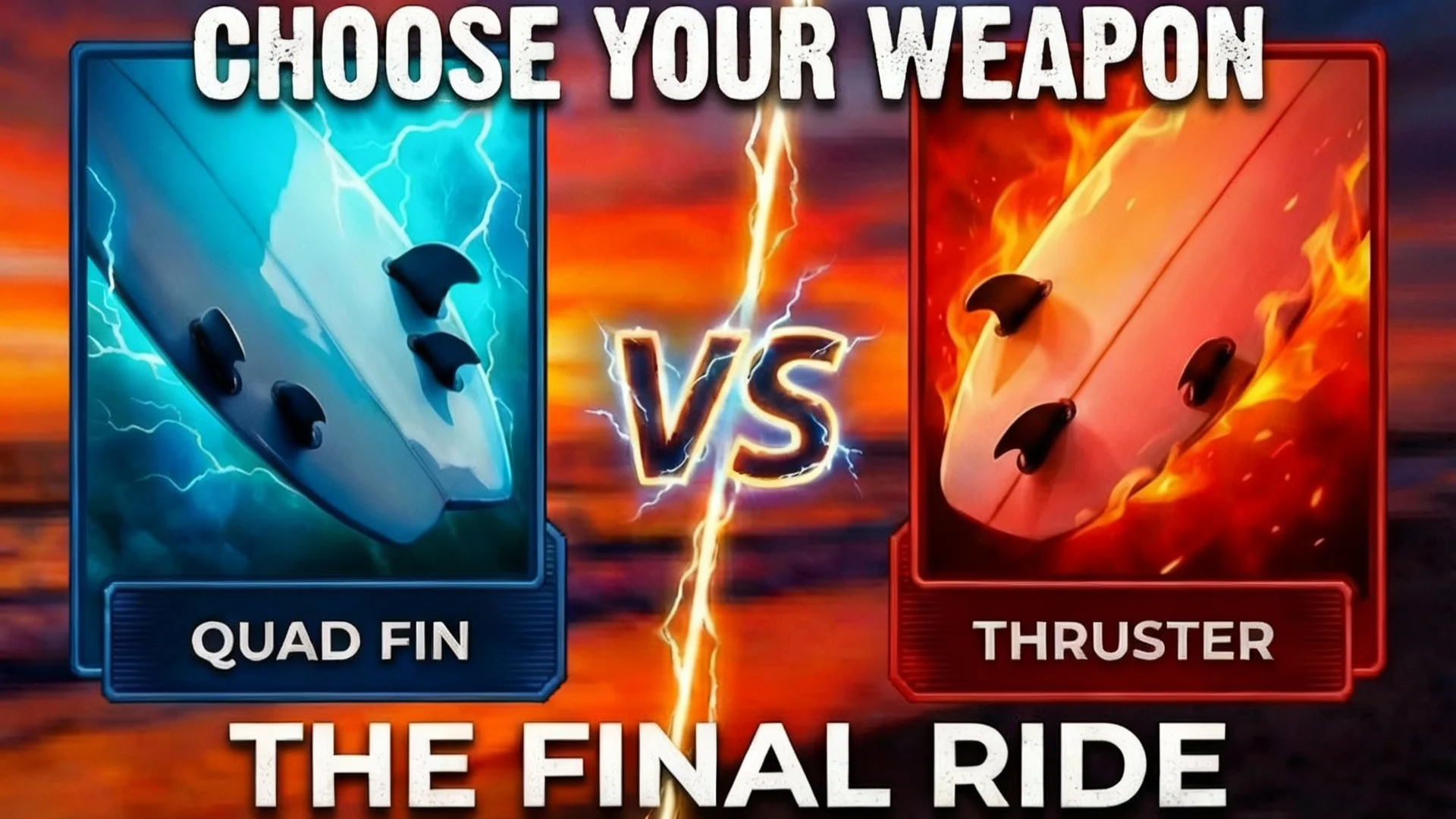
If your step-up has five boxes (and it should), buy both a thruster and quad set. Run thrusters when the waves are powerful but workable and you want to do turns. Switch to quads when it's barreling and you need pure speed.
John John Florence famously switches between thruster and quad at Pipeline depending on whether the swell is running more west (open face, thruster) or north (barreling, quad). If it's good enough for the best surfer alive, it's good enough for you.
Common Step-Up Fin Mistakes
Keeping Your Small-Wave Fins In
The most common mistake. You grab the step-up twice a year, and the fins that were in it last time are the ones that stay. If those are your flexy honeycomb mediums from a summer session, they'll fold on you when it matters.
Swap your fins when you swap your board. It takes 30 seconds.
Riding Too-Small Fins for Your Weight
Big waves generate force. Heavier surfers generate more force. If you weigh 180+ pounds and you're riding medium fins on your step-up, you're under-finned. The board will feel skatey and loose in conditions where you need it locked in.
Size up. It's not going to make you slow. It's going to keep you on the wave.
Going Full Stiff When You Don't Need To
There's overhead surf, and there's genuinely heavy surf. If you're stepping up to head-high-plus at your local point break, you don't need the stiffest carbon fins money can buy. A Performance Glass or solid fiberglass fin in the right size will handle it.
Save the full-carbon setup for when you're paddling out at spots where the consequences of a wipeout include hitting reef or getting held under for two waves.
Step-Up Fin Setup by Wave Type
Not all big waves are the same, and your fin setup should reflect that.
Point breaks (Rincon, J-Bay, Honolua Bay): Thruster with high-rake fins. Long walls, drawn-out turns, sustained speed. The Carver template was designed for exactly this.
Reef breaks and barrels (Pipe, Padang Padang, Teahupo'o): Quad for speed and hold inside the tube. Or a thruster with stiff, large fins if you plan to make turns on the open face sections.
Beach breaks with size (Puerto Escondido, The Wedge): Thruster with an upright, drivey template. These waves are powerful but shifty. You need the center fin's pivot to adjust when the wave does something unexpected.
Key Takeaways
- Step-up fins need to be stiffer, larger, and higher-rake than your daily driver fins. The wave is doing the work, so your fins need to hold, not flex.
- Performance Glass and carbon fiber are the right materials for overhead surf. Skip the honeycomb and composite flex fins.
- Size up from your shortboard fins. Medium on your daily driver means large on the step-up.
- Thrusters for open-face power surfing, quads for barrels and speed. Five-fin boxes let you run both.
- Swap your fins when you swap your board. The 30 seconds it takes could save your session.
Not sure which fins match your step-up? The FinFinder recommender factors in your board dimensions, wave type, and weight to narrow it down. Faster than calling your shaper, and it won't judge your quiver choices.
Helpful Resources
Ready to Find Your Perfect Fins?
Use our expert fin recommender tool to get personalized suggestions based on your needs.
Try Fin Recommender