You're at Lowers on a chest-high running day, riding a quad you love, and something keeps bugging you. The board's fast. Stupid fast. But every time you blow the tail out off the top, it keeps drifting a half-beat longer than you want, like the board's not totally sure you meant to do that. You're fighting the looseness instead of using it.
There's a fix that costs about twelve bucks and weighs less than a AA battery. It's called a nubster.
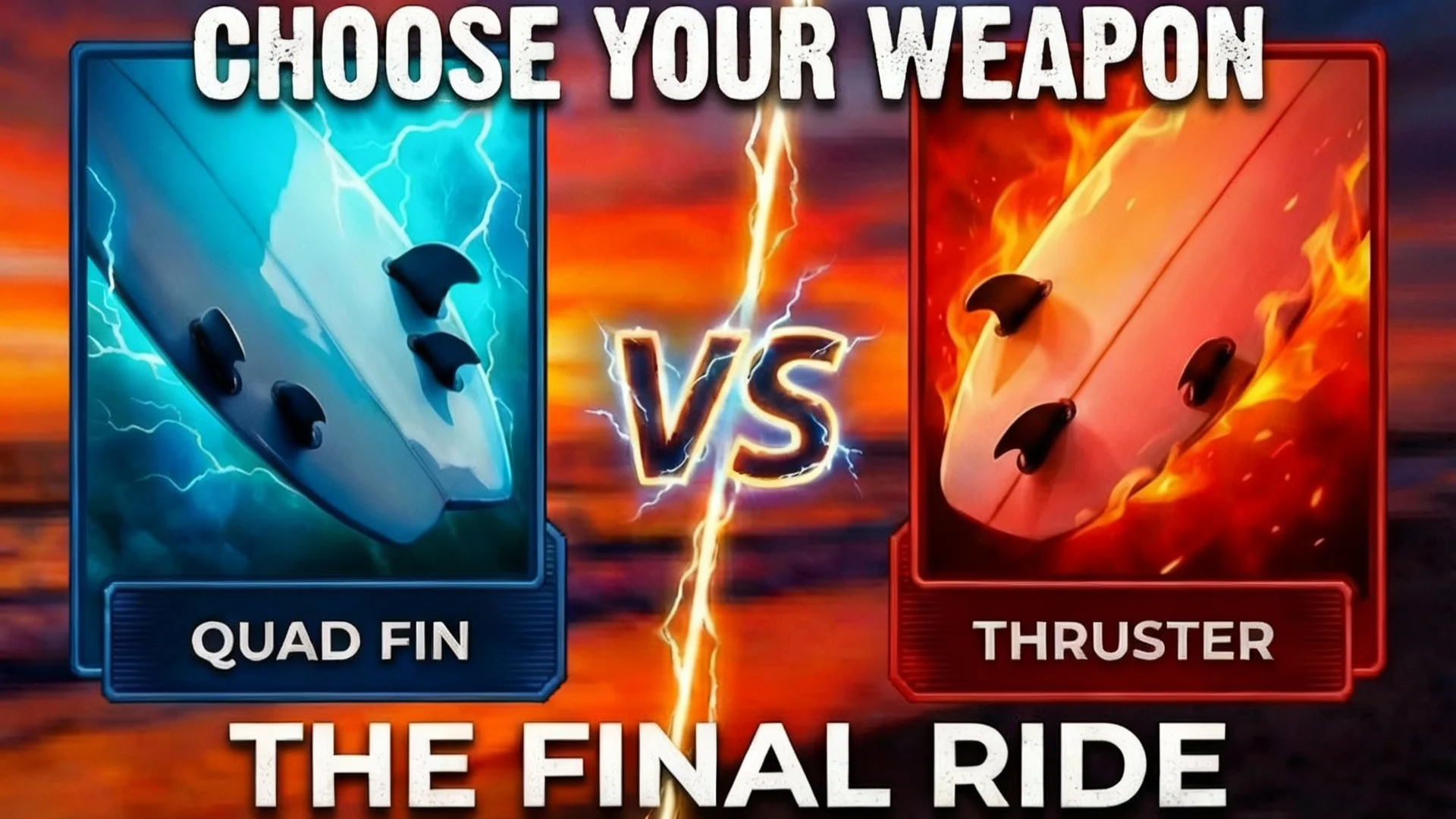
A nubster fin is a tiny half-height center fin you bolt into the trailer box of a quad. It turns a four-fin setup into a 4+1, sometimes called a five-fin. It doesn't make your quad a thruster. It just hands back a sliver of the control that quads trade away for speed.
Where the nubster came from
This isn't some big-brand R&D project. The modern nubster came from a Florida surf coach named Sean Mattison, who started messing with a stubby center fin to calm down the loose feeling on his quads around 2011. Other people had stuck fifth fins on boards before. Mattison redesigned the shape until it actually did something useful and didn't just add drag.
Then Kelly Slater put one on his quad and made the final of the Quiksilver Pro New York. Some people credit that little fin as part of the recipe for his eleventh world title that same year. When the best surfer who ever lived bolts your garage invention onto his board mid-contest, word travels fast.
Slater's own take, roughly: a nubster makes your favorite quad faster, smoother, and adds a touch of control. Coming from a guy with eleven titles, that's worth more than any spec sheet.
What a quad gives up, and what the nubster gives back
Quads are quick because there's no center fin dragging down the middle of the board. The water flows clean off the tail, and the board feels like someone switched off the brakes. We covered why that works in our breakdown of quad fins for small waves, and it's the whole reason people love them.
The catch is that same freedom can feel vague. With no center fin to pivot around, a quad can wash out or slide past where you wanted it. On a wider tail or in soft surf, it can feel floaty coming out of turns. Loose is fun until loose becomes sloppy.
The nubster splits the difference. It's so short that when you're vertical at the lip, the fin's barely in the water, so it doesn't kill your speed the way a full center fin would. But the second you load up a bottom turn or set the tail down, it gives the board a point to pivot around. You get quad speed with a hint of thruster discipline.
Here's how it actually feels. You drop in, pump twice, and the board still shoots like a quad with no extra drag you can sense. Then you go to redirect off a steep section and instead of the tail drifting wide, it snaps to the line and holds. The release is still there. It just stops half a beat sooner, exactly where you wanted it.
Why the "guitar pick" shape matters
People call the nubster the "guitar pick" because that's pretty much what it looks like sitting in the box. Squat, rounded, maybe an inch and a half tall. Compare that to a normal thruster center fin around four and a half inches deep, and you understand why it behaves so differently.
Depth is the variable doing the work. A deep fin bites hard and resists sideways slide, which is great for hold and miserable for release. We get into this in detail in the fin depth guide, but the short version is that height controls how much grip you get. The nubster is tiny on purpose. It adds just enough bite to organize the tail without locking it down.
The foil is usually a basic symmetric or near-flat shape, because it's not there to generate lift like your side fins. It's there to add a touch of directional stability. Think of it less as a fifth engine and more as a rudder that mostly stays out of the way.
Moving it forward and back changes everything
The best part is that the nubster lives in a standard center box, so you can slide it forward or back, and that small move changes the whole feel.
Push it forward and you get less drive but more freedom. The pivot point moves up the board, the tail loosens, and it feels closer to a pure quad with a little extra organization. Slide it back toward the tail and you get more speed and more hold. The board tracks straighter and feels planted, which is what you want when the wave gets bigger and faster.
Slater put it simply: when his quads felt floaty out of turns, or drifted too much like they do on a wider tail, that's when he'd add the nubster. It's a tuning tool, not a permanent commitment. Two screws and you're back to a regular quad.
Who should actually try one
If your quad already feels perfect, leave it alone. Don't fix what isn't broken. The nubster solves a specific complaint, and if you don't have that complaint, you're adding hardware for no reason.
It earns its keep for a few types of surfer. People riding wide-tailed grovelers or fish that feel skatey in weak surf. Surfers stepping up to a quad from a thruster who miss the familiar pivot. Anyone who loves quad speed but keeps over-rotating their off-the-tops. If that's you, twelve bucks is a cheap experiment.
It's worth saying who it isn't for. If you're a beginner still learning to trim and turn, the difference is too subtle to matter. Spend that money on getting your fish and quad fundamentals dialed first. The nubster is a finishing touch, not a foundation.
Does it really work or is it a placebo?
Fair question. The cynical read is that a one-inch fin can't possibly do much, and that Slater would've made that final on a bar of soap.
But shapers kept using it after the hype died. Firewire's Dan Mann has leaned on the fifth fin as part of his quiver, and brands from Futures to smaller outfits still mold versions of it. Trends fade in a season. Something that survives more than a decade in pro and shaper quivers is doing real work, even if that work is small.
The honest verdict: a nubster won't transform your surfing. It's a refinement, not a revolution. But refinements are exactly what separate a board that's fun from a board that's dialed. If your quad is 90% there and that last 10% is a drifty tail, this is the cheapest, fastest fix you'll find.
Key Takeaways
- A nubster is a tiny half-height center fin that turns a quad into a 4+1, adding control without the drag of a full center fin.
- It came from Florida coach Sean Mattison and got famous when Kelly Slater rode one to a final during his eleventh title run.
- Its small depth is the point: enough bite to organize the tail, not enough to kill quad speed.
- Slide it forward for more freedom, back for more drive and hold. It's a tuning tool, not a permanent change.
- Skip it if your quad already feels great or you're still learning. It's a finishing touch for surfers chasing that last 10%.
If you're not sure whether your board wants a quad, a thruster, or a quad with a little extra, that's a question of tail shape, weight, and the waves you actually surf. Tell our fin recommender what you ride and it'll point you at a setup before you start buying fins you'll only use once.
Helpful Resources
Ready to Find Your Perfect Fins?
Use our expert fin recommender tool to get personalized suggestions based on your needs.
Try Fin Recommender