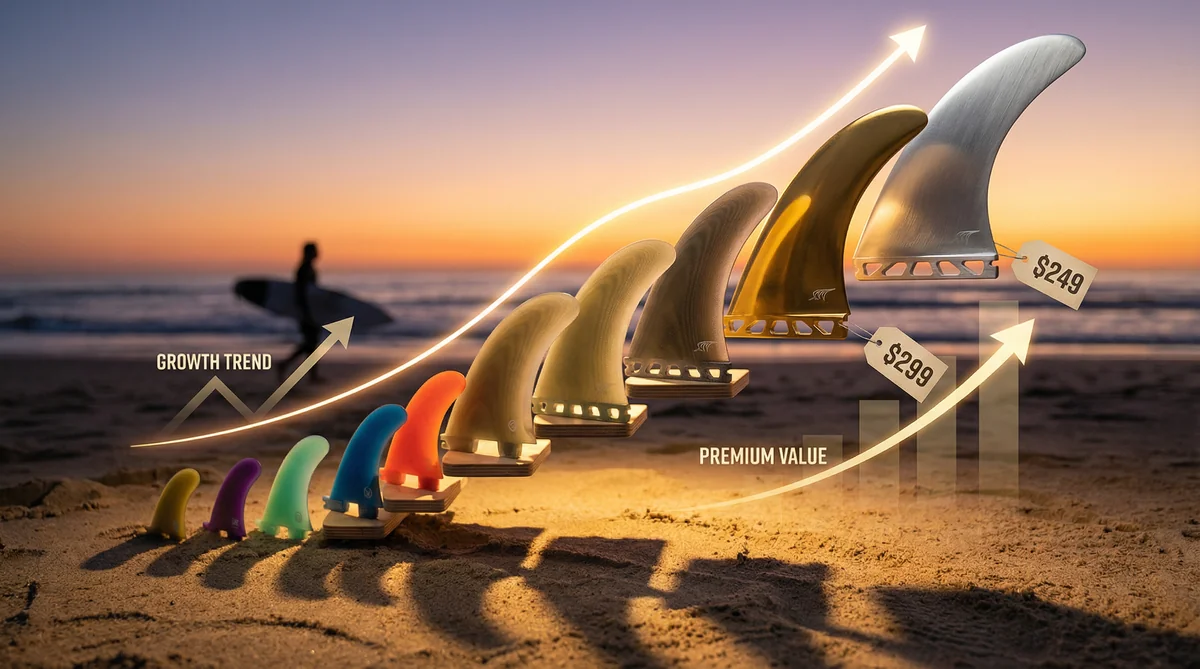
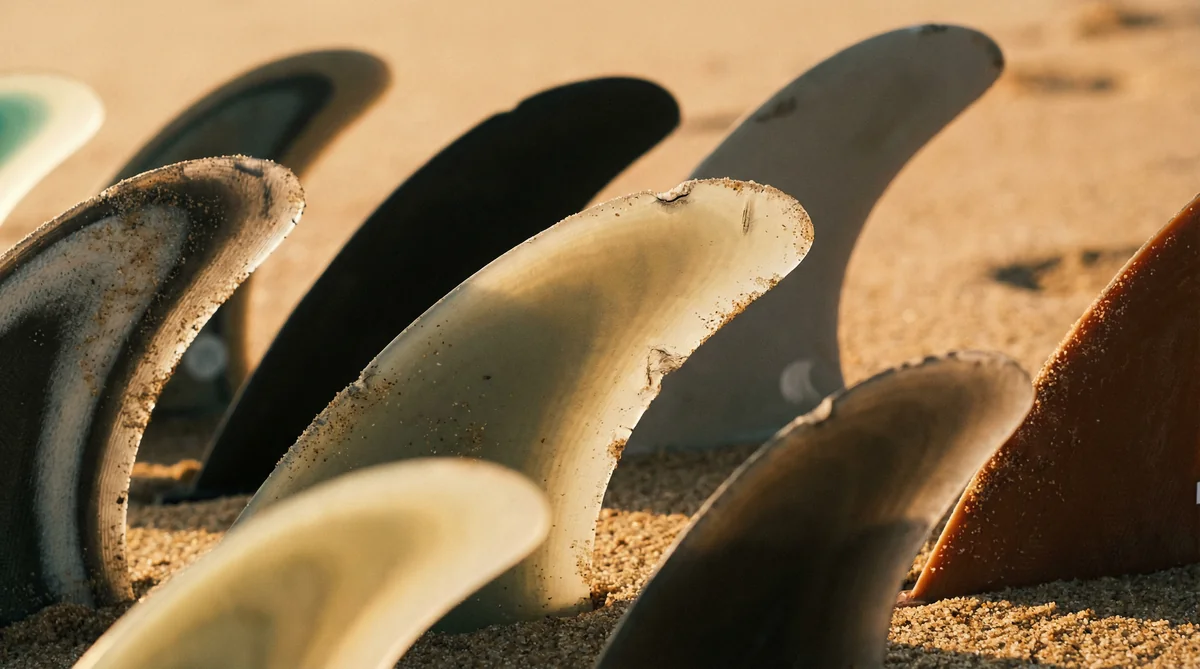
You just walked out of the shop with a brand new board. Glassy white deck, sharp rails, that smell only a fresh board has. Then you flip it over and clip in the fins it came with: three lumps of black plastic that feel like they were molded from an old patio chair.
Those are your stock fins. And the question every new board owner eventually asks is the same one you're asking now. Keep them, or toss them?
Real answer? It depends on who you are and what came in the bag. But most surfers hang onto stock fins way longer than they should, and it's quietly flattening their surfing.
Why Boards Ship With Cheap Fins in the First Place
Nobody puts good fins on a stock board out of generosity. Boards come with plastic fins because plastic is cheap, and cheap fins keep the sticker price down. A shaper would rather sell you a complete board at an attractive number than bundle in an $90 fin set that scares off half the buyers.
So the fins are an afterthought. They exist so the board isn't useless the day you buy it. That's the entire design brief.
It gets weirder at the top end. A lot of higher-performance boards from brands like Channel Islands ship with no fins at all. The shaper assumes you already have a quiver of fins you trust, so they hand you a bare board and let you sort it out. Stock fins are mostly a beginner-to-intermediate board thing.
What Stock Plastic Fins Actually Do to Your Surfing
Here's the part that matters. A molded plastic fin and a foiled fiberglass fin are not the same tool with different price tags. They behave differently in the water, and your body feels it whether you can name it or not.
Plastic fins lack flex memory. They bend under load and then just... stay bent for a beat too long. They soak up your energy instead of firing it back.
A good fiberglass fin does the opposite. You set your rail on a bottom turn and the fin loads up like a drawn bow. You can feel it storing your weight. Then it snaps that energy back into the board and you come off the bottom with speed you never pumped for.
It's the difference between jumping on concrete and jumping on a trampoline. Same effort, completely different return.
There's a drag cost too. A properly foiled fin slices water clean and makes lift. A blunt molded fin shoves water out of the way like a bargepole.
On a knee-high crumbler at Tourmaline you might never notice. The first time you take a real fiberglass set into a head-high wall, the board feels like it woke up.
Not All Stock Fins Are Garbage
Time for some honesty, because the "all stock fins suck" take is lazy. The stock fin world has tiers, and a few of them are genuinely fine.
The injection-molded fiberglass tier
FCS makes a material called Glass Flex. It's injection-molded, like plastic, but the formulation captures a lot of the flex and memory of real laminated fiberglass. FCS aims it at "novice plus" surfers, and honestly it's a solid fin to learn on.
If your board came with a Glass Flex set, you got lucky. That's a real fin, not a patio chair.
The step above is Performance Core: a honeycomb sandwich between layers of fiberglass, hand-finished and polished. Those run two to three times the price of Glass Flex, and no stock board is shipping with them. Glass Flex Reactors have hovered around 80 bucks for years while the PC versions push past 180. That gap tells you exactly where stock fins live.
The hard-plastic-with-a-glass-core tier
Some midrange boards include fins with a stiffer composite or G10 panel rather than pure soft plastic. Torq, for example, ships most of its epoxy boards with Futures fins already in the bag. They won't out-surf a hand-foiled set, but they hold a rail and they won't embarrass you. Good enough to ride while you figure out what you actually want.
The soft-top safety tier
Then there are the rubbery fins on your foamie. Those are soft on purpose. A flexible plastic fin that pops out before it splits your shin is a feature, not a flaw, when half the lineup at Doheny is on their third session ever.
They're not built for drive. They're built to not send you to urgent care. For a true beginner, that's the right call.
The Real Question: Are You Past Them Yet?
Forget the fins for a second. The honest test is about you.
If you're three sessions into your surfing life, riding a soft top, still working out how to stand up and trim, leave the stock fins alone. Better fins won't fix a pop-up, and you don't want sharp glass anywhere near you while you're falling off constantly. Spend the money on more sessions.
But if you've been surfing more than a year, you're linking turns, and you're still on the plastic set that came with the board? You're the person leaving the most free performance on the table in all of surfing.
A mid-range fiberglass thruster set runs 70 to 110 dollars. Think the FCS II Performer in Performance Glass or the Futures F6. For most surfers that's the single best dollar-per-feel upgrade available, full stop.
People drop two grand chasing a new board to find speed that was hiding in a 90-dollar fin set the whole time. If you want the deeper material breakdown, our guide to carbon, fiberglass, and plastic fins goes spec by spec. And if you're a true beginner sorting out foamie options, the soft-top fins guide covers what to ride before you upgrade.
What to Do With the Old Stock Fins
Don't throw them out. Stock fins make a perfect travel beater set and a no-cry backup. When you're flying to a reef pass in Indo and the thought of snapping your good fins on coral keeps you up at night, the stock set goes in the board bag. Cheap insurance you already own.
They're also the right fins to hand a friend who borrows your board and surfs like they're trying to fight the ocean and losing. Save the good glass for yourself.
Key Takeaways
- Boards ship with cheap fins to hit a price point, not to match the board's performance. The fins are an afterthought.
- Molded plastic fins have no flex memory. They absorb your energy instead of returning it, so the board feels dead through turns.
- FCS Glass Flex is a legit learner fin and worth keeping. Pure soft-plastic and rubber stock fins are not, beyond beginner safety.
- If you've surfed more than a year and you're still on stock plastic, a 70 to 110 dollar fiberglass set is the best value upgrade in surfing.
- Keep the old stock fins as a travel beater and backup. They're free insurance for reef trips and loaner sessions.
The tricky part isn't deciding to upgrade. It's picking the right template and size for your weight, your board, and the waves you actually surf instead of the ones you dream about. Tell our fin recommender what you ride and it sorts the match in about a minute, so your first real fin set isn't a guess. And if you want to understand what every number on the box means first, start with the all-about-fins guide.
Helpful Resources
Ready to Find Your Perfect Fins?
Use our expert fin recommender tool to get personalized suggestions based on your needs.
Try Fin Recommender