You finally booked your two-hour at Surf Ranch and now you're standing in the garage staring at three Ziploc bags of fins. None of them are labeled. Two are missing trailers. One belongs to your friend who hasn't asked for it back since 2022. Welcome to wave pool prep.
Here's the thing nobody warns you about before your first pool session. The water's different. The wave's different. Your fin choices have to be different too. Not by a little. By a lot.
Pool water is sluggish, and your fins have to wake it up
Saltwater is roughly 2.5% denser than freshwater. That sounds like nothing. It isn't. For an average surfer on an average shortboard, that's about 1.6 pounds of buoyancy that just disappeared. Your board sits lower. The rails feel heavier. You're working harder for the same speed.
Most pros bump their volume up half a liter when they fly to a freshwater pool. That handles the sink. But your fins still have to compensate for water that doesn't want to give you anything back. Translation: stiff, fast templates win. Soft flexy fins that come alive in punchy ocean surf will feel dead in chlorine.
Carbon fins. Honeycomb fins. Anything light and snappy. That's the move in pools. The 50-gram weight saving you couldn't feel at your local beach break shows up the second you push off your back foot at Lemoore.
Surf Ranch wants drive, so bring quads
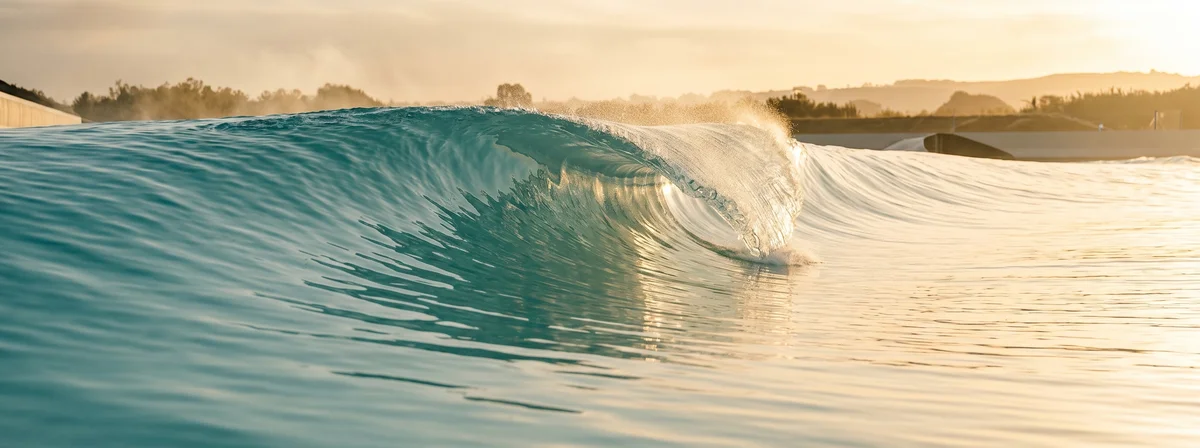
Kelly's pool produces a hydrofoil-generated wave with a 6.5-foot face and a ride that runs roughly 45 seconds across a 2,300-foot basin. It's one long, predictable, peeling wall. You're not getting hit with sections. You're getting one open canvas with a couple of bowls thrown in for variety.
That wave shape rewards lateral speed and rail-to-rail commitment. Which is exactly what quads do.
Filipe Toledo won at Surf Ranch riding an FCS II H4 quad in a Sharpeye 72 Inferno. That setup wasn't a fluke. The H4 quad gives you mechanical drive through long drawn-out turns and predictable hold when you stand on the gas. On a wall that just keeps going, you don't want a fin that resets after every snap. You want one that keeps generating.
You drop in, find your line, and the board accelerates the way a quad does in clean water. No drag, no resistance, just this quiet pull forward. You reach the inside bowl with speed you didn't earn. That's the whole pitch for quads at Lemoore.
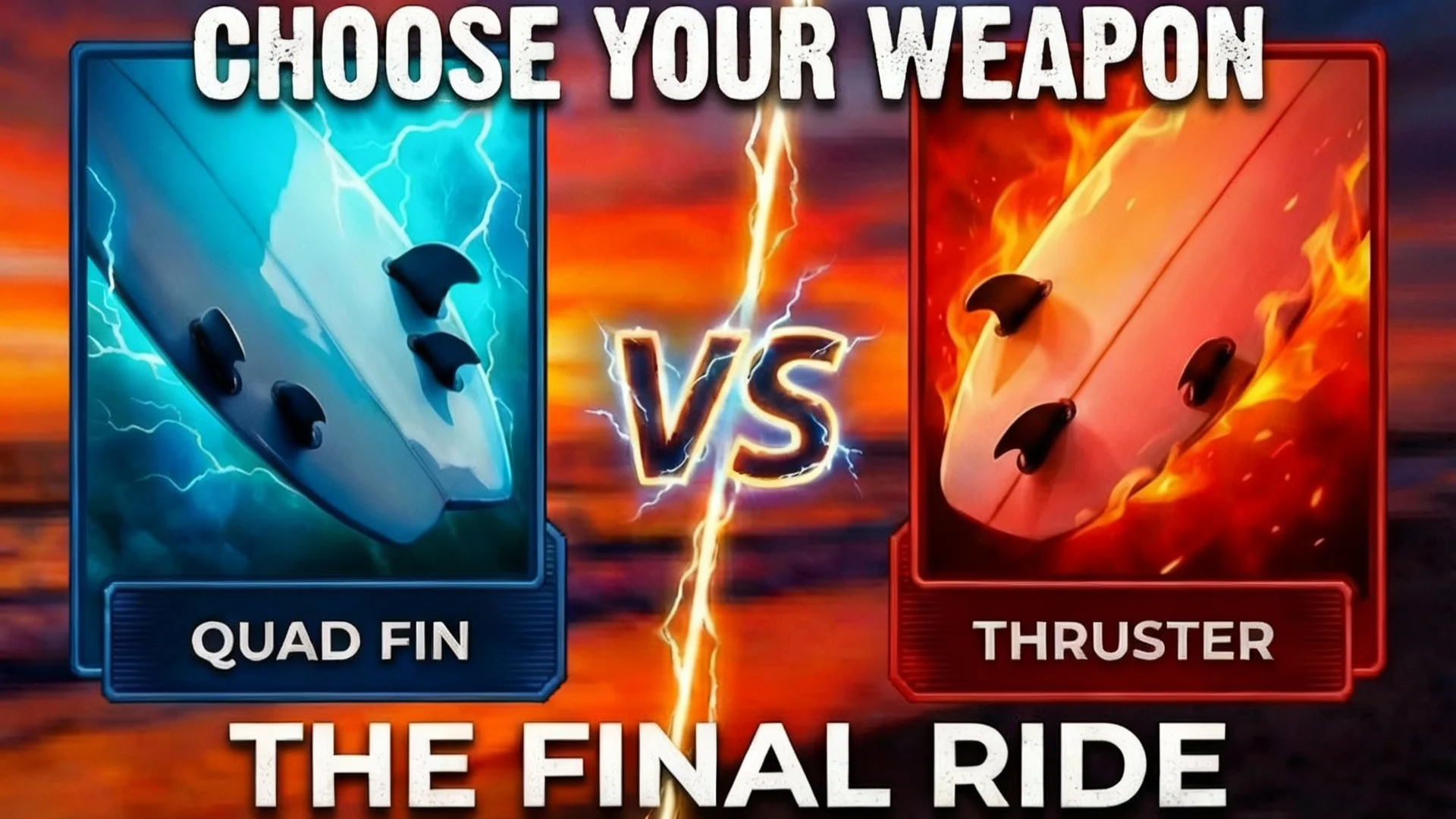
Thrusters work fine here too. Performance shortboards with medium-template fins (Performer, Reactor, Carver) cover the wave without complaint. But you'll be pumping more, which feels weird on a wave engineered to do most of the work for you. If you've never compared the two, our guide on how thrusters and quads behave on the same board covers the trade in detail.
Waco is a different machine entirely
BSR's pool runs on PerfectSwell technology, which uses pneumatic chambers to push water rather than dragging a foil through it. The result is three different wave types per cycle, each lasting 10 to 15 seconds, with a tighter pocket and more punch.
The famous one is the Air Wave Left. It's been called surfing's foam pit. Seth Moniz landed a viral backflip there inside the first month it opened in 2018, and the pro circuit hasn't stopped showing up since. The U.S. Olympic team trains there.
For the air section, you want loose. Not "drivey through the carve" loose. Catastrophically loose. Twins with a small trailer, or a thruster with the smallest set you own, anything that releases the moment you stand on the tail. The whole point of that section is launch. Hold is your enemy.
For Waco's regular sections (the rights and the pocket lefts), small thrusters or quads both work. The wave's too short to demand the all-out drive of a Surf Ranch setup. You'll do more vertical surfing in 12 seconds at BSR than you will in 45 at Lemoore.
If you bring one set to Waco, bring something playful. A small thruster you'd happily ride in head-high mush. Save your big-wave H4s for somewhere they can stretch their legs.
Palm Springs Surf Club is the wildcard
One quick correction first: PSSC doesn't run on PerfectSwell. It uses SurfLoch technology, which produces a different shape than what BSR puts out. The pool reopened in 2024 after a major rebuild and now offers selectable wave modes including A-Frames, Rights, Lefts, Clean Easy Tube, The Slab (a steep top-to-bottom barrel for advanced riders only), and a dedicated Air Section.
That variety is the whole problem. PSSC isn't one wave. It's six. Bringing one set of fins is like packing one pair of shoes for a week of mixed terrain.
If you're booking the Slab session, ride a thruster with serious hold. H4s, AM2s, Mick Fanning templates, anything stiff enough to set a rail on a vertical drop without chattering. The Slab will eat a loose setup alive.
For the A-Frames and standard rights/lefts, your normal performance thruster is fine. Reactor, Performer, JC1, whatever you'd ride at home in waist-to-shoulder surf.
For the Air Section, treat it like Waco. Smallest set you own. Twins with trailer if you're feeling spicy.
Bring two sets to Palm Springs. The drive from L.A. is two hours. The cost of dragging an extra envelope of fins is zero. The cost of being on the wrong setup for The Slab is a lot more than zero.
The pool quiver, simplified
If you're flying or driving long distance and want one decent compromise set per pool, here's the cheat sheet.
- Surf Ranch: Medium-large quads. FCS II H4 Quad, Performer Quad, or a Futures DHD Quad set. Drive through the wall is the priority.
- Waco: Small thrusters or twins with trailer. Captain Fin twins, FCS II AM Small, anything playful. Loose wins.
- Palm Springs Surf Club: One stiff thruster (H4, MF) for The Slab plus one small thruster or twin for the Air Section. If you can only bring one set, bring the small thruster.
If you're not sure what fits your board, your weight, and the specific session you booked, that's the exact problem the FinFinder recommender solves. Plug in your numbers, tell it where you're going, and let it argue with itself instead of you.
One last thing: pack everything
Pool sessions cost money. Fin keys cost three dollars. Bring two. Bring two trailer fins. Bring a backup leash. The number of people who lose 20 minutes of their booked hour in the parking lot looking for a stripped FCS screw is genuinely tragic.
For sizing the actual fin templates against your weight before you fly, our fin sizing guide will save you from the classic mistake of riding a Large set when you're a 145-pound surfer on a 28L groveler.
Pools are predictable in every way except the one you didn't prepare for.
Key Takeaways
- Freshwater pools rob about 1.6 lbs of buoyancy. Bump your board volume up and choose stiffer, faster fins to compensate.
- Surf Ranch's long open wall rewards quads. Filipe Toledo won there on an FCS II H4 quad for a reason.
- Waco and PSSC's air sections demand the loosest setup you own. Twins with a trailer or your smallest thrusters.
- Palm Springs Surf Club has six wave modes, not one. Bring two fin sets if you can.
- Light fins (carbon, honeycomb) feel noticeably better in pools than heavy fiberglass. The weight savings finally matter.
Helpful Resources
Ready to Find Your Perfect Fins?
Use our expert fin recommender tool to get personalized suggestions based on your needs.
Try Fin Recommender